

Cost Management Report
April-June 2026 issue.
「Although the Recent Rise in Construction Costs May Be Levelling Off, Outlook Uncertainty is Growing」
Scroll Down
This report has been prepared by the Cost Management Group of the Architectural Design Dept. of Nikken Sekkei Ltd for information purposes. While the information herein is current as of the date of publication, its completeness is not guaranteed. The contents are subject to change without notice. Unauthorized reproduction of this report is prohibited.
Although the Recent Rise in Construction Costs May Be Levelling Off, Outlook Uncertainty is Growing
Year-on-year construction cost inflation continues to slow
Labor input in 2025 remains virtually unchanged
-
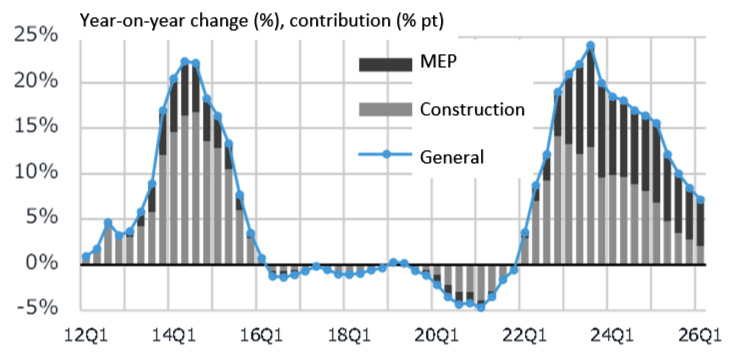 Fig. 1: Year-on-year trends in the NSBPI*1
Compiled by Nikken Sekkei.
-
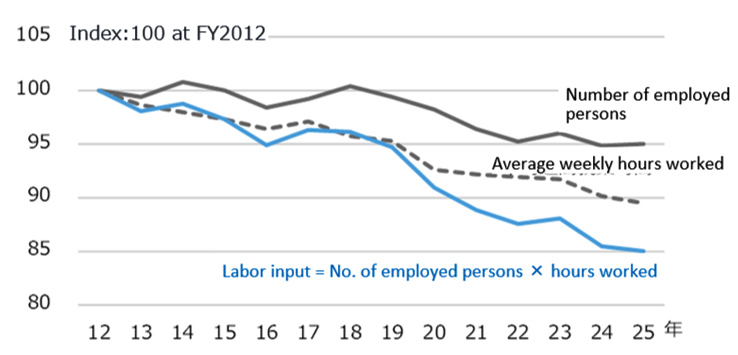 Fig. 2: Trends in labor input (number of employed persons × hours worked)
Compiled from the Ministry of Internal Affairs and Communications’ Labor Force Survey.
The Corporate Goods Price Index rises 2%
Uncertainty about the future is growing due to soaring crude oil prices
-
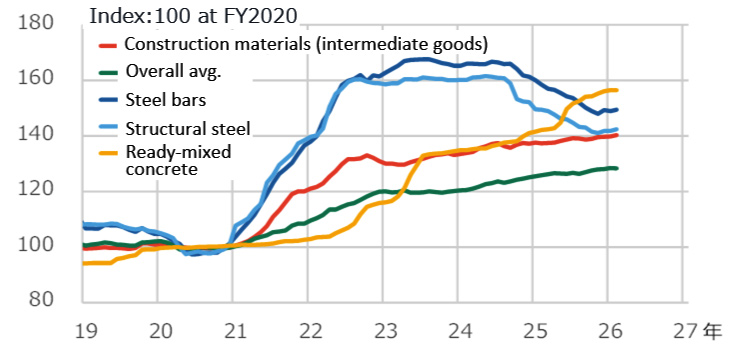 Fig. 3: Trends in the Corporate Goods Price Index
Compiled from the Bank of Japan’s Corporate Goods Price Index. -
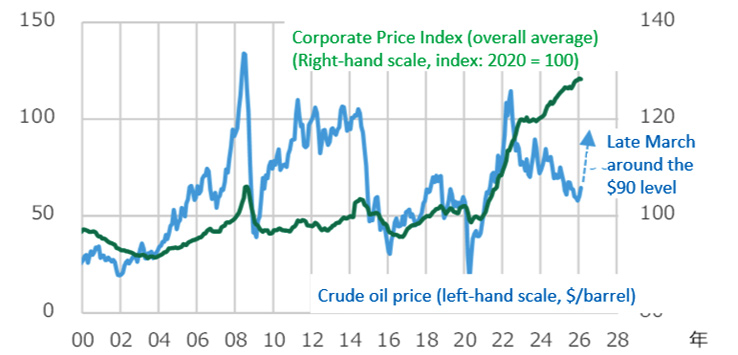 Fig. 4: Trends in crude oil prices and the Corporate Goods
The World Bank’s Commodity Prices and the Bank of Japan’s Corporate Goods Price Index.
Construction Costs Remain Largely Unchanged;Equipment Costs Rise Slightly
Nikken Sekkei Standard Building Price Index (NSBPI)*1
Regarding MEP work, the rate of increase was up slightly compared to the previous quarter due to factors including manufacturers’ price revisions for equipment, the incorporation of rising materials costs (such as electrical copper) into quotations, and higher labor costs (Figs. 5 and 6).
-
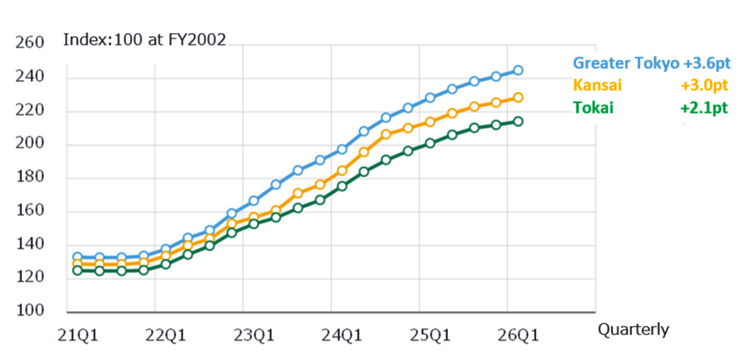 Fig. 5: Change in NSBPI
-
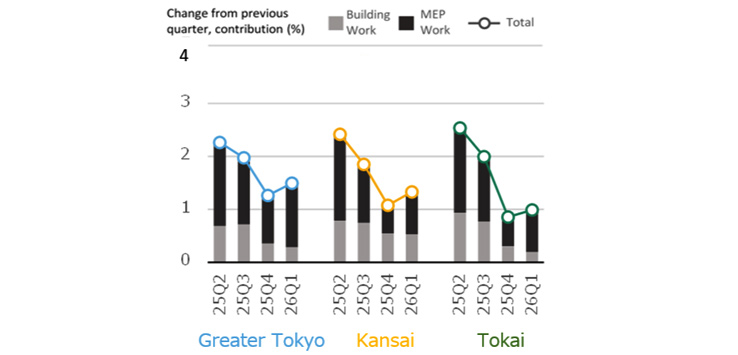 Fig. 6: Percent Change in NSBPI & Building Work, MEP Work Contributions
The amended Construction Industry Act is fully implemented
Efforts to improve conditions for engineers gain momentum
The US dollar-denominated NSBPI has plateaued due to the weak yen
-
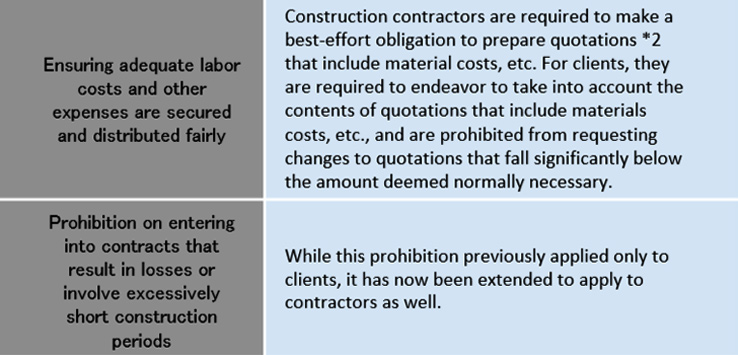 Fig. 7: Main impacts on private-sector clients under Con-struction Industry Act amendments enforced in Dec. 2025
Compiled from the Ministry of Land, Infrastructure, Transport and Tourism’s Briefing on Construction Industry Act Amendments (enforced in December 2025).
-
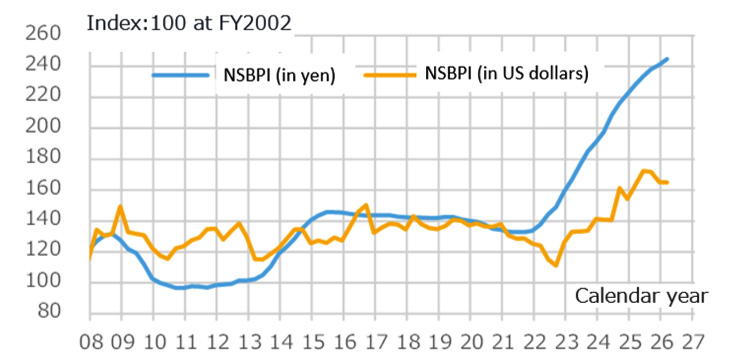 Fig. 8: Change in USD-denominated NSBPI
Compiled from Nikken Sekkei data and the Bank of Japan’s Exchange Rates.
The USD-denominated index is calculated based on the exchange rate as of Sept. 2008.
*1: The Nikken Sekkei Standard Building Price Index (NSBPI) shows movements in construction prices, calculated independently by Nikken Sekkei Ltd. Using standard rental office space as a quantitative model, the index is calculated and converted into an index of construction prices that reflect prevailing prices, as identified through independent surveys from time to time. The first quarter (Q1) is from Jan. to March, Q2 is April - June, Q3 is July – Sept., and Q4 is Oct. - Dec.
*2: Quotation specifying material costs, etc.: A quotation for construction work that details, according to the nature of the work, the material costs and labor costs for each type of work, as well as a breakdown of expenses essential to ensure proper execution by the workers engaged in the construction work, and other expenses necessary for the execution of the construction work.
* This report has been compiled based on information available as of 12:00 noon on March 30, 2026.