
Innovation Change and the Power of Place
Scroll Down
As remote work and activity-based working (ABW) become more widespread, the very idea of the R&D hub and the office is being called into question. Where, then, is the key to innovation today? Ken Kodama of Nikken Sekkei spoke with Taro Sengoku—who has long worked at the forefront of knowledge management and value-creation support, and who now serves as President of the Japan Innovation Network (JIN)—about designing “place.” At a time when innovation can no longer rely solely on a physical “box,” this dialogue explores the high-density interactions that emerge when different forms of knowledge intersect and spark new ideas, as well as the power of place conceived by working backwards from the society and work styles of ten or twenty years from now.
TAG
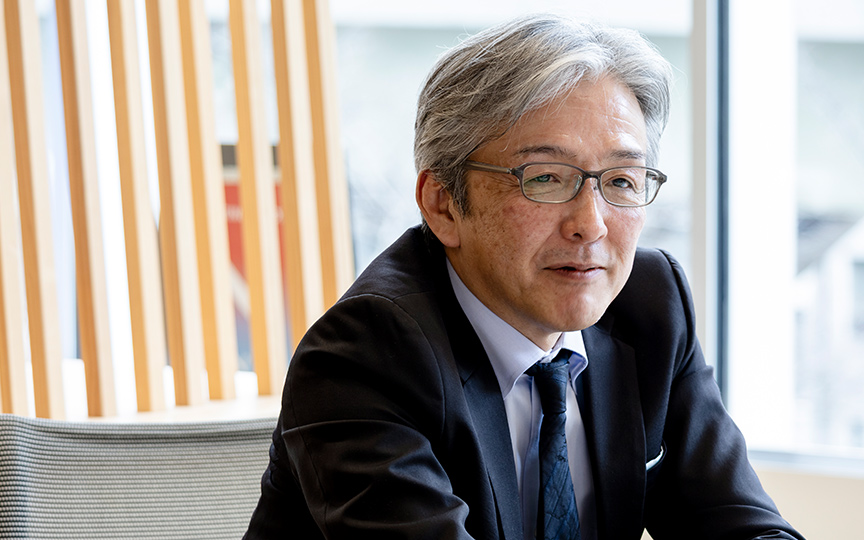
Taro Sengoku (Sengoku) Fuji Xerox, where I worked for 31 years, began developing the concepts of remote work and satellite offices at a very early stage in 1989.
Kodama Where those initiatives for the company internally, or were they externally directed?
Sengoku It was internally directed at the time, but in those days when telecommunications infrastructure was still weak, I think it was a pioneer in remote office work. In the background was the influence of the Fuji Xerox US Palo Alto Research Center. The Center was engaged in research about environments conducive to creativity, observing, for example, how placing a whiteboard in areas where researchers went for breaks in their work sometimes sparked spontaneous discussions among them. They invited cultural anthropologists to apply ethnological approaches to innovation in business settings. They were pioneers in incorporating fieldwork approaches to workplace and human interface designs, and findings they had accumulated in the 1980s and even before spread to Stanford University and other institutes.
Sengoku At Fuji Xerox, I began exploring consulting based on knowledge-creation theory (the SECI model) together with Ikujiro Nonaka (professor emeritus at Hitotsubashi University; deceased 2025) and Noboru Konno (professor emeritus at Tama Graduate School of Business). In the mid-2000s, companies were starting to update their research and development hubs, turning them into innovation centers.
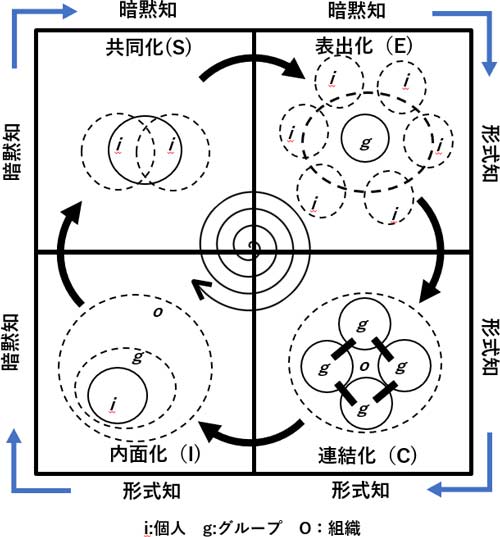 Knowledge-creation theory (the SECI model)
Originally published in: Nonaka & Konno (1998), “The Concept of ‘Ba’.”
Sengoku At the time, many companies believed that innovation was achieved by swiftly developing differentiating technologies. They prioritized factors such as distance to prototype workshop or laboratory and collaboration among experts of different specializations. Konno found this approach frustrating: “You can’t create future-oriented spaces just by studying current ways of working.” He insisted that we had to build concepts by working backwards from the business models, IT advances, working practices, and open innovation landscapes projected for ten or twenty years hence. The Future Center brought into organizations the context of development for and addressing questions about the society of the future. That’s why it was established in an urban area.
The same applies to research and development centers. In any era, what matters most for laboratories and researchers is having inexhaustible curiosity and the ability to pose essential questions. Equally important is to what extent innovations at the researchers’ workplace can support their efforts. The need to upgrade R&D centers as innovation centers grew stronger as we moved away from the days when we could absorb ourselves in purely technological development into a time when social implementation—mobilizing user experience and business models—is key. Designers of new facilities must identify where a company’s strengths can be most fully expressed.
Kodama That’s true. In the wake of the Covid-19 pandemic, one might have expected activity-based working (ABW) to take off across the board, yet sectors closer to core industries are also seeing a trend toward tighter security. High-grade office buildings are no longer selling as they once did, and fewer companies are choosing to build their own headquarters in city centers. There is a renewed need to ask what kind of workplaces companies truly seek. This question encompasses both the built environment and intangible considerations, and it begins with addressing the most fundamental issue: Whether to build at all.
Kodama Perhaps even innovation centers are reaching a point where the physical building itself is no longer what is ultimately being sought.
Sengoku It is also true that without analog “place,” new connections cannot be forged. Routine work can be done in traditional offices and home environments, but innovations that shake up established frameworks emerge at the boundaries where knowledge of diverse kinds intermingle. The paramount theme of our endeavors has to be building platforms that generate this “high-density interaction.”
In the past, a key theme when establishing R&D centers was how to prevent siloing within the organization. Since the 2010s, however, connecting with the outside—open innovation—has become mainstream. For business-to-consumer issues, creating spaces for sharing customer experience became popular, and component and materials manufacturers focused on establishing business-to-business customer co-creation spaces. Next came attention to third-place-like spaces. There are successful examples where multiple companies bring their technologies together to jointly create comfortable, future-oriented spaces. There is, for example, the Dutch co-working space “Seats2meet”; it is free to use, but in exchange, users must register and publicly share their knowledge or special skills. Users go there with a purpose, thinking, “Today, a famous photographer will be there, so I'll go meet him.” It's not merely renting space; it’s using the space with the specific aim of meeting people and seeking collaboration. Similarly, the evolution of research institutes into innovation centers, and further into future centers and living labs, was the result of the pursuit of such encounters with knowledge.
Rather than designing merely to suit today’s context, we need to imagine the social conditions and work styles of ten or twenty years from now and redirect our actions today based on that vision. I think that creating places from this future-oriented perspective is indispensable to innovation going forward.
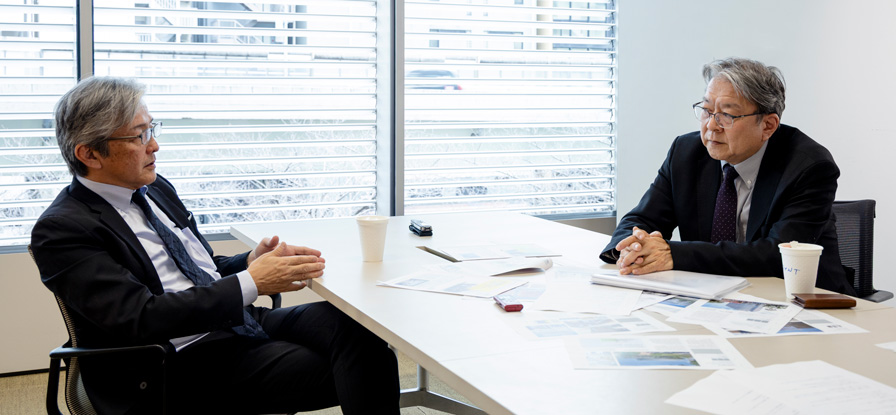
Thank you for your sharing your observations and experience.
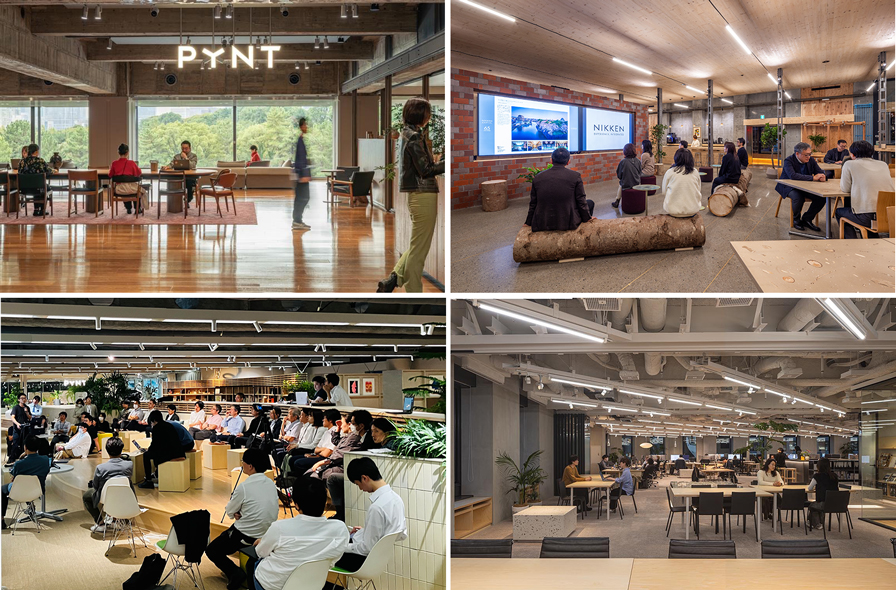 Photography (from top left, clockwise): Nikken Sekkei (PYNT Takebashi), Niitsu Photo (PYNT Hokkaido), Toshihisa Ishii/Blitz Studio (PYNT Kyushu), Nikken Sekkei (PYNT Tokyo)
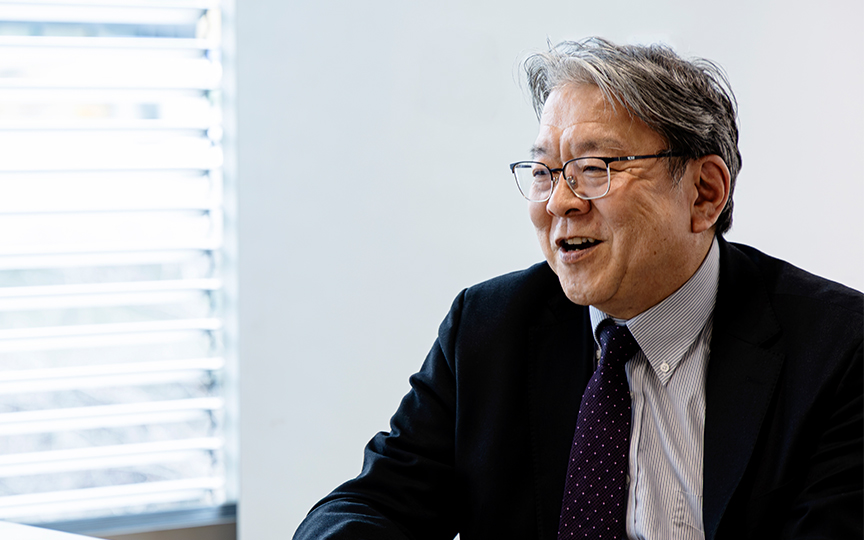
Taro Sengoku
President, Japan Innovation Network (JIN); Director, Future Center Alliance Japan;
Chief Executive Officer, Rewired Co., Ltd.