

May it continue spreading peace throughout the world
Seismic reinforcement on the Atomic Bomb Dome World Cultural Heritage Site
Scroll Down
The Atomic Bomb Dome, a World Cultural Heritage Site in the Hiroshima Peace Memorial Park, was originally constructed in 1915 (Taisho 4) as the three-story brick building that was the Hiroshima Prefectural Commercial Exhibition Hall. Near the hypocenter of where the atom bomb was dropped on August 6, 1945 (Showa 20), the building was, miraculously, not totally destroyed. After the war, in time it somehow came to be called the Genbaku [atomic bomb] Dome and became a monument to convey to posterity the tragedy of the atomic bombing. In 1996, its registration on UNESCO’s World Cultural Heritage List was decided; its role as a symbol for the abolition of nuclear weapons and importance of peace has grown ever larger.
Because the building was one that had already incurred destruction, it lacked the strength to withstand large earthquakes. For the preservation of the Atomic Bomb Dome, in 2001 Hiroshima City independently established the Advisory Committee on Preservation Techniques for the A-bomb Dome. The Committee consisted of experts, and discussions were repeatedly held.
The intent was to protect cultural asset value and dignity.
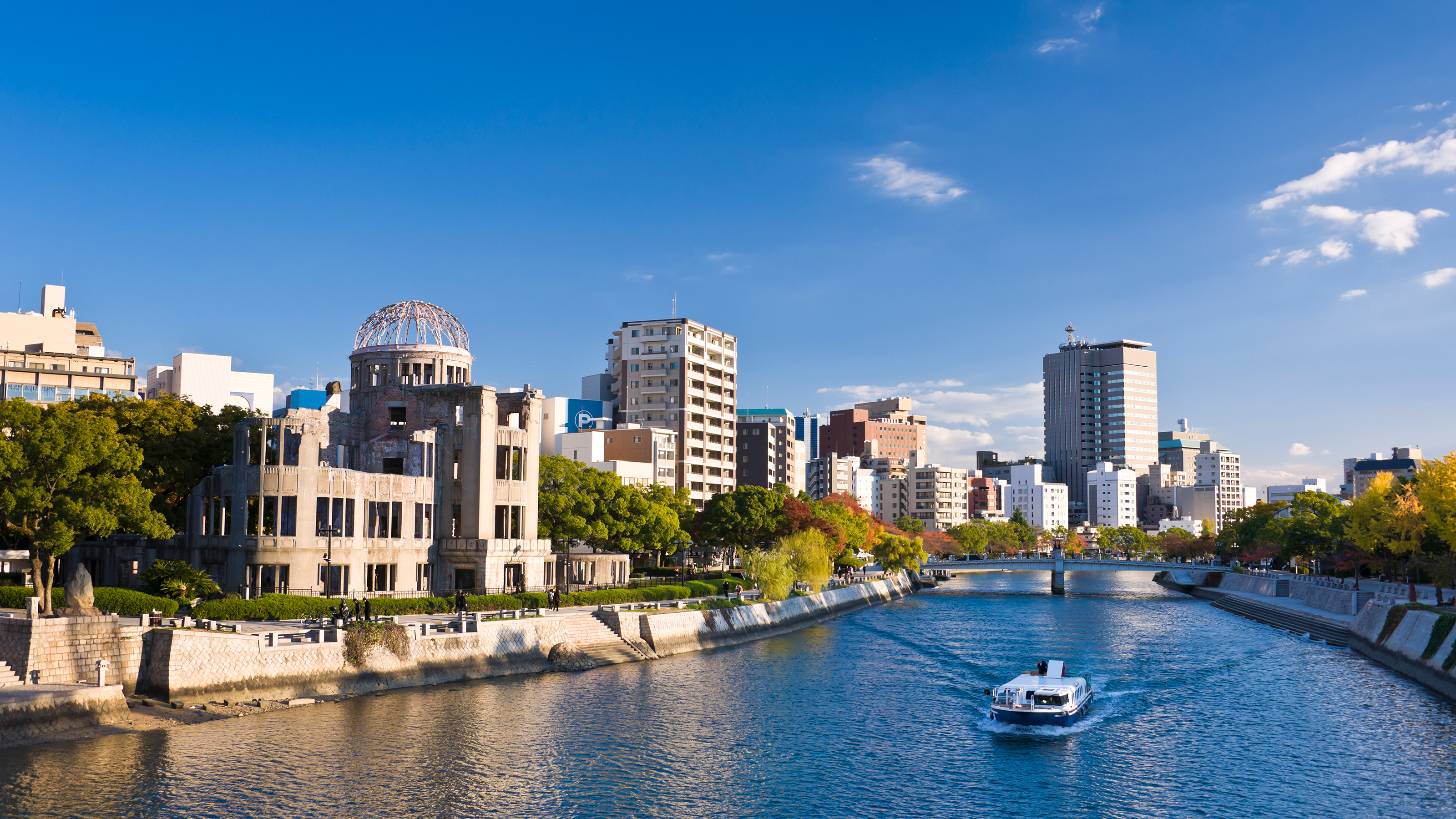
At Nikken Sekkei, when the Structural Design Department members in charge first participated in the project, they considered using the latest seismic technology in reinforcing the building. However, over the course of multiple hearings with those in charge from Hiroshima City, they noticed differences from the standard seismic approach. Usually, structural designers have the goal of ensuring safety and security, but as the Atomic Bomb Dome was a building that had already been destroyed, its cultural asset value and dignity were the things to protect. For this reason, it was necessary to reconsider what engaging in design actually meant.
“The latest simulation technology was fully utilized for the investigations, but simple technology was intentionally chosen for the actual reinforcement work.”
First, investigations were begun to determine where force would be applied to the building in the event of a major earthquake. In 2012, the building’s weak points were detected using diagrams converted to CAD, prepared by Hiroshima City; data on waveforms and the like pertaining to major earthquakes that could occur in future; and cutting-edge simulation technology for structural analysis. Then, in 2013, bricks were actually extracted from the building and strength investigations conducted repeatedly. Based on the results of those investigations and structural analyses, more than 10 reinforcement proposals were drafted.
This was by no means the latest of the numerous seismic retrofitting technologies available. Although the technology was, in fact, simple and the necessary minimum, the conclusion to use it was arrived at based on UNESCO’s global standards for repairing World Heritage Sites and the like: (1) Exteriors shall not be visually modified, as a rule. (2) Measures taken shall be kept to the necessary minimum. (3) Measures taken should be reversible, as much as possible.
The idea was to entrust preservation to future technology and connect to the future.
Why was this method chosen? For a historic site replete with complex feelings, like the Atomic Bomb Dome, the idea was to preserve it in a way that would include each generation, rather than forcibly preserve it based on the technology and emotions of a certain time. The reinforcement work done this time was based on the concept of entrusting preservation to future technology, with no arrogance about current technology yet doing the best possible at the time.