
After nearly eight years and numerous social experiments,
the “hatmachida” community hub was born
Scroll Down
In March 2025, a new community hub called “hatmachida” opened in Machida City, Tokyo. Located on the main street in front of Machida Station, it aims to revitalize the town by renovating and repurposing a privately operated police box into a multifunctional facility. This project, realized over approximately eight years, was spearheaded by Machida Community Development Corporation, an organization responsible for town development, through various social experiments. Nikken Sekkei engaged with the community's challenges and aspirations even before the building design phase, collaborating with the client to explore the experiential value the space should embody.
TAG
From Private Police Box to Community Hub
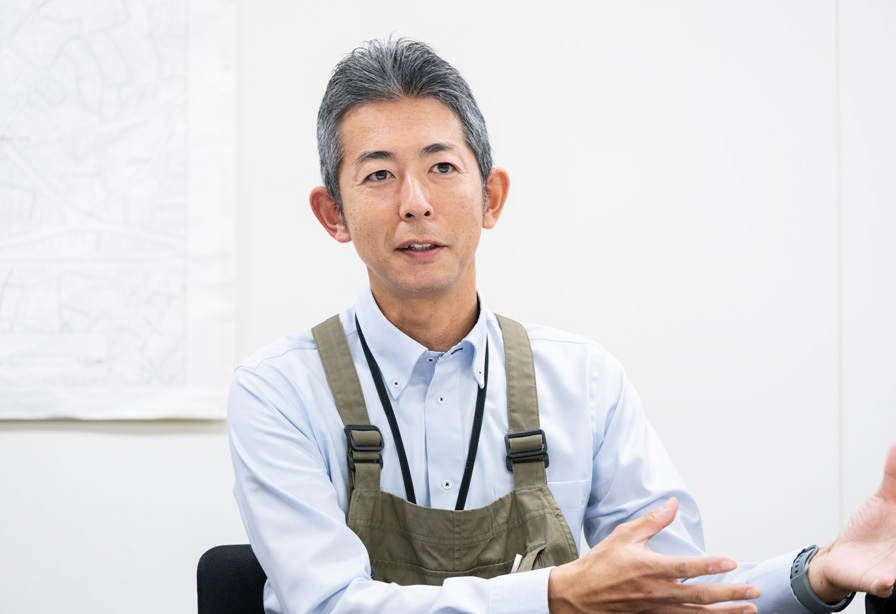 Machida Community Development Corporation
Director, Central City Revitalization Promotion Section
Fujito Suzuki
Photography: INOUE Sayuki Photography
Our corporation (a public corporation) was established in 1999 as a joint stock company funded by Machida City, the Organization for Small & Medium Enterprises and Regional Innovation, and local businesses, with the goal of revitalizing the central business district. We operate various businesses, primarily focusing on the parking lot operations and cargo handling facilities within the “Poppo Machida” building complex, which was managed by the public corporation.
However, looking at the town as a whole, we observed that facilities were aging and redevelopment was lagging compared to other areas. We began considering what our corporation could do to address this.
In 2019, we established a policy to further enrich activities throughout the town. Concurrently, we were designated as an Urban Regeneration Promotion Corporation by Machida City. This enabled us to plan and implement experimental projects utilizing special permits for road occupancy and other measures.
——How did the hatmachida project begin within this context?
Suzuki
Based on the Machida City Central City Area Development Plan formulated by Machida City in 2016, we examined how our company could contribute to one of the plan's ten initiatives: the project to create a space for relaxation and vibrancy on Haramachida Odori.
Haramachida Odori is a four-lane main thoroughfare connecting the JR Machida Station intersection to Machida Kaido. It is expected to be extended in the future, becoming an access route to Serigaya Park. However, it also faced challenges like a lack of rest areas and a street that bisected the town. To create a better environment for pedestrians, we participated in the development plan alongside the city. As part of the effort to widen part of the four lanes into sidewalks, we proposed utilizing the private police box that our company had been operating since 2018 under commission from the city.
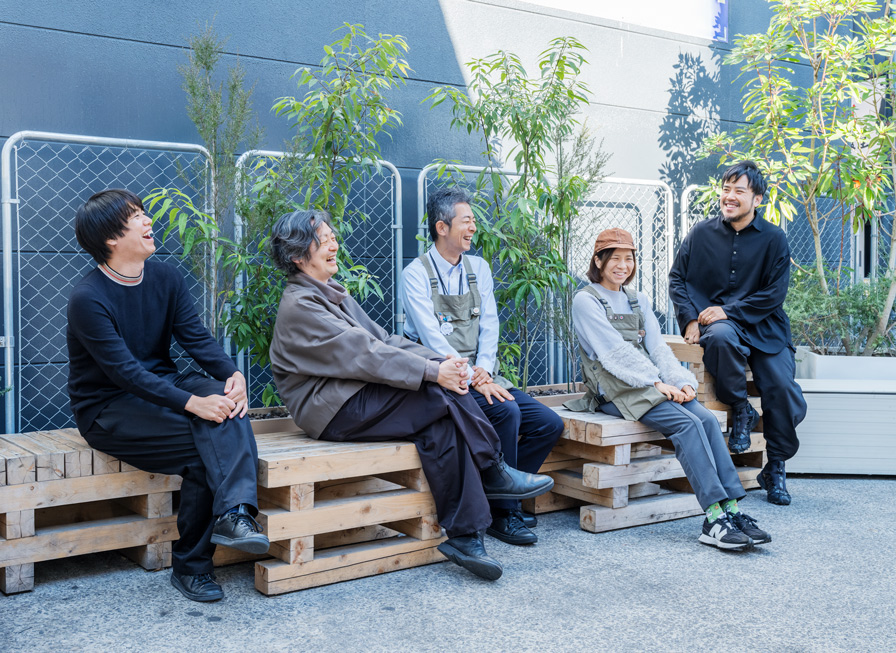 A “spot” behind the hatmachida
Photography: INOUE Sayuki Photography
Suzuki
The Safety Box Salvia private police box was established on Haramachida Odori in 2004 as a base for local residents to conduct neighborhood watch activities such as patrolling and giving directions.
Primarily staffed by members of the shopping district association and neighborhood associations, it became difficult to maintain due to factors like the aging population, which led to its temporary closure in 2018.
The City of Machida took over the facility, and our company contracted to operate it until 2024. With the perceived safety in the surrounding area improving, we also wanted to further enhance the functions of the private police box. This desire led to the conception of the hatmachida project.
Joint consideration of the town's challenges and potential
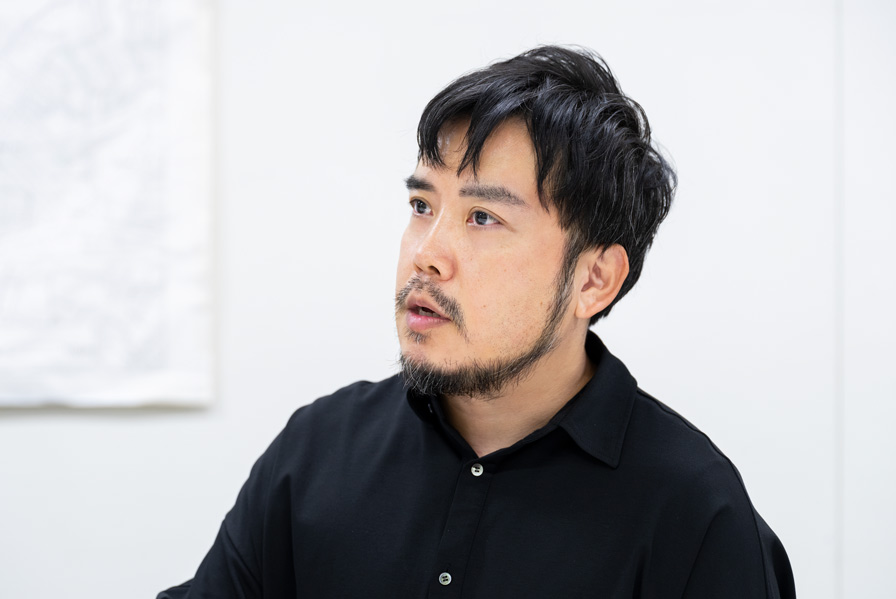 NIKKEN SEKKEI (at the time)
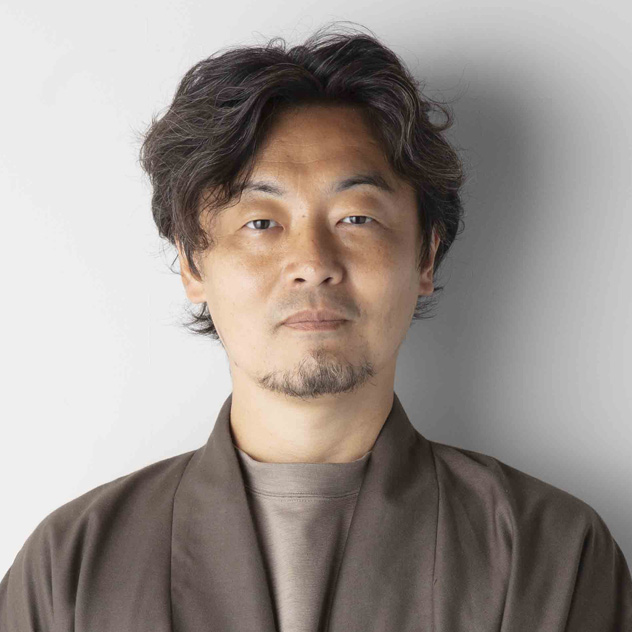
MEMENT (current) Creative Director/Designer
Takaaki Ueda
Photography: INOUE Sayuki Photography
My first involvement was as a consultant in a project commissioned by Machida City and the public corporation in fiscal 2020 to explore the future vision for Haramachida Odori. At the time, discussions were underway to extend the Tama Monorail toward Machida. This created momentum to reimagine the boulevard -- shifting it from a car-centric transportation space to a pedestrian-focused public space -- and revitalize it. To develop this vision, we worked with the city and the public corporation for about a year. We conducted case study visits, held workshops, and deliberated on what to achieve and how to achieve it.
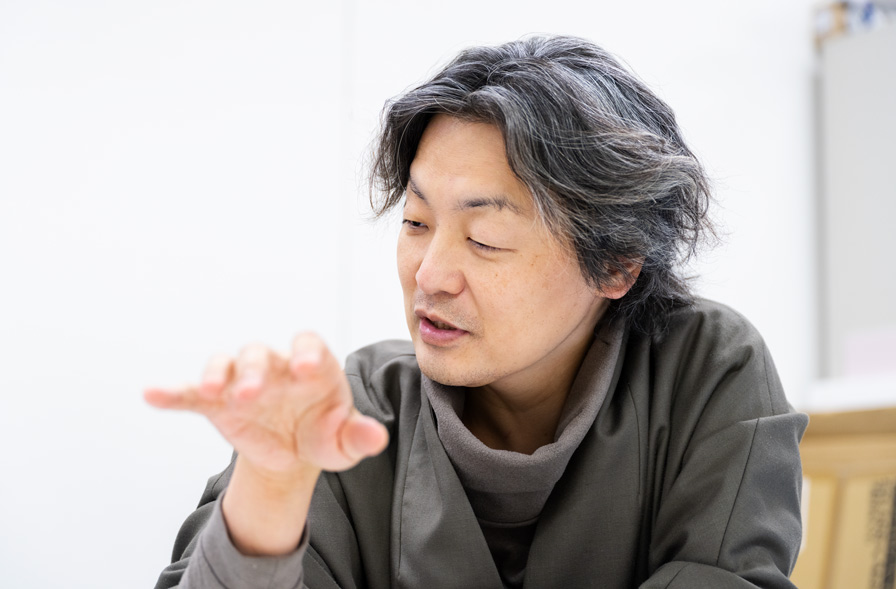 Design Supervision Department, Design Department Director
Takeyuki Katsuya
Photography: INOUE Sayuki Photography
For example, reducing lanes on a major boulevard changes how the road is used, opening up various possibilities. The idea is to propose specific hypotheses, conduct experiments to test them, and explore new ways for the city to function while listening to citizens' voices.
Ueda
We received a number of diverse ideas, including some wildly imaginative ones like converting roadways into parks and installing water slides. Therefore, our conclusion for fiscal 2020 was to establish Haramachida Odori as an “urban experimental zone” and adopt a policy of conducting experiments with various activities.
——So you're involved from the experimental stage, before the building is designed, yes?
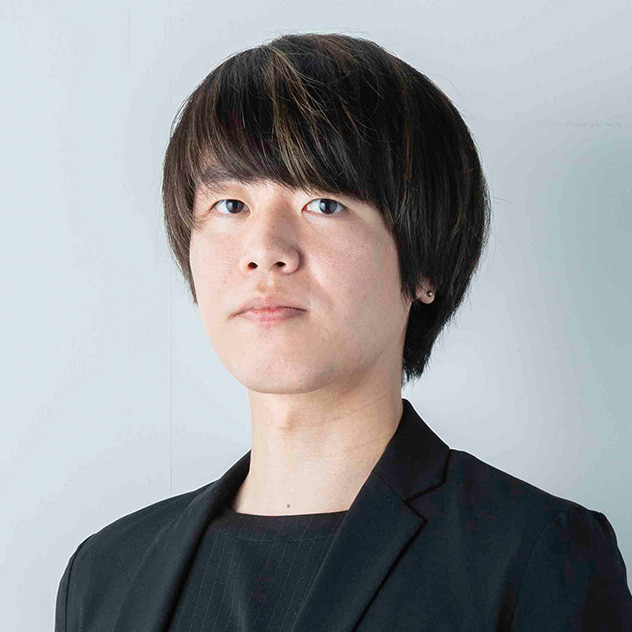
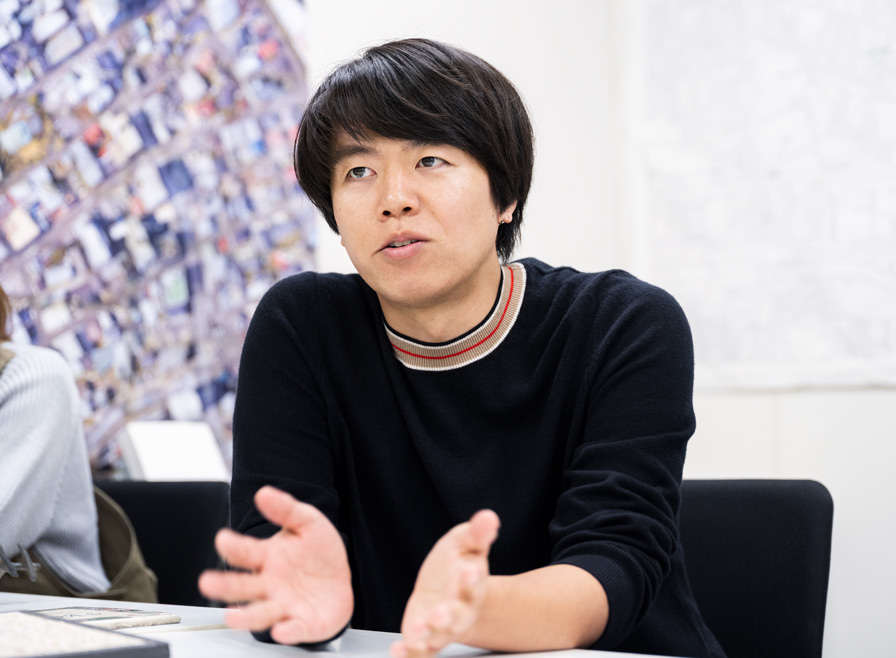 Planning and Development Department Commons Group
Yuta Sano
Photography: INOUE Sayuki Photography
At the time, we belonged to a department called Nikken Activity Design Lab., commonly known as NAD. It was a team that first discussed what kind of experiences should exist in a given space, then worked backward from there to translate those ideas into the building's design.
Katsuya
The background for NAD's creation is that Japan faces a population decline and an increase in vacant homes, meaning there's a considerable building “stock.” Consequently, even when projects launch, it's difficult to immediately jump to discussions about “building something new.” We're now in an era where the challenges themselves are hard to pinpoint. By thinking alongside our clients, we aim to provide what's truly necessary for companies and society. This time too, driven by that same problem awareness, we at NAD are involved from the very beginning of the planning process.
Advancing planning through iterative testing
Suzuki
Experiments were underway even before Nikken Sekkei joined. However, we couldn't use the road itself (due to lack of road use permits), so in fiscal 2018, we utilized the open space of a nearby large commercial facility (Machida Tokyu Twins) as a virtual road. In fiscal 2019, we conducted an experiment simply closing Haramachida Odori to traffic. We learned that stopping vehicle traffic incurs security costs and requires extensive coordination with transportation operators and roadside shops. In 2020, we expanded the verification area to include Haramachida Chuo-dori, conducting experiments on securing space for delivery vehicles and widening sidewalks. Building on this track record, we finally succeeded in conducting a social experiment using the roadway in fiscal 2021, in collaboration with Nikken Sekkei.
——That was the 2021 “What If Haramachida Odori” project, yes?
-
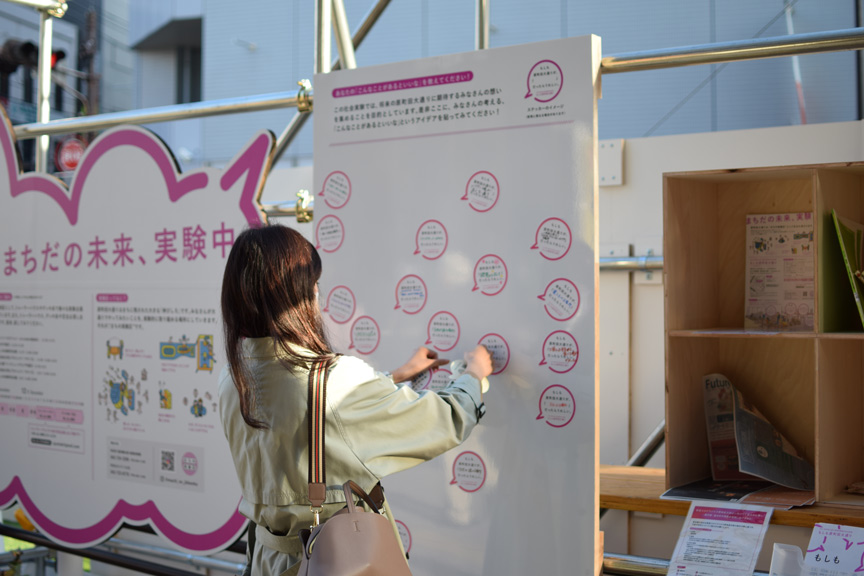 The “What if sticker” participatory opinion-gathering tool
Photography: Nikken Sekkei -
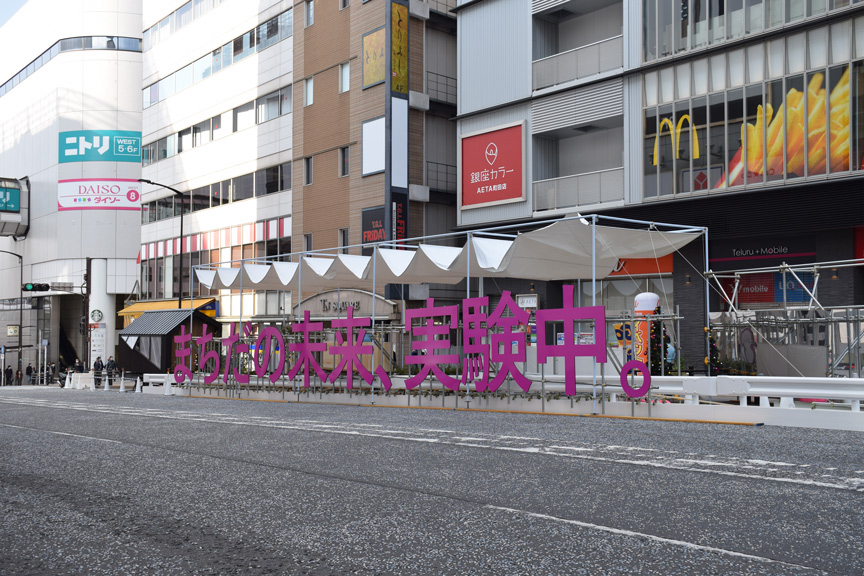 Temporary roadside loitering space (social experiment on loitering spaces)
Photography: Nikken Sekkei
Yes, from November to December 2021, we conducted a social experiment called “What If Haramachida Odori.” We created a temporary loitering space on part of the roadway (originally a bus stop bay and currently used as a parking area) by installing decks, benches, and other features. We placed a trailer house there for exhibits that were fun even for kids, hosted live talk show events with individuals running personal radio programs, and even game tournaments with a large screen using a projector.
We tested about ten different projects, gathered feedback from citizens, and posted their comments on a large display board. We wanted passersby to come to the realization that, “Oh, streets can be used like this.” The pandemic also acted as a tailwind, coinciding with a time when the value and economic impact of outdoor activities were being reevaluated.
——Regarding the utilization of private police boxes, a social experiment was conducted in 2022.
-
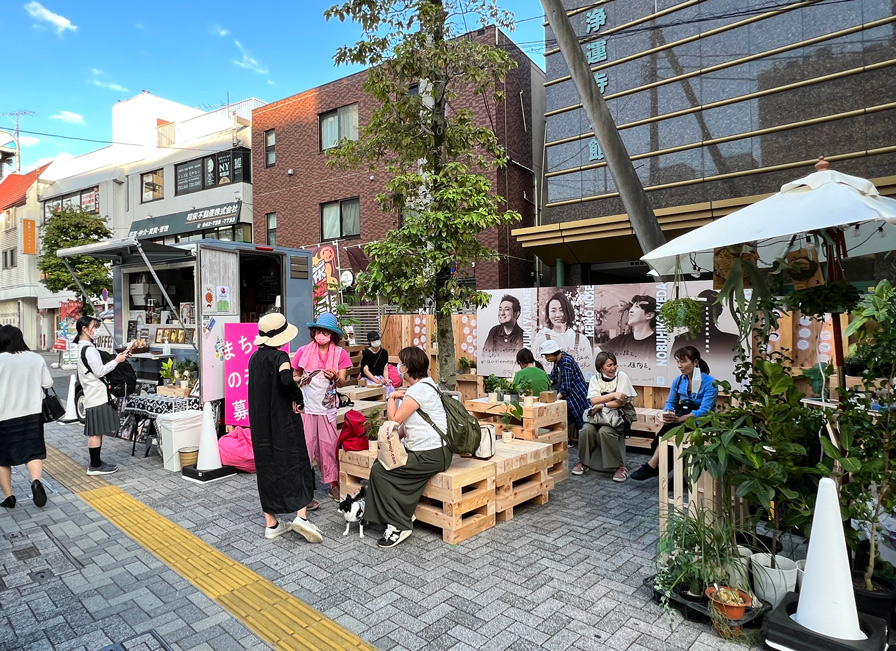 Temporary roadside community hub (social experiment for community hubs)
Photography: Nikken Sekkei -
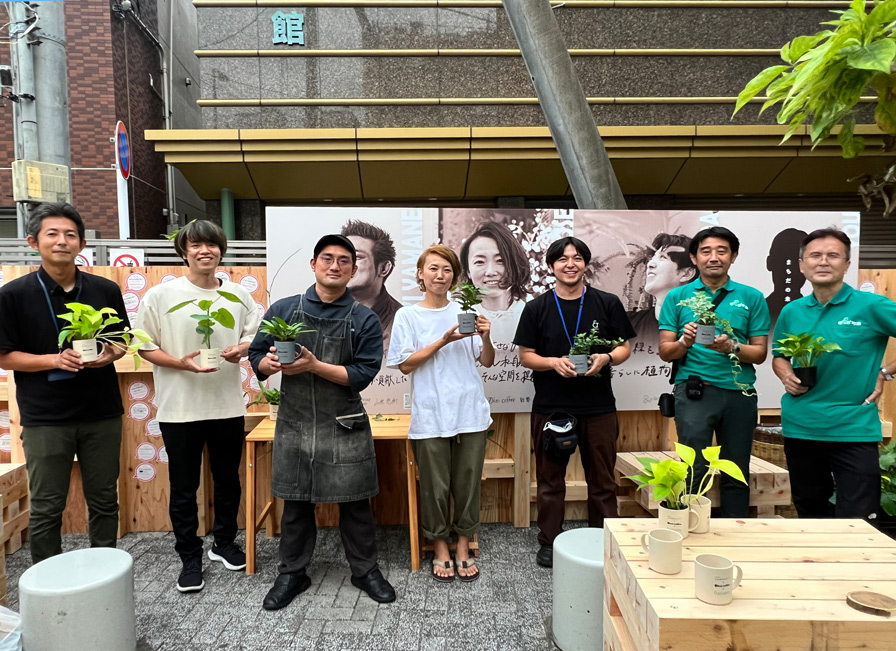 Demonstration of a roadside space as a “stage for citizens”
Photography: Nikken Sekkei
Yes. Rather than focusing solely on preserving private police boxes, this social experiment aimed to test the concept of a broader community hub. It built upon feedback from previous experiments, such as requests for rest areas and food/beverage and sundries stalls.
Sano
We held a small market under the slogan “Turning the Private Police Box into a Stage for Citizens.” In addition to providing directions as before, we offered takeout coffee and set up spaces for food, drinks, and merchandise sales. Though it lasted only two days, many customers came, and word-of-mouth advertising made it a huge success. Being on the street itself showed us that people desire a place where they can casually drop by on a daily basis. We were able to discuss with everyone ways to encourage people to stop in, and how to foster interactions. It was well-received by the administration and by individual business owners, so we moved forward with full-scale planning for a new community hub.
——What led to this symbolic form?
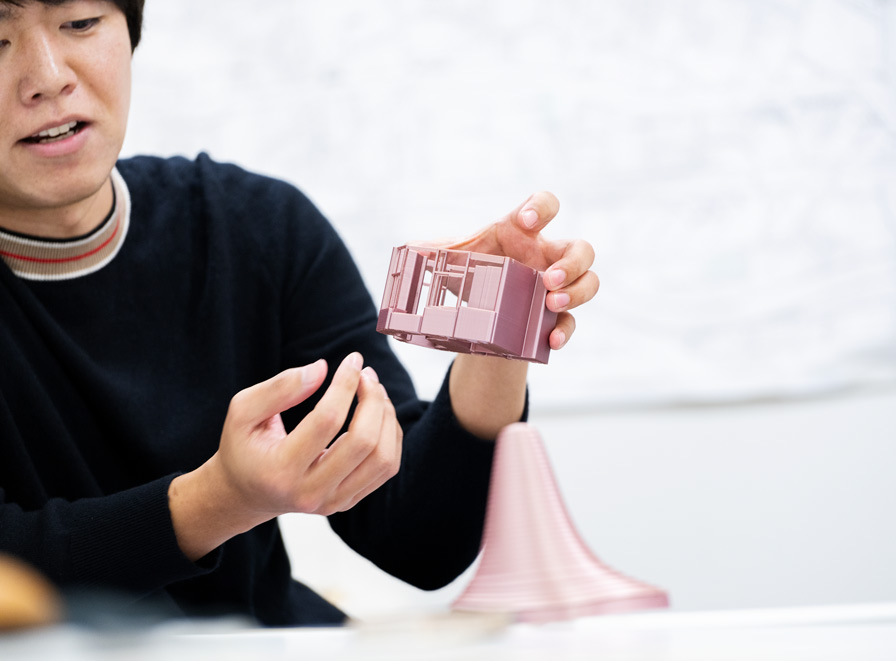 The hatmachida 3D printed model
Photography: INOUE Sayuki Photography
It started with the public corporation president's words: “We want it to become a symbol for this town, like Shibuya's ‘Hachiko’ statue.” Based on that vision, we explored the site's unique characteristics and pedestrian flow from multiple angles. Through repeated sketches and models, we deepened discussions within our firm and with the public corporation. Rather than relying on a specific motif, we carefully interpreted the form that the land itself seemed to suggest. The result is an abstract, open shape where each viewer can freely find their own meaning. We aimed for a presence where the land's memory and people's imagination could quietly resonate together.
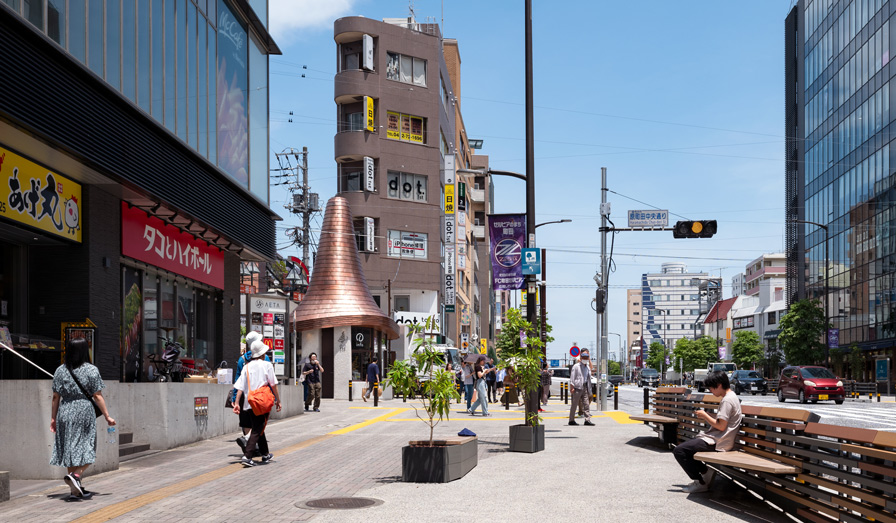 The hatmachida Panorama
Photography: IT IMAGING Shota Hiyoshi
Since it's not a large building, a conventional design wouldn't catch people's attention. We explored a form that would instantly grab interest with its novelty or sense of incongruity yet also evoke a sense of nostalgia and affection. We also considered it crucial for the building to be open to the town as a “stage for citizens.” Consequently, it resembles a house with a high roof, visible even from a distance.
——The building features numerous windows, with window frame sizes and counter heights varying according to function -- such as information desks and takeout counters.
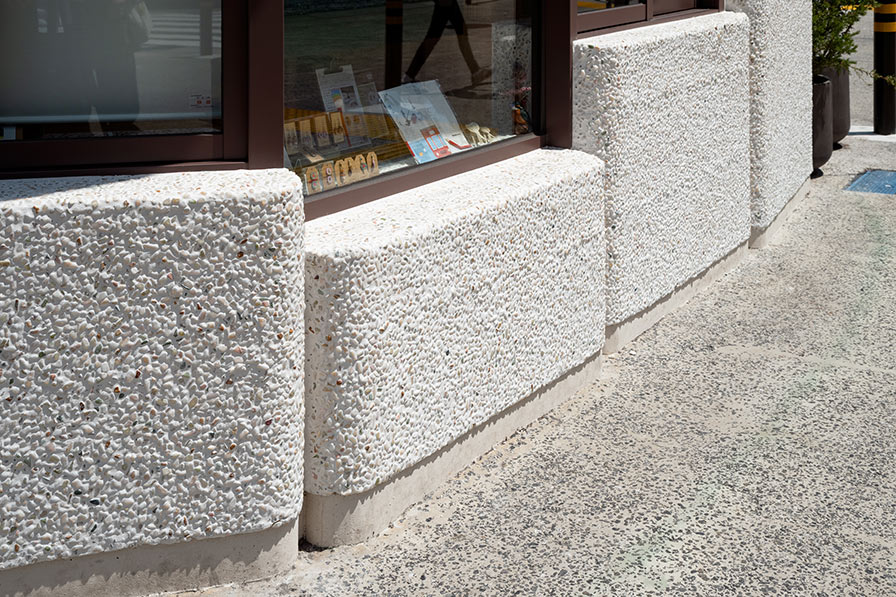 Walls with a furniture-like sense of scale
Photography: IT IMAGING Shota Hiyoshi
We considered how to make it more inviting for people to stop by, so we designed the wall surfaces with a scale with a “furniture-like scale, close to the body.” There's volume from the roof and volume from the ground, with nothing obstructing the space between them -- it's wide open. Glass (windows) just happen to fit gently into that space, welcoming people in.
——We paid meticulous attention to finishes, including the copper roof, with wooden panels installed on the ceiling and eaves.
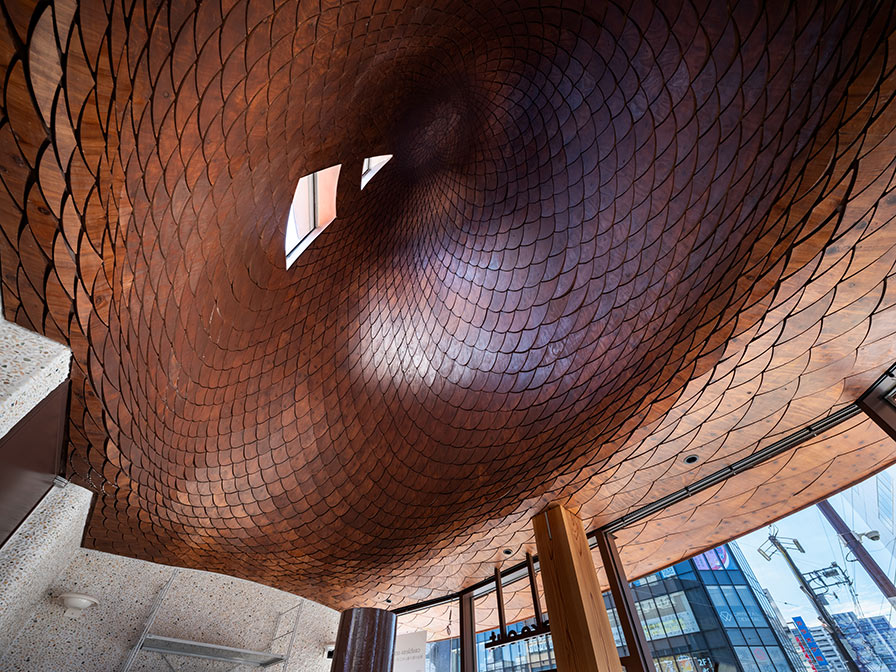 Roof interior
Photography: IT IMAGING Shota Hiyoshi
To evoke softness and nostalgia, we created an atmosphere mimicking the scale-like cladding used in old folk houses. The parametric design resembles a net draped over the entire roof. We computer-simulated and produced approximately 3,000 tiles, each with a unique shape. Additionally, the counter features washed-out “net stone” embedded with numerous small pebbles. Rather than creating something entirely new, we aimed for a warm, welcoming atmosphere. We selected materials with unique distortions and textures for this purpose.
A place to build good relationships with citizens
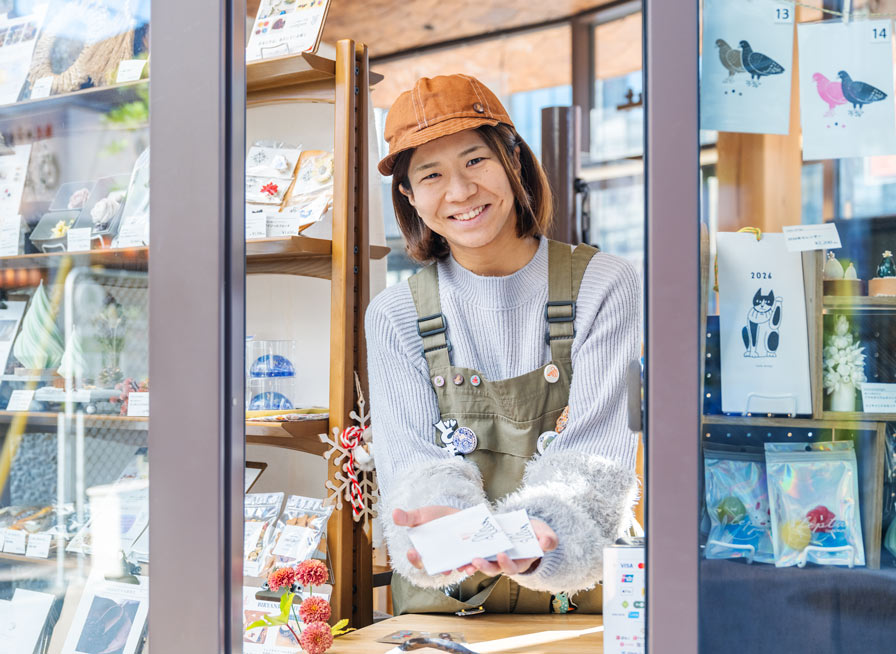 Machida City Development Corporation
Chief, Central City Revitalization Promotion Section
Eri Aoki
Photography: INOUE Sayuki Photography
When we consulted residents of this diverse town -- from elementary schoolers to seniors, housewives and businesses -- about the name, someone remarked, “It kinda looks like a hat, doesn't it?” After much discussion, that led us to the final name: “Hatto” (hat).
Ueda
Beyond “hatmachida,” we've also unified the naming for terraces and plazas under the “hat ◯◯” prefix. Including the naming structure of “hatmachida,” “hat terrace,” and “hat spot,” the visual identity (VI) designed by a graphic design firm in Machida City creates a unified look for the entire area. We believe it's crucial for everything -- not just signage plans, but also websites, leaflets, and other printed materials -- to appear as part of the same brand. Therefore, everything is developed using the same VI.
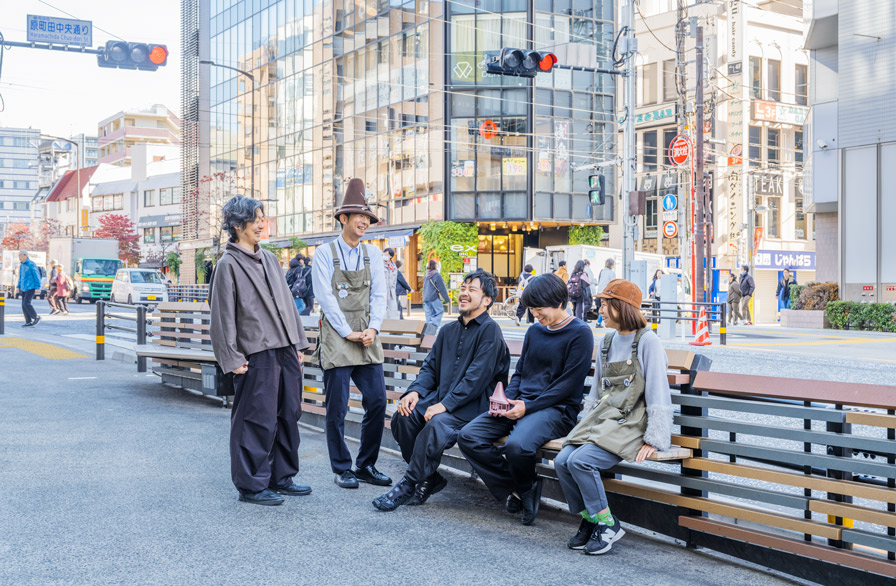 At the hat terrace (parklet)
Photography: INOUE Sayuki Photography
Aoki
We discovered there are many active individuals in Machida, and we've worked on this project feeling connected to everyone. So, first and foremost, I'm delighted to see the ideas we developed together are taking shape. Right after opening, we often heard people say, “This used to be the police box, right?” which really showed us how well-known the private police box was. On top of that, we've received positive feedback, with people saying, “it's better now.” Lately, more people have been saying, “I live in Machida and want to try doing something,” expressing interest in participating in events. Just now, the priest from a nearby temple who's been helping us since the pilot phase came over to talk. Next weekend, we'll be borrowing their temple grounds to host an event for another project, different from the one on Haramachida Odori. The hatmachida is becoming a place that creates opportunities to build good relationships with local residents. I feel that connections spread from this place.
Suzuki
First and foremost, it's crucial that our staff enjoy their work. We're delighted when citizens and visitors approach us, and we encourage everyone to share any challenges or concerns they have. hatmachida was conceived over eight years starting in 2018 to realize a town that brims with vitality and interaction. It evolved from a private police box into its current expanded function. Moving forward, we want to keep operating with the mindset of becoming a beloved facility, constantly thinking about what we can achieve together with all kinds of people.
——Could you tell us about your outlook for the future?
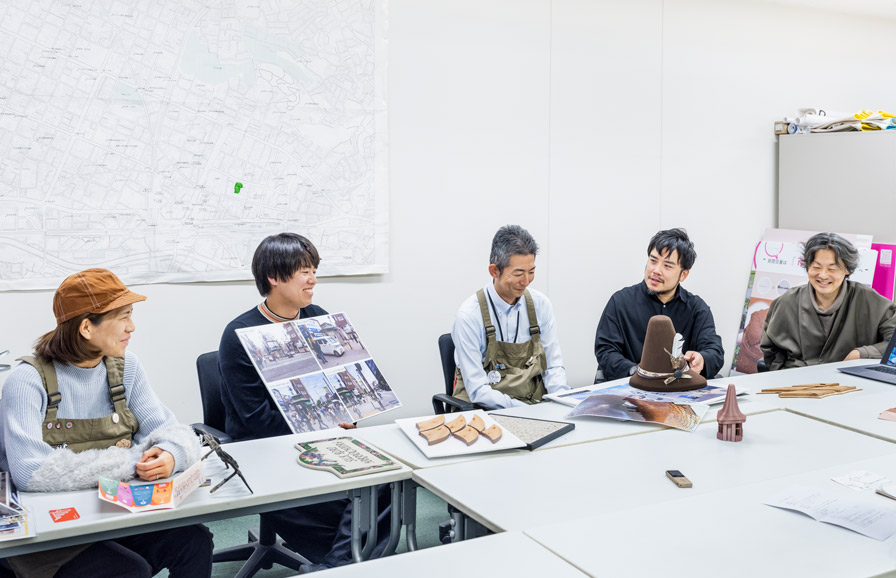 Photography: INOUE Sayuki Photography
As the planning department, we intend to explore the next steps. For instance, we could consider mechanisms to help businesses opening at the hatmachida to take root in the community going forward. We should also look at things from a broader perspective, including the possibility of establishing new “bases” scattered throughout the town. Having a physical location like The hatmachida allows us to understand the town's current state and challenges. Returning to our original concept of a “town experiment zone,” we want to continue testing various approaches, and then updating our approach.
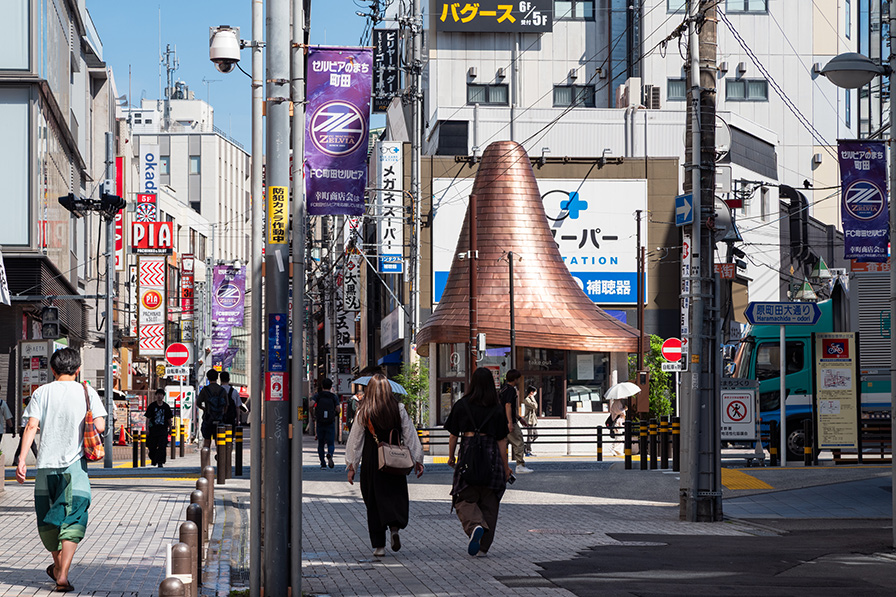 Photography: IT IMAGING Shota Hiyoshi
It's quite rare to find such a community hub established right on the street in the city center, just steps from the station exit. I hope this experience will be leveraged to continue sowing new seeds in various communities, leading to further improvements in the town.
Sano
Meeting wonderful people and working alongside them made this project one that leaves me feeling almost 100% personally satisfied. Through this project, I also truly realized that in community development, connections between people are more important than anything else.
Katsuya
It was great to be involved in this project at a time when outdoor spaces in towns are gaining attention and momentum is building to create walkable, enjoyable streets. The hatmachida is like an acupuncture point for the town. Stimulating this point should connect various flows and generate overall vibrancy. I hope this becomes a town that everyone grows to like.
——Thank you very much.