

5-3: The Legacy of the Steel Mill Project and Questions for the Future
Although Nikken Sekkei and the companies of the Nikken Group are currently involved in numerous projects, there are several common roots underlying the history and background that enabled them to develop the capabilities necessary to carry out these projects.
Architecture designed for “industrial production”—that is, “factory architecture”—which supported the postwar recovery and growth of the Japanese economy, stands as one of these key roots.
Architecture designed for “industrial production”—that is, “factory architecture”—which supported the postwar recovery and growth of the Japanese economy, stands as one of these key roots.
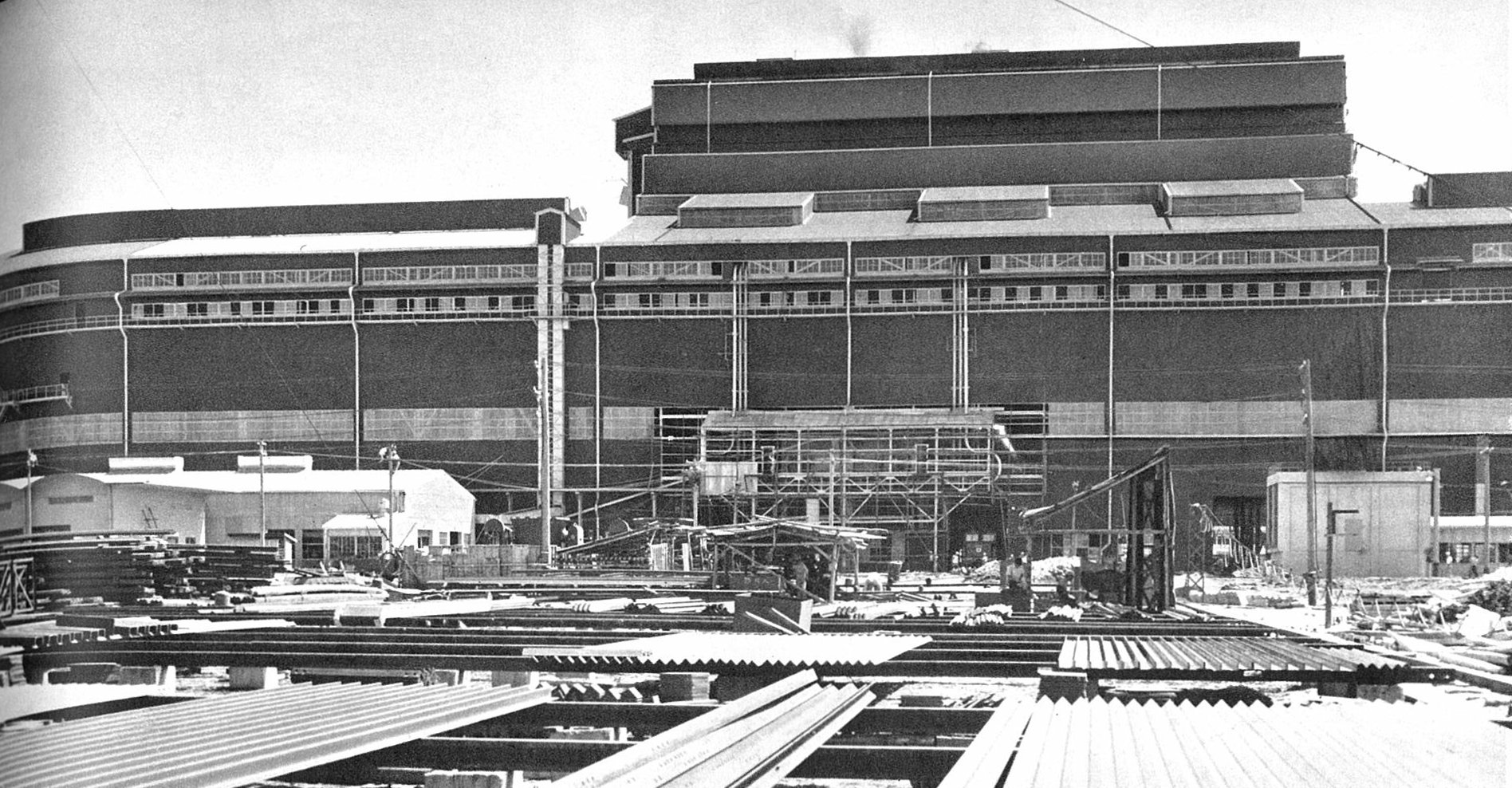 5-13: Yawata Steel Tobata Converter Plant (now Nippon Steel & Sumitomo Metal Yawata Works) Showa 34 (1959)
A Factory Project That Cultivated a Variety of Skills
During the prewar era of the Hasebe & Takekoshi Architectural Firm, while the firm worked on projects such as the Osaka Stock Exchange and the main building of Nippon Life Insurance’s headquarters, it also accumulated a track record in designing numerous factories, including Sumitomo Metal Industries’ domestic steel mills, steel pipe factories in Fengtian (now Shenyang) and Anshan in Manchuria,factory plants for Sumitomo Electric Industries, and even the Maizuru Naval Arsenal—a military munitions facility—among many other industrial facilities.In the early postwar years, shortly after Nikken Sekkei Construction became independent, nearly half of its work consisted of factory projects—such as steel mills—that emerged alongside the period of rapid economic growth, building on the firm’s prewar experience in factory construction. This track record in factory projects has been carried forward into the Nikken Group’s current design of production and distribution facilities, and it also serves as the “roots” of the following three points.
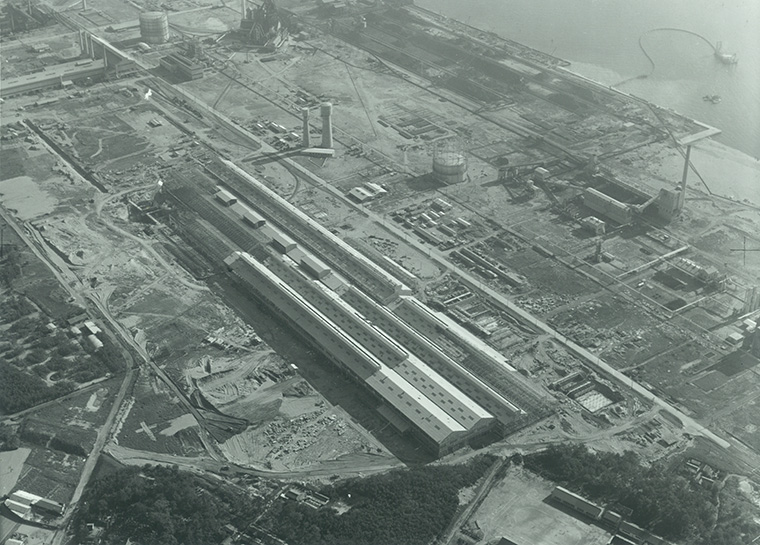 5-14 Sumitomo Metal Industries Wakayama Steel Works (now Nippon Steel & Sumitomo Metal Wakayama Steel Works) Showa 40 (1965)
1. Structural design of tower buildings and skyscrapers, such as the TOKYO SKYTREE℠
The converter plant at the steelworks stood over 60 meters tall at its highest point. It required structural design expertise—such as the weldability of extremely thick steel plates and techniques for erecting and joining large structural members—and the technical level involved was on par with that required for the structural design of skyscrapers and tower buildings.Furthermore, foundation design techniques for dealing with the ground were honed through the design of these plants. One of the key “roots” of today’s structural design technology can be traced back to industrial buildings such as steel mills.
2. Kansai International Airport Co.,Ltd. Project Management for Terminal Buildings, etc.
At the steelworks, which spans approximately 500 meters in length, project management was essential to integrate a wide range of individual elements—such as massive crane girders aligned with the extensive building structure and civil engineering foundations for complexly arranged converters—into a cohesive whole.This project management experience was subsequently applied to numerous large-scale projects, including the Kansai International Airport Co.,Ltd. Terminal Building and the restoration of the Goeido Hall at the Higashi Hongan-ji Shin Buddhism Main Temple.
Today, this track record in project management has become one of the “roots” of the entire Nikken Group, starting with Nikken Sekkei’s Architectural Design Department and Project Development Division, and extending to Nikken Sekkei Construction Management, Nikken Sekkei Civil, and Nikken Sekkei Management Solutions.
Today, this track record in project management has become one of the “roots” of the entire Nikken Group, starting with Nikken Sekkei’s Architectural Design Department and Project Development Division, and extending to Nikken Sekkei Construction Management, Nikken Sekkei Civil, and Nikken Sekkei Management Solutions.
3. Overseas Projects, Including Those in China and Other Countries
After the war, Japanese steel manufacturers were actively pursuing turnkey contracts for the construction of overseas steel mills. Nikken Sekkei, however, was commissioned to design the plant buildings based on its track record with overseas projects from before the war. These overseas steel mill projects marked the beginning of Nikken Sekkei’s overseas projects.
The company’s involvement in numerous projects—such as the Malaya Wata Steel Works in Malaysia, the Baoshan Steel Works in Shanghai, and the Minas Gerais Steel Works in Brazil—laid the foundation that later enabled it to secure large-scale projects like the China World Trade Center in Beijing. Today, this experience continues to drive many overseas projects, particularly in China and other countries.
The company’s involvement in numerous projects—such as the Malaya Wata Steel Works in Malaysia, the Baoshan Steel Works in Shanghai, and the Minas Gerais Steel Works in Brazil—laid the foundation that later enabled it to secure large-scale projects like the China World Trade Center in Beijing. Today, this experience continues to drive many overseas projects, particularly in China and other countries.
-
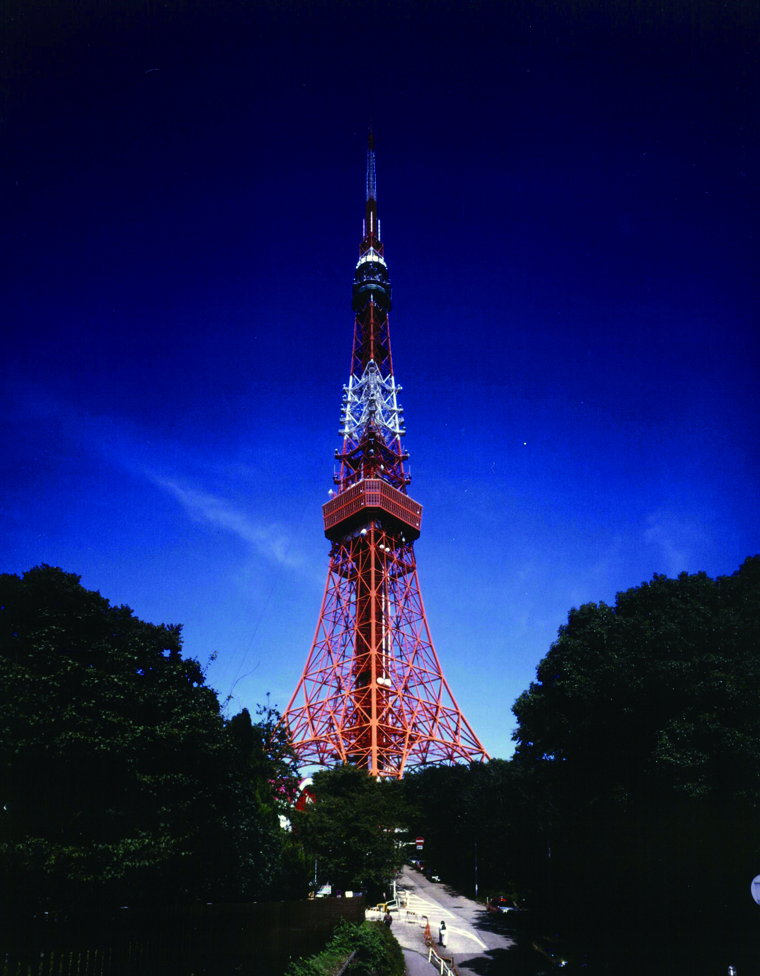 5-15 Tokyo Tower, Showa 33 (1958)
-
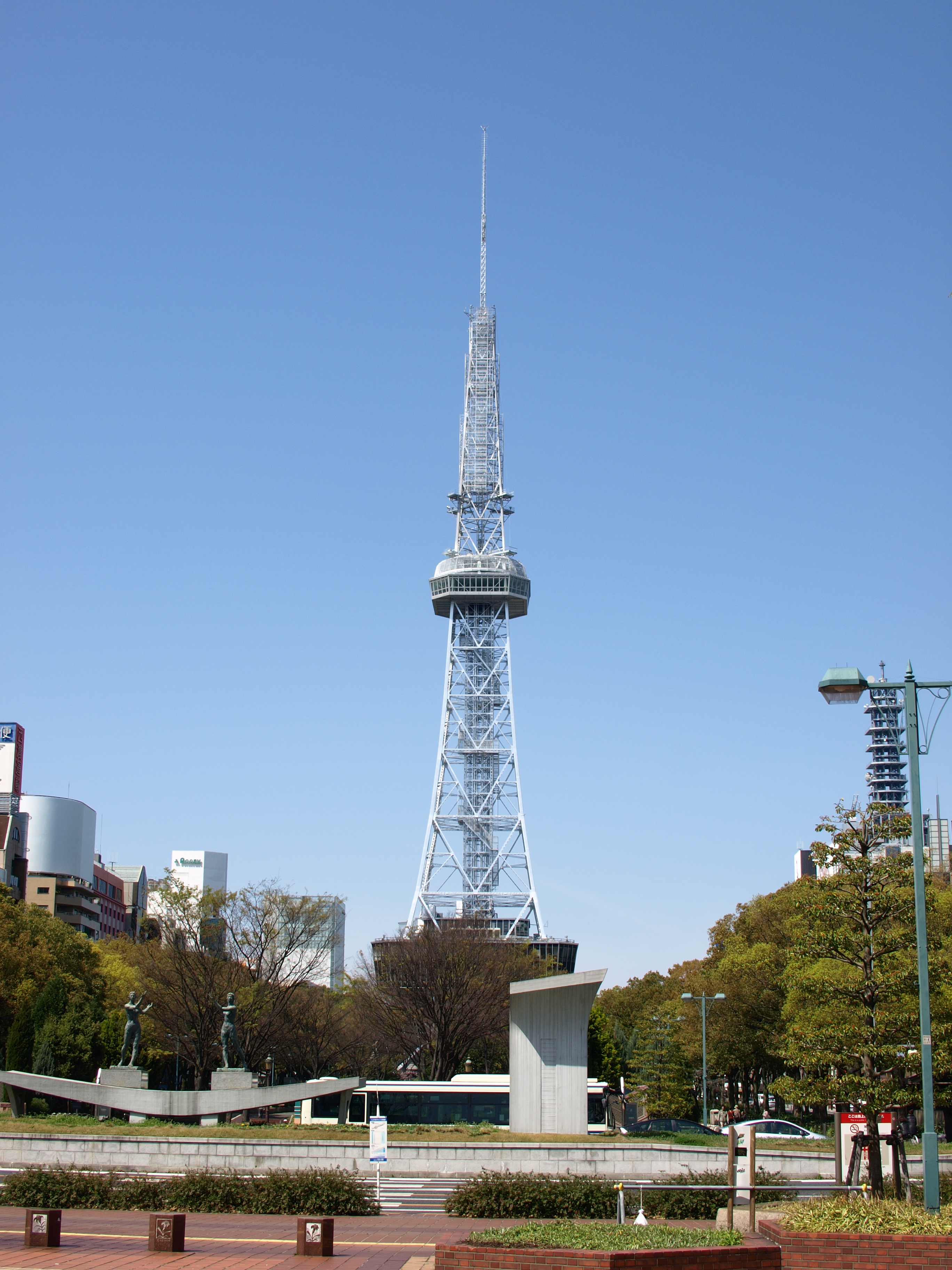 5-16 Nagoya TV Tower, Showa 29 (1954)
-
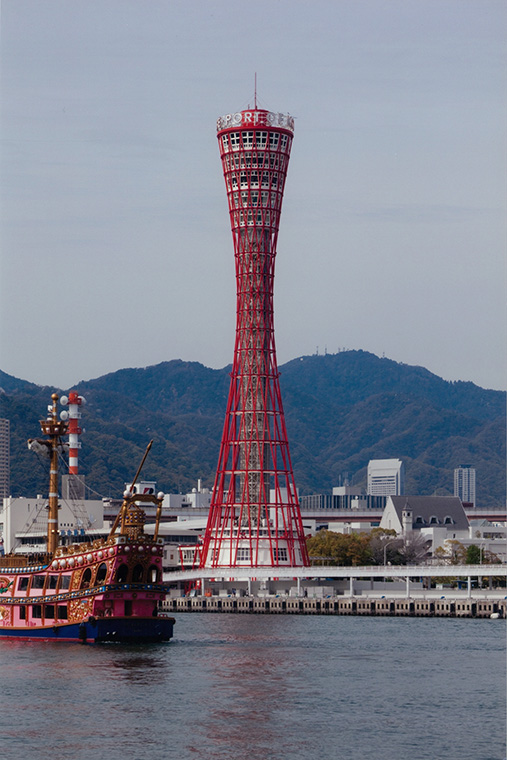 5-17 Kobe Port Tower, Showa 38 (1963)
Note: For the Tokyo Tower and Nagoya TV Tower, we carried out the basic design, detailed design, and design supervision under the guidance of Dr. Tachū Naito.
Questions for the Future
In the challenging years following World War II, when Nikken Sekkei became independent from Sumitomo, the firm actively expanded into a wide range of fields beyond steel mills.As a result, we have evolved into a group of professionals capable of delivering top-tier work in each of these fields. This can be attributed to the sincere efforts of our predecessors in addressing the diverse challenges of their respective eras. As heirs to this legacy, we continually ask ourselves, “What does the present era require?”
(References)
Nikken Sekkei (2000), *The Art of Design: 100 Years of Nikken Sekkei*, Nikken Sekkei
Nikken Sekkei (2000), *The Art of Design: 100 Years of Nikken Sekkei*, Nikken Sekkei
Source
5-13 Nikken Sekkei (1970), *Twenty Years of History*, Chuo Koron Jigyo Publishing
5-14 Nikken Sekkei Construction (1962), *10th Anniversary Project Collection*, Nikken Sekkei Construction
5-16 Courtesy of Nagoya TV Tower Co., Ltd.
5-17 Courtesy of: Kobe Port Promotion Association (incorporated association)
5-13 Nikken Sekkei (1970), *Twenty Years of History*, Chuo Koron Jigyo Publishing
5-14 Nikken Sekkei Construction (1962), *10th Anniversary Project Collection*, Nikken Sekkei Construction
5-16 Courtesy of Nagoya TV Tower Co., Ltd.
5-17 Courtesy of: Kobe Port Promotion Association (incorporated association)