

5-4 The Establishment of the Civil Engineering Division and the Work of the U.S. Army’s Japan Construction Headquarters
In Showa 19 (1944), the Hasebe & Takekoshi Architectural Office—a separate entity within Sumitomo—and Osaka North Port Co., Ltd. were merged in accordance with the government’s “Corporate Reorganization Order.”
After the war, this merger gave rise to two unexpected sources of vitality. One was the birth of the “Trading Division,” which would later become Sumitomo Corporation; the other was that Nikken Sekkei Construction came to possess a “Civil Engineering Division.”
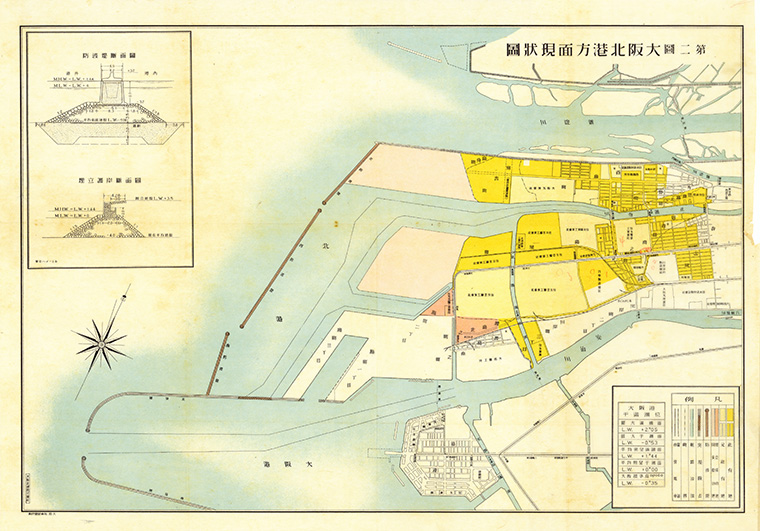 5-18 Map of the Osaka North Port Area
In 2001, 82 years after the establishment of Osaka North Port Co., Ltd., Universal Studios Japan opened in the central portion of the map shown above.
Universal Studios Japan opened.
We handle everything ourselves—from soil and ground surveys to structural design.
As mentioned in the previous article, factory design accounted for nearly half of Nikken Sekkei Construction’s work in the postwar period, and that track record has played a significant role in the development of today’s Nikken Sekkei. Civil engineering design—such as land development and foundations for heavy machinery—is essential for constructing vast steel mills.Large-scale factory projects require a system capable of carrying out architectural and civil engineering work in an integrated manner; it was precisely because Nikken Sekkei Construction had a civil engineering department that it was able to design and supervise steel mills and survive the harsh postwar era.
-
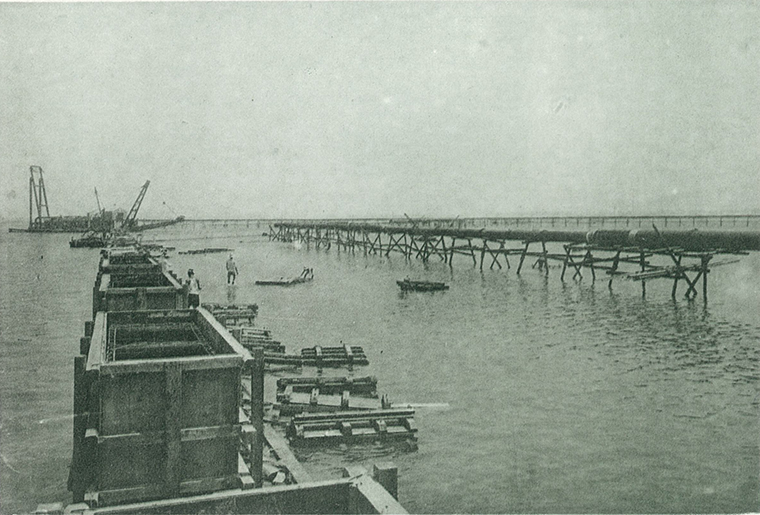 5-19 Osaka North Port Construction Project: Landfill Work
-
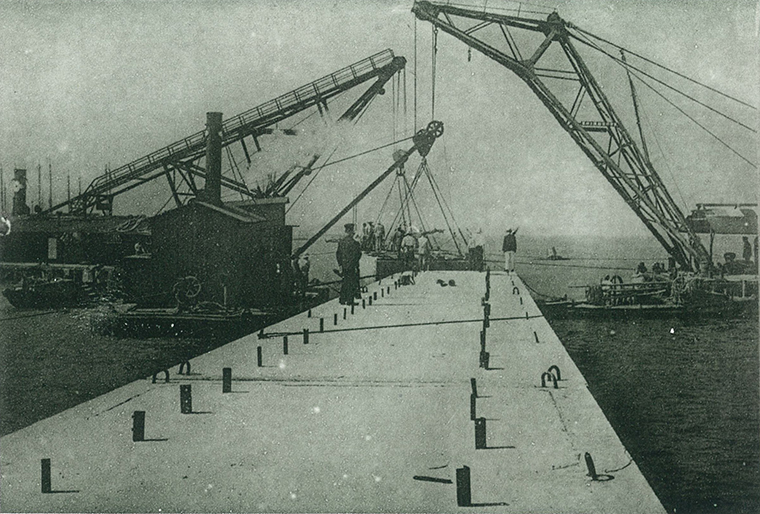 5-20 Osaka North Port Construction: Installation of Caissons
-
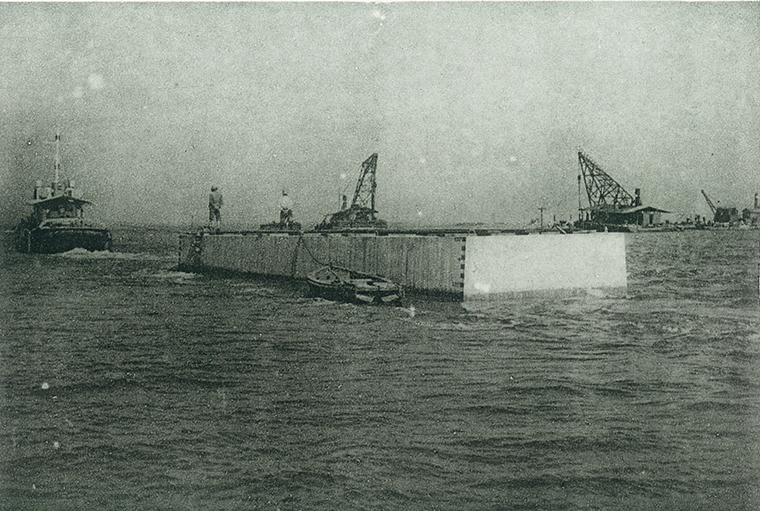 5-21 Osaka North Port Construction: Towing of Caissons
From my work at the U.S. Forces Japan Construction Agency (JCA)
The JCA required that the project be carried out using an American-style project management approach, involving a mixed team of civil engineering, architectural, and facilities specialists. This approach served as the foundation for Nikken Sekkei Construction’s formalization of its project manager system in 1962.Furthermore, the JCA required that drawings and specifications be prepared in English in accordance with U.S. military design standards. Through this work conducted in English, the company absorbed new technologies from the United States and incorporated them into the content and structure of its design specifications. The experience gained from these JCA projects also served as the foundation for building an organizational structure that allows the company to approach many of its current overseas projects with ease.
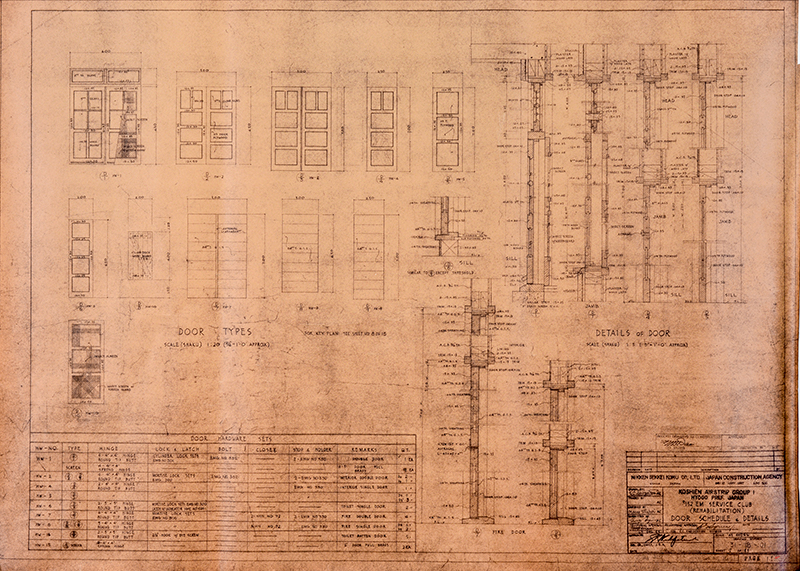 5-22 Example of JCA Project Drawings
There is a JCA “Approval” signature in the lower right corner.
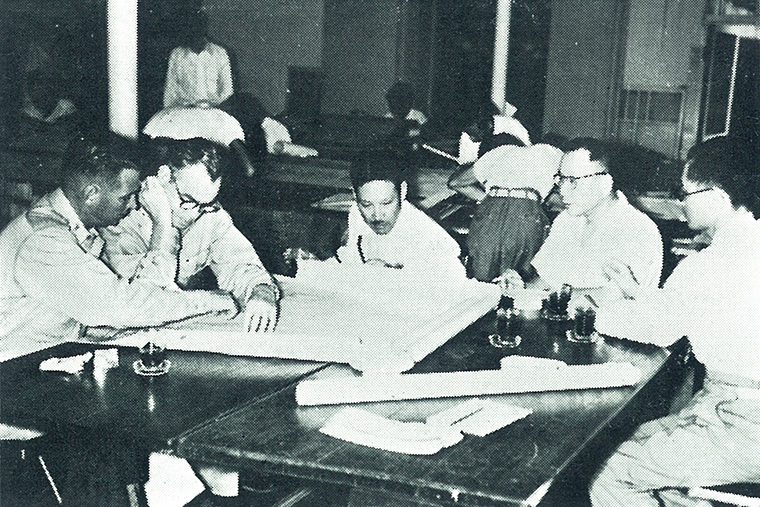 5-23: A scene from a meeting with the JCA
In the center is Hisasuke Ozaki, the first president of Nikken Sekkei Construction (President and CEO).
“Diversity”: The Nikken Group’s “The Power of Diversity”
“Diversity” is one of the sources of the Nikken Group’s “strength.”
In 2001, the civil engineering division was spun off as Nikken Sekkei Civil. It undertakes industrial infrastructure development projects in the private sector, as well as the design of urban spaces and underground shopping districts related to social infrastructure. Today, the company is also involved in urban development projects around the world, including in China and Vietnam.
-
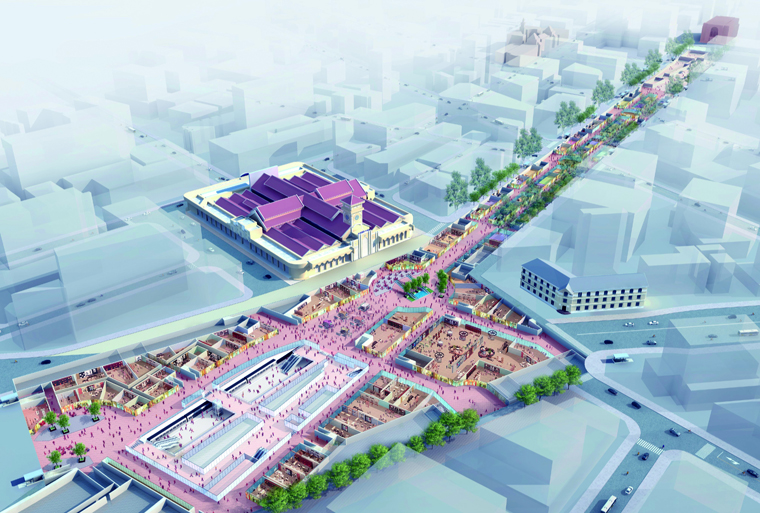 5-24 Ho Chi Minh City, Vietnam (Plan Formulation: 2012)
Preliminary Feasibility Study for the Comprehensive Development Project in the Area Surrounding Ben Thanh Station: A plan to create an attractive and vibrant underground space in the area surrounding Ben Thanh Station on Ho Chi Minh City Urban Railway Line 1, including the creation of an atrium connecting the platform to the street level. -
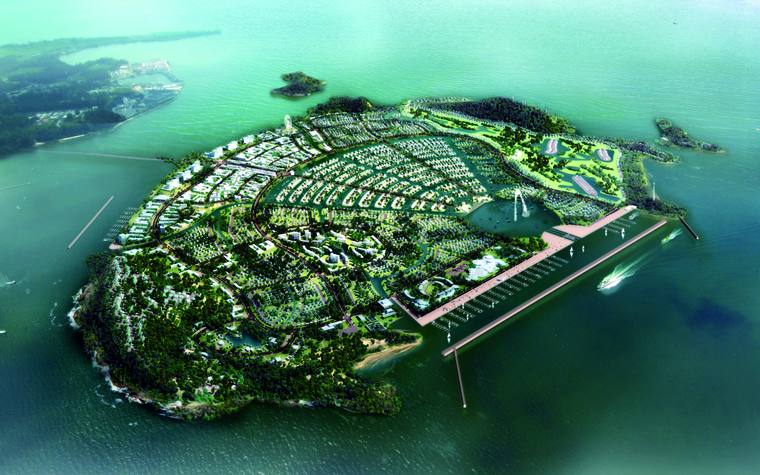 5-25 Tokai Meishu Island Concept Plan (Location: Ningbo) (Plan Formulated in 2007)
This plan aims to create a high-quality resort island rich in marine resources that coexists with the existing natural environment, utilizing technologies such as large-scale land reclamation covering approximately 800 hectares and water exchange in inland water bodies.
Takayuki Hashimoto (1999), *From 13 Kitahama 5-chome*, Sogensha
Nikken Sekkei Civil Engineering Website
Ota, Kyujiro (1941), *A Twenty-Year History of Osaka North Port*, Osaka North Port Co., Ltd.
5-18–21, 1941, *A 20-Year History of Osaka North Port*, Osaka North Port Co., Ltd.
5-22: Yoshifusa Funakoshi (1968), *Kusuke Ozaki: His Life and Achievements*, Nikken Sekkei Construction Co., Ltd.