

11-4 Together with People in Contemporary Islamic Societies
Muslims sympathize with the fact that Japanese society—which, like Islamic society, originated from a non-Western civilization—has built economic power and technological standards on par with Western countries while preserving its traditional culture. Here, we highlight two projects related to Islamic finance that were carried out with respect for Islamic culture.
Islamic Development Bank Headquarters Building — A Symbol of Mutual Aid —
In Showa 46 (1971), the Organization of Islamic Cooperation (OIC), which unites Islamic nations, was founded, and one of its key challenges became the integration of norms and economic principles based on Islamic doctrine, known as Sharia.In Showa 48 (1973), the Islamic Development Bank—which serves as the cornerstone of a mutual aid system based on Sharia—was established, and it currently provides development assistance to more than 50 Islamic countries.Its headquarters are located in Jeddah, Saudi Arabia’s second-largest city, which is known as a stopover for pilgrims traveling to the holy city of Mecca and has prospered as a trading port on the Red Sea.
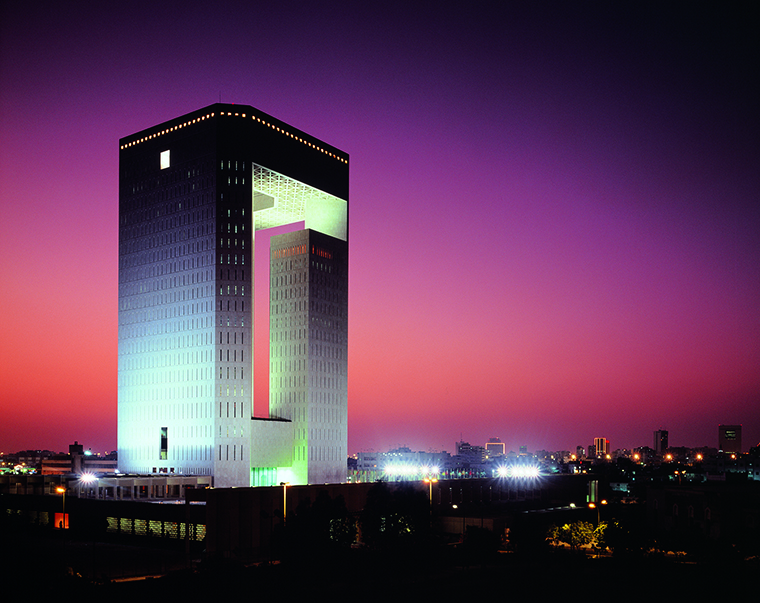 November 24—Islamic Development Bank Headquarters Building, Heisei 5 (1993)
The building consists of two wings—the bank headquarters and the research and training center—that are integrated under a single large roof. Looking up at the main roof from the light court enclosed by the two wings, one notices the symbolic skylight, which resembles openwork carving featuring Islamic motifs.The design theme centers on the thick exterior walls with few openings—a hallmark of Islamic architecture—and the expansive spaces opening onto the inner light court; elements unique to Islamic architecture, such as spatial concepts and traditions, are reflected throughout the structure.The sculptural appearance of the building, created by the interplay of deep shadows and light, not only serves as a regional landmark but also stands as a symbol embodying the important concept of “mutual aid” that underlies Islamic society as a whole.
-
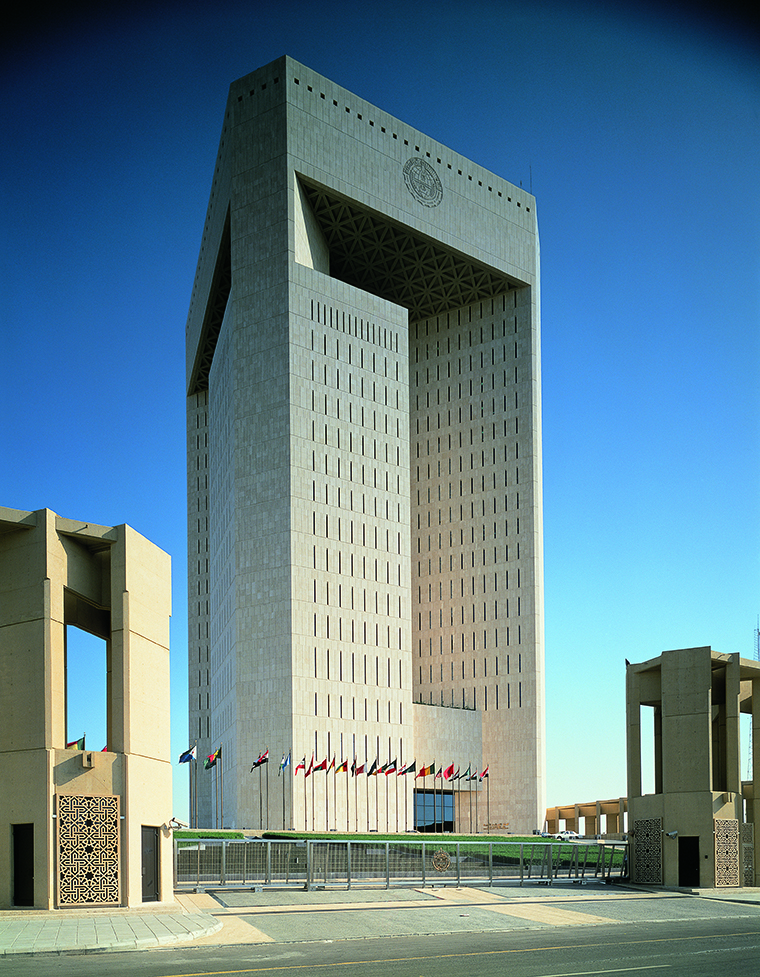 11-25 The entire building creates deep, dramatic shadows and serves as a local landmark.
-
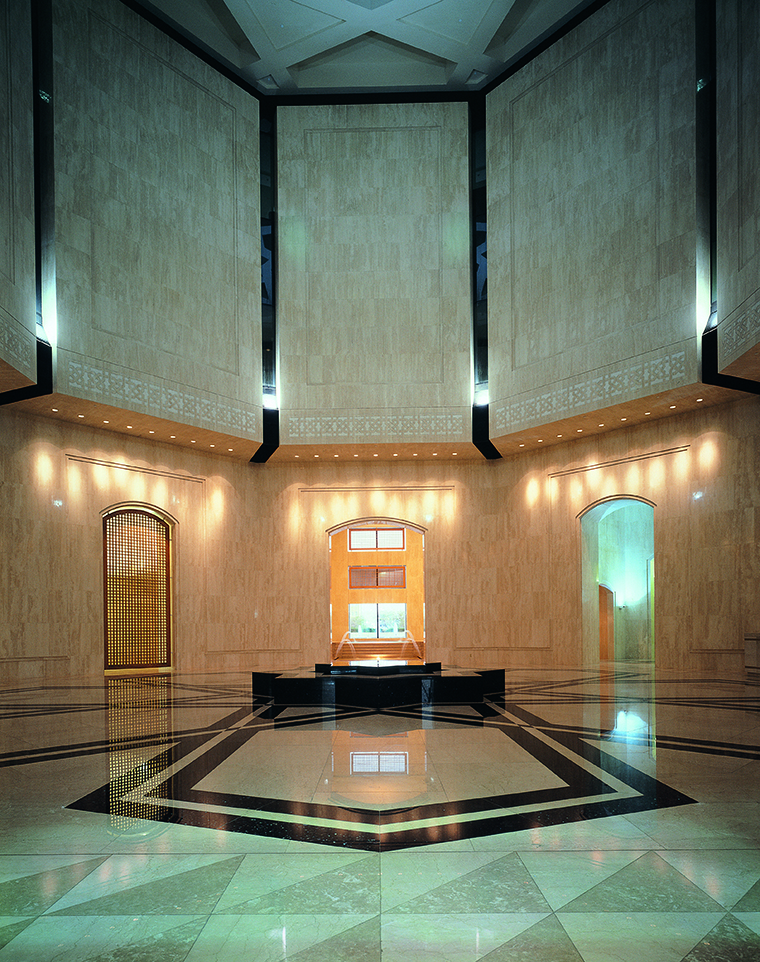 11-26: An entrance hall with a tranquil fountain in the center. In Islamic culture, water is a symbolic element that evokes the image of “Paradise.”
-
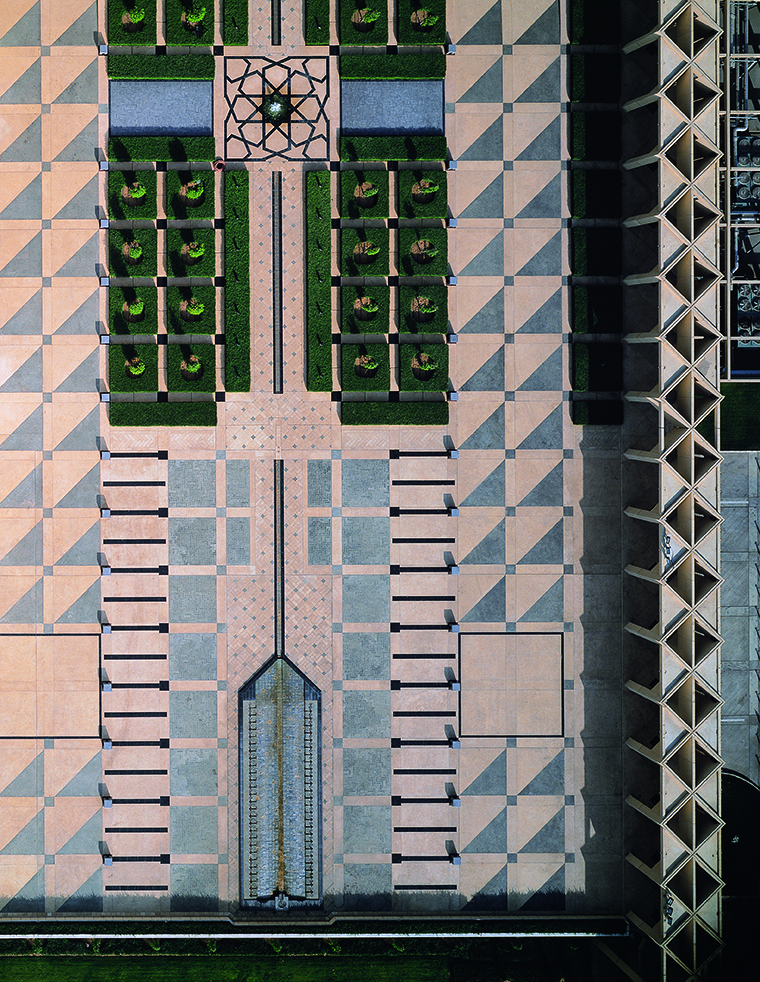 Nov. 27: An Islamic-style colonnade called a “riwaq” (right) and a garden featuring geometric patterns
-
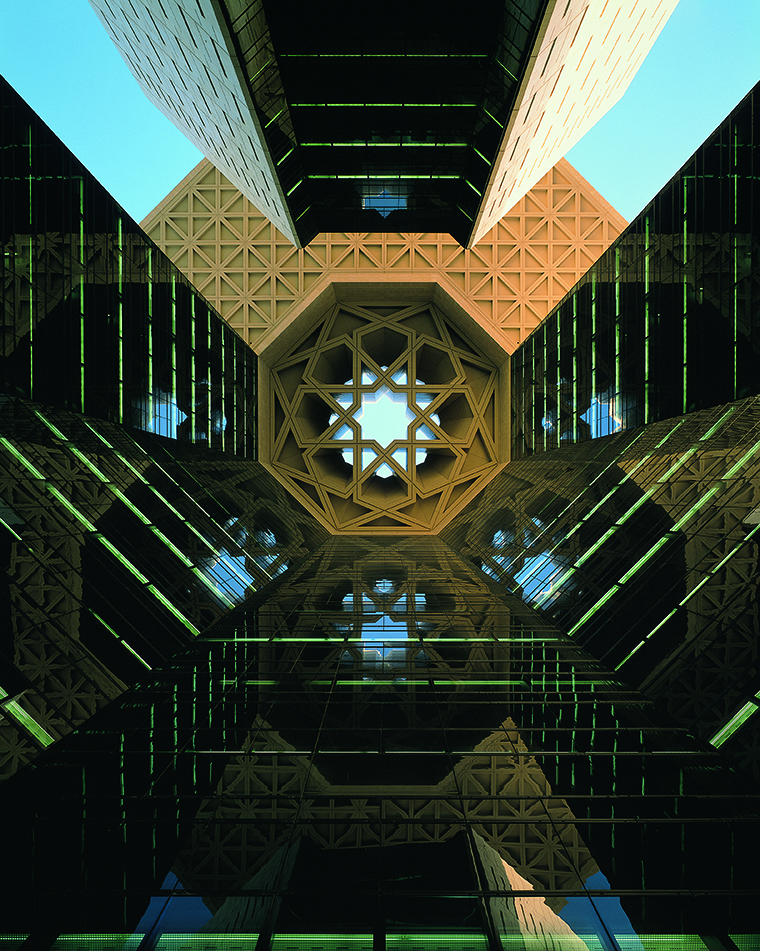 11-28: Looking up from the light courtyard at the roof with its Islamic-patterned skylights.
Tadawul Tower (Saudi Stock Exchange)
-
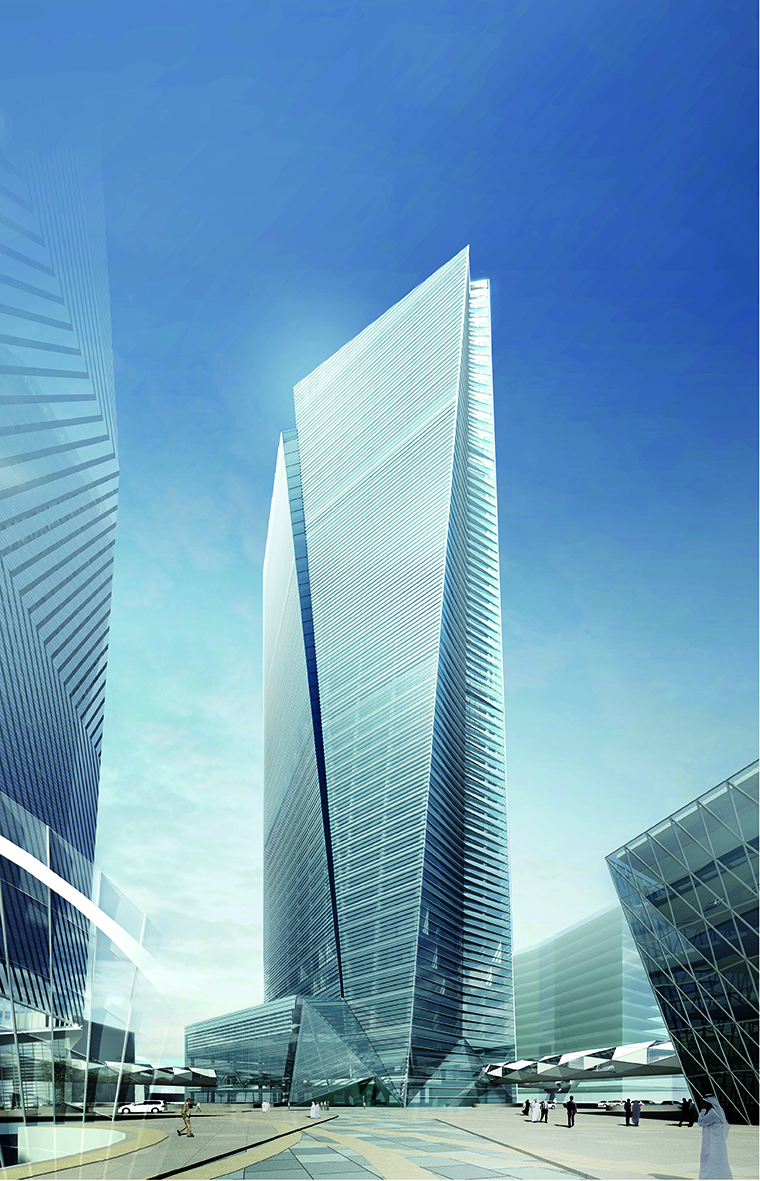 November 29, Tadawul Tower (Saudi Stock Exchange)
Scheduled for completion in Heisei 28 (2016) -
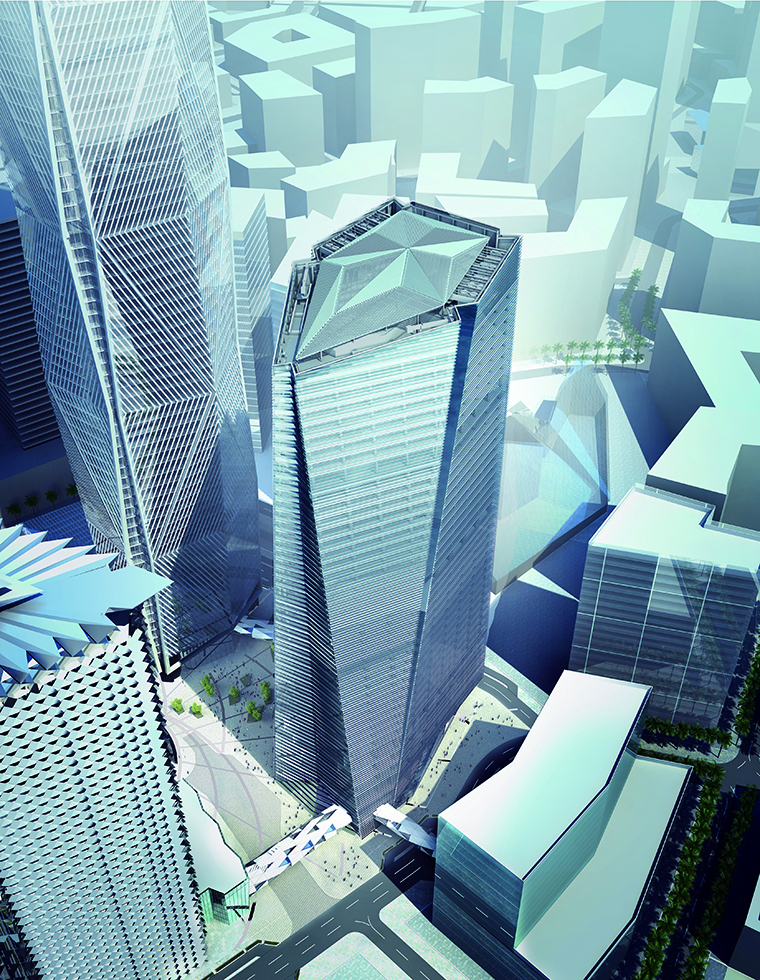 11-30: The top floors—floors 35 through 41—house the Tadaur headquarters, centered around an atrium featuring a waterfall. The top section, known as “CROWN,” directs controlled light into the atrium.
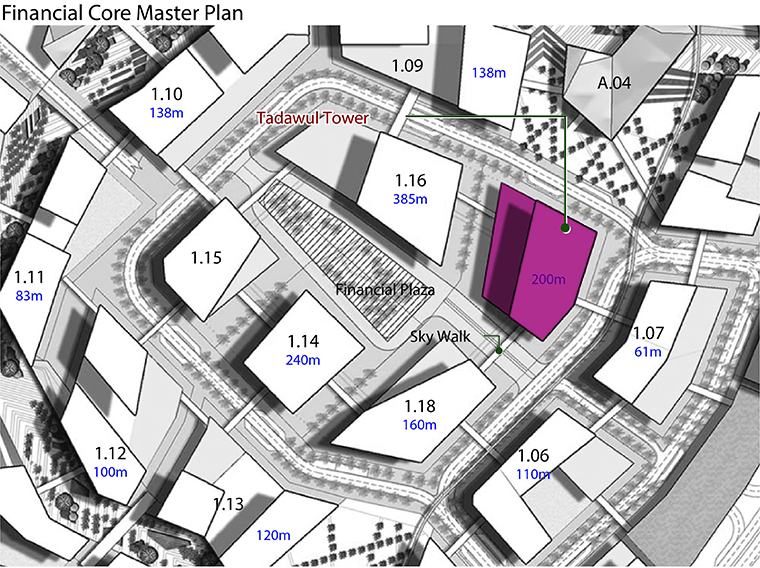 11-31 KAFD Central District Master Plan. The red mark indicates the Tadawul Tower.
Tadawul Tower, which incorporates a variety of architectural techniques, is a sustainable building that—combined with environmental technologies such as advanced control systems for various facilities—is scheduled to achieve LEED (U.S. green building standard) GOLD certification.
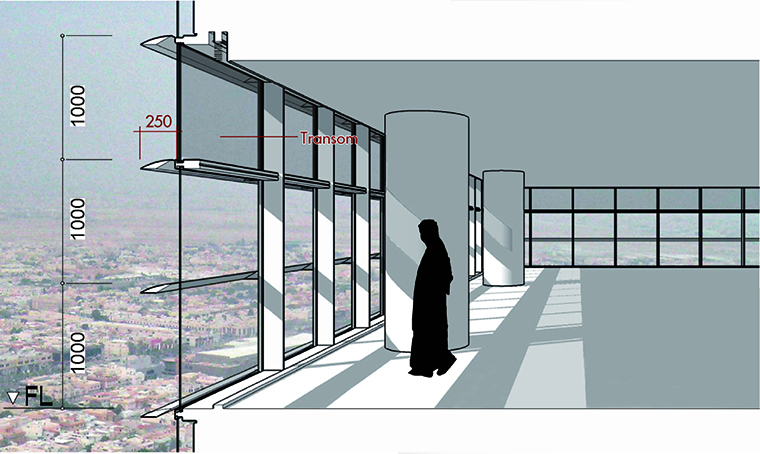 11-32: The window surrounds of the curtain wall feature Low-E glass with high thermal insulation performance. The horizontal fins create subtle shadows. Additionally, Low-E glass with even higher thermal insulation performance is used in the transom section above the windows.
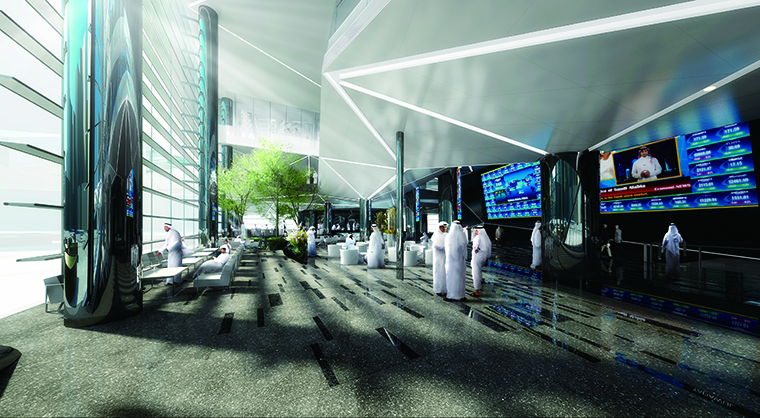 11-33: The Tadauru Forum—Where You Can Easily Access Financial Information
Inazō Nitobe (translated by Tatsuya Naramoto) (2009), *Reading "Bushido" in English and Japanese*, Mikasa Shobō
Toshihiko Izutsu (1982), *Islamic Culture: Its Foundations*, Iwanami Shoten
Ritsu Miyata (2001), *Trends in Contemporary Islam*, Shueisha Shinsho
“Islamic Development Bank Website” (2014)
“Tadawul Website” (2014)
November 24–28; Photo by Richard Bryant