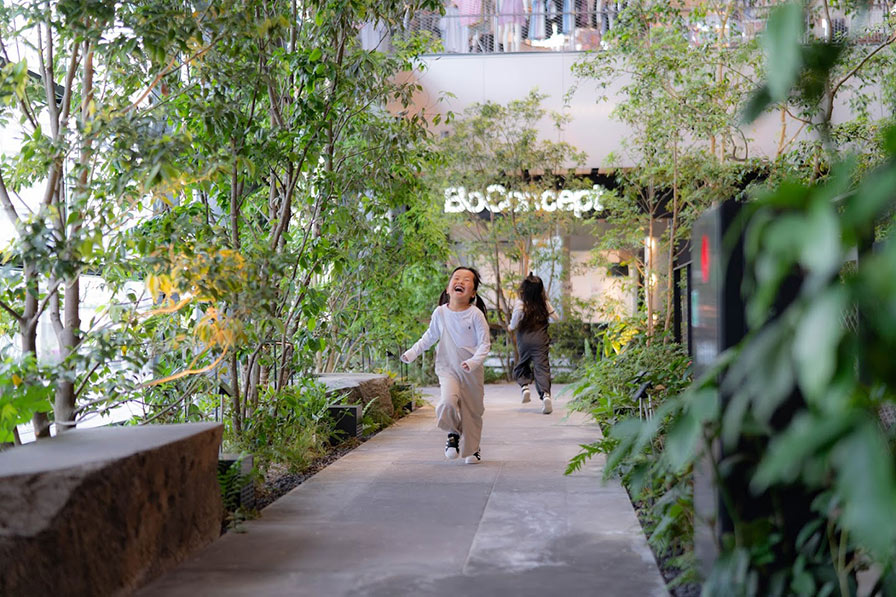

Biophilic design project accomplished through the collaboration among diverse experts
JR Kumamoto Station Building: “Water and Green Vertical Garden”

Scroll Down

The JR Kumamoto Station Building was completed in April 2021 in front of JR Kumamoto Station, the major railway terminal in Kyushu. The project, which incorporates the “biophilic design” approach used in places such as Singapore's Changi International Airport, won the 2022 Stephen R. Kellert Biophilic Design Award, hosted by the International Living Future Institute. How was this large-scale indoor garden, which is said to be unprecedented both in Japan and abroad, created? We will introduce the process.

CATEGORY

A story of water that begins in Aso and circulates

The term “biophilic” is a coined word that combines “bio,” meaning “life,” and “philia,” meaning “love.” The term “biophilic design,” which has attracted attention in recent years, refers to a design method that enriches people's lives by incorporating elements of nature into their immediate surroundings.

The initial request for the JR Kumamoto Station Building Project was to create a “three-dimensional garden of water and greenery” that would make people feel the “Kumamoto-ness” of the area the moment they stepped off the train. Kumamoto has long been known as the “Land of Fire,” but Kumamoto City is also the “Land of Water,” with all the tap water used by the citizens of the city being supplied by groundwater. This is how the concept of a landscape that expresses the flow of water from Aso to the city of Kumamoto was born.
© Nikken Sekkei

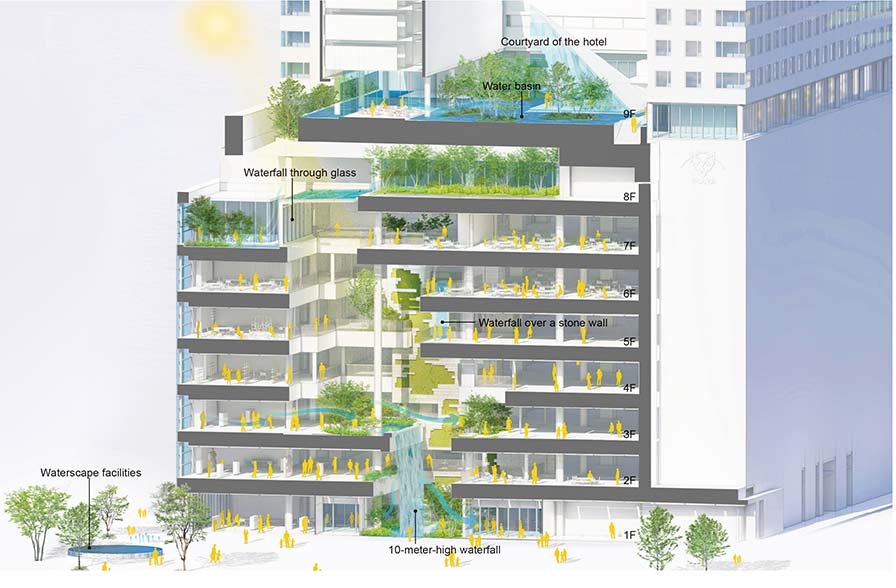
The building is made up of the commercial facility “Amu Plaza Kumamoto” from the 1st to 8th floors, and the hotel “THE BLOSSOM KUMAMOTO” from the 9th to 12th floors. In the courtyard of the hotel on the 9th floor, there is a water basin with a motif of the Aso spring water, and the water that gushes out of it flows down the glass and stone walls of the facility and flows into a 10 m wide, 10 m high waterfall with a motif of Nabegataki Falls, a famous spot in Kumamoto. Furthermore, there are fountains and springs scattered around the station square, creating a continuous public space from the building's interior to the outdoors.

Illuminance simulation to create an environment close to nature
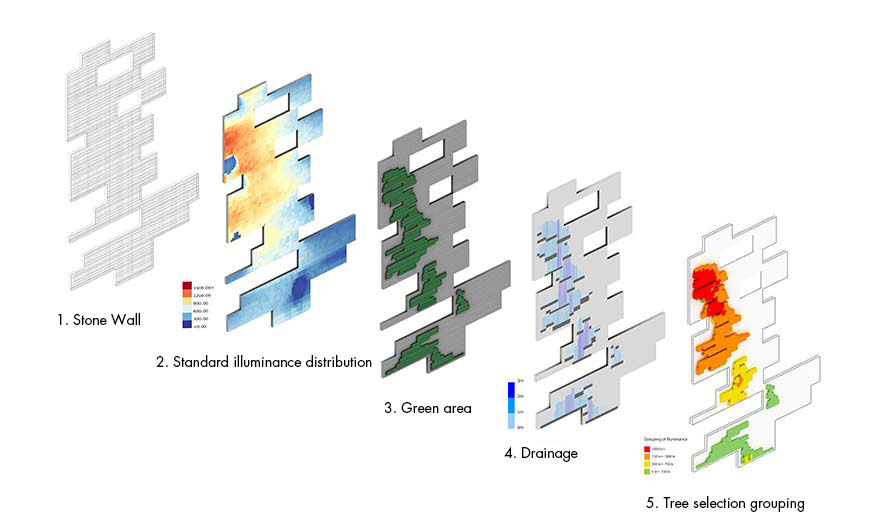
The building has a seven-story atrium, and the arrangement of the approx. 50 different types of plants was decided through daylight simulation. The first challenge in embodying “Kumamoto-ness” was how to bring in light and arrange the rich greenery of Kumamoto indoors. Illuminance simulation was also carried out for the 30-meter-high stone wall that lets in natural light from the skylight, and by choosing a location that would receive more light, we were able to achieve wall greening close to nature.

Vertical garden arrangement program
© Nikken Sekkei DDL
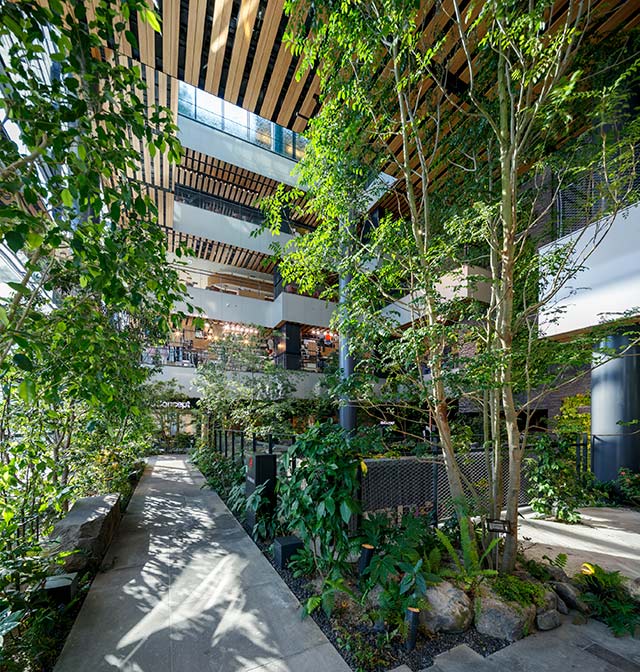
In indoor greening, which usually uses plants that grow in tropical and subtropical regions, the fact that we have chosen as many plants as possible that are native to Kumamotowas also a great challenge. Furthermore, we have incorporated many local characteristics, such as using Kumamoto-produced cedar for the ceiling material and using stone made from hardened volcanic ash from Aso for parts that come into contact with water and greenery.

© SS Co., LTD.

Three years have passed since the completion of the project, and it is possible to see that the plants have grown to over two meters in height, ferns have spread to the waterfront, and the plants are reading the indoor environment and approaching a more natural landscape.

One of Nikken Sekkei's strengths is that we can work across different fields as a single team
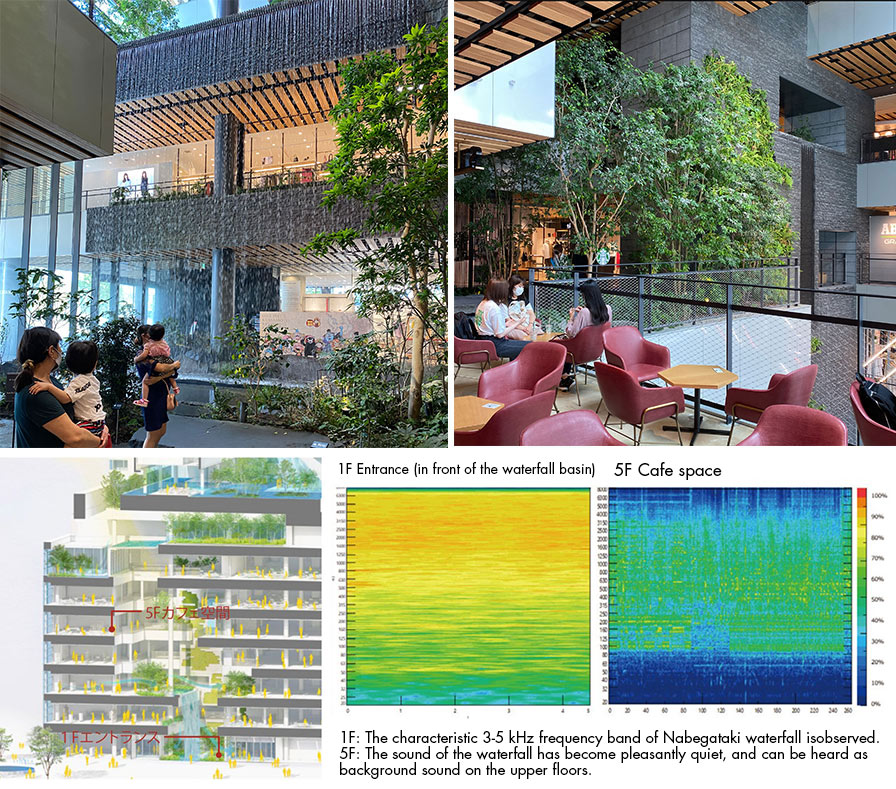
Another challenge was dealing with the sound. When a waterfall 10 meters high is made to fall inside a room, it makes a very loud noise, so we controlled the sound by making the waterfall's mouth into a slit and reducing the amount of water flowing through it. By making several mock-ups and repeating simulations, we were able to create a sequence of sounds that visitors would find pleasant. The sound is powerful on the first floor, but gradually fades as visitors move up the floors.

The 1st floor entrance, where visitors can experience the powerful sound of the waterfall, and the 5th floor cafe, where visitors can enjoy the pleasant sound of the waterfall. © Nikken Sekkei, © Nikken Sekkei Environmental Design Team

There are few examples in Japan of such a large-scale natural environment being incorporated into a building in three dimensions, and the site was full of firsts. In addition to the issues of light and sound, there were also many technical hurdles to overcome, such as waterproofing and the load on the building structure.

The reason we were able to overcome such a difficult project was that we had a diverse range of experts on hand, including architects and landscape architects, as well as environmental design teams for sound, light, temperature and humidity, and computer simulation teams. The fact that we were able to bring all these people together as one team and collaborate across different fields is a strength that can only be found at Nikken Sekkei.

A design that integrates the inside and outside, which is also essential for urban development
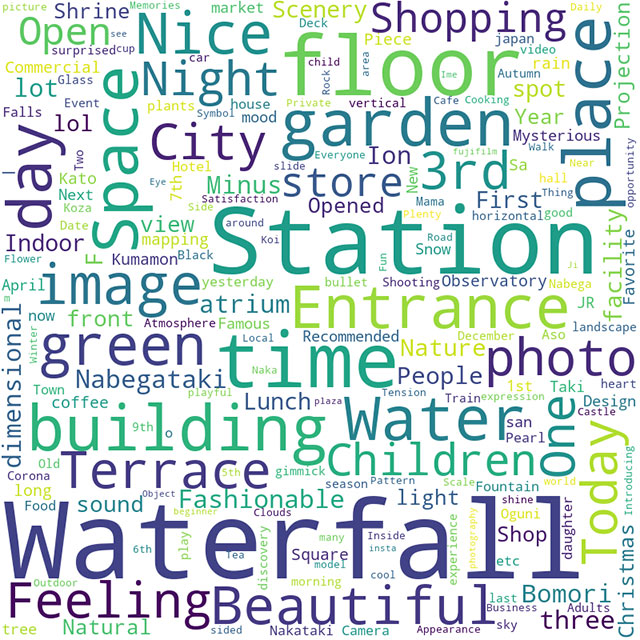
Nowadays, there are many people of various ages and backgrounds who gather here, such as workers who concentrate on their work in the café, children who run around in the greenery, and families with babies who listen to the sound of the waterfall. Data from SNS (Instagram) analysis also shows that keywords such as “waterfall,” “water” and “garden” appear frequently, indicating that visitors experience and share the nature of Kumamoto.

@ Nikken Sekkei Research Institute

In the JR Kumamoto Station Building Project, Nikken Sekkei integrated landscape design and architecture by analyzing the lighting, sound and thermal environments. When we talk about “biophilic design,” people tend to focus only on indoor greening, but the most important thing is the landscape design that unifies the interior and exterior.

© KOO-KI

How can we incorporate pleasant public spaces and greenery into places where natural light shines? This is now an essential element in many developments, not just in the city center. As we continue to operate, we should be able to clarify data such as indoor greening maintenance and the optimal amount of greenery for feeling nature.

We will feed this knowledge back into other projects. Furthermore, we will visualize the value that biophilic design brings to both people and buildings, and how we can create green-filled architectural and urban spaces. We believe that these are the major issues we should be tackling in the future.
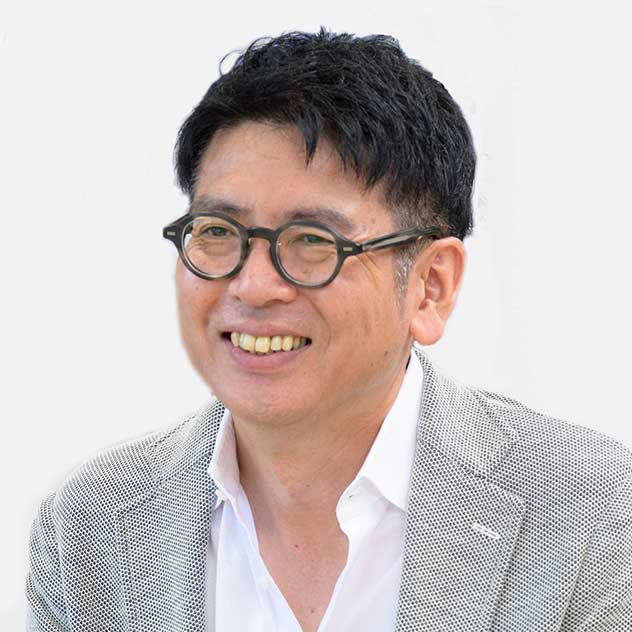

  • Yoshiaki Komatsu

    Yoshiaki Komatsu

    Executive Officer
    Principal, Landscape Design Group, Urban and Civil Project Department

    Since joining Nikken Sekkei, Yoshiaki Komatsu has actively participated in landscape design projects for offices, educational facilities, hotels, commercial complexes, etc., as well as environmental architecture that utilize specialized greening techniques and biophilic design projects. He strives to create landscapes unique to each region and location, working to develop pleasant spaces that enrich people's lives. He is a recipient of numerous landscape and environmental awards, including the IFLA AAPME Award, the Japan Institute of Landscape Architects Award, and the Good Design Award. He is a certified engineer, Registered Landscape Architect (RLA), and a certified arborist. He also lends his time as a part-time lecturer at Kindai University, and as a design workshop instructor at Osaka Metropolitan University.

  • Yuki Iwata

    Yuki Iwata

    Associate
    Landscape Design Group, Urban and Civil Project Department

    Since joining the company, she has worked on a wide range of projects both in Japan and overseas, including landscape design for public facilities, offices, schools and commercial facilities.
    She specializes in spaces that combine beauty and functionality, and she strives to create designs that harmonize with the atmosphere of the town, while also taking into account its history.
    She has received the Japan Institute of Landscape Architects Award, the Japan Society of Civil Engineers Design Award, and the SABED Environmental Simulation Design Award.
    She is a first-class architect and a first-class landscape construction management engineer. She is also a part-time lecturer at Kobe University.

This website uses cookies. By continuing to use this website, you agree to the use of cookies. Our cookie policy.