

Using the “Green Ruler,” we comprehensively and visually evaluate and visualize the environmental value of GRAND GREEN OSAKA
xml-ph-0000@deepl.internal’s environmental value is comprehensively and visually assessed and visualized
Promoting urban development that harnesses the power of nature and contributes to addressing environmental challenges
PRESS RELEASE
2024.07.17
Nikken Sekkei Ltd. (Headquarters: Chiyoda-ku, Tokyo; Representative Director President and CEO: Atsushi Omatsu; hereinafter “Nikken Sekkei”) is responsible for the overall design coordination of the “GRAND GREEN OSAKA” project—scheduled to open in phases starting September 6 of this year—in addition to its landscape and architectural design and urban planning.As part of this effort, the firm has recently developed a methodology to comprehensively and visually evaluate the environmental value provided by greenery and to visualize its essential role.As an initiative to restore high-quality green spaces to the city, this project aims to create a society that contributes to the global environment by evaluating the environmental value of green spaces—which has been difficult to quantify until now—using five indicators known as the “Green Yardstick” to present concrete numerical data and visual representations.
*In this press release, the terms “greenery,” “greening,” and “green” are used to refer not only to physically increasing the number of plants—such as through rooftop and wall greening—but also to the creation of green, open urban spaces that contribute to environmental conservation and the creation of a sustainable society.
*In this press release, the terms “greenery,” “greening,” and “green” are used to refer not only to physically increasing the number of plants—such as through rooftop and wall greening—but also to the creation of green, open urban spaces that contribute to environmental conservation and the creation of a sustainable society.
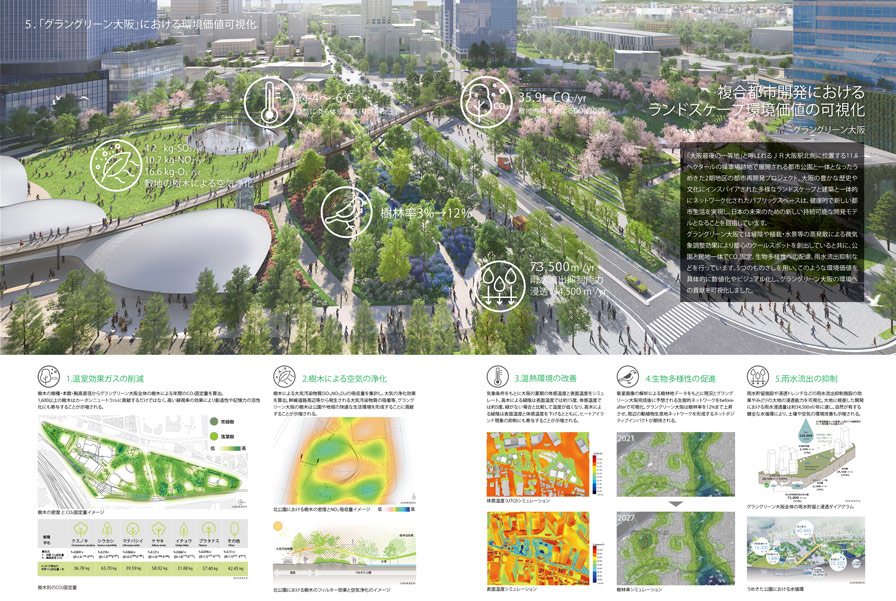 Figure 1. Evaluation results based on the “Green Ruler” (GRAND GREEN OSAKA)
Background of the Policy and Nikken Sekkei’s Initiatives
In recent years, amid growing calls for environmental stewardship—including the SDGs—global initiatives such as“30by30,” which aims to conserve biodiversity by 2030, and “Carbon Neutrality by 2050,” which aims to achieve carbon neutrality by 2050—efforts to halt global environmental problems are intensifying year by year as part of these worldwide initiatives.Amid this momentum, major global cities such as New York and Paris are reevaluating the value of “greenery” in urban development centered on public spaces like parks, recognizing that bringing abundant greenery back into cities can not only solve various environmental challenges but also lead to improved quality of life (QOL) and increased real estate values.
While the movement to bring “greenery” back to cities has become a global trend, the multifaceted value and quality of “urban greenery” have been difficult to communicate clearly to everyone. Consequently, the value that urban greening brings to people, society, and cities has often been obscured, making it hard to understand its benefits.
Therefore, based on a review of prior research and the environmental benefits of green spaces—such as reducing greenhouse gas emissions, purifying the air, improving the thermal environment, promoting biodiversity, and reducing stormwater runoff—Nikken Sekkei developed five indicators known as the “Green Ruler.”While comprehensive evaluation and analysis have historically been difficult, we anticipate that by concretely visualizing the environmental value of green spaces—using numerical data and visuals—from these five perspectives, the environmental contributions of greening will become clearer. This is expected to serve as a catalyst for promoting the introduction of high-quality green spaces that address environmental challenges from the perspective of urban development.
While the movement to bring “greenery” back to cities has become a global trend, the multifaceted value and quality of “urban greenery” have been difficult to communicate clearly to everyone. Consequently, the value that urban greening brings to people, society, and cities has often been obscured, making it hard to understand its benefits.
Therefore, based on a review of prior research and the environmental benefits of green spaces—such as reducing greenhouse gas emissions, purifying the air, improving the thermal environment, promoting biodiversity, and reducing stormwater runoff—Nikken Sekkei developed five indicators known as the “Green Ruler.”While comprehensive evaluation and analysis have historically been difficult, we anticipate that by concretely visualizing the environmental value of green spaces—using numerical data and visuals—from these five perspectives, the environmental contributions of greening will become clearer. This is expected to serve as a catalyst for promoting the introduction of high-quality green spaces that address environmental challenges from the perspective of urban development.
Overview of the Features of “The Green Ruler”
We have established an evaluation method that uses the five environmental values provided by green spaces as evaluation criteria and performs calculations and simulations based on aggregated data. Using these five indicators, we visualize the value of urban green spaces from an objective perspective.
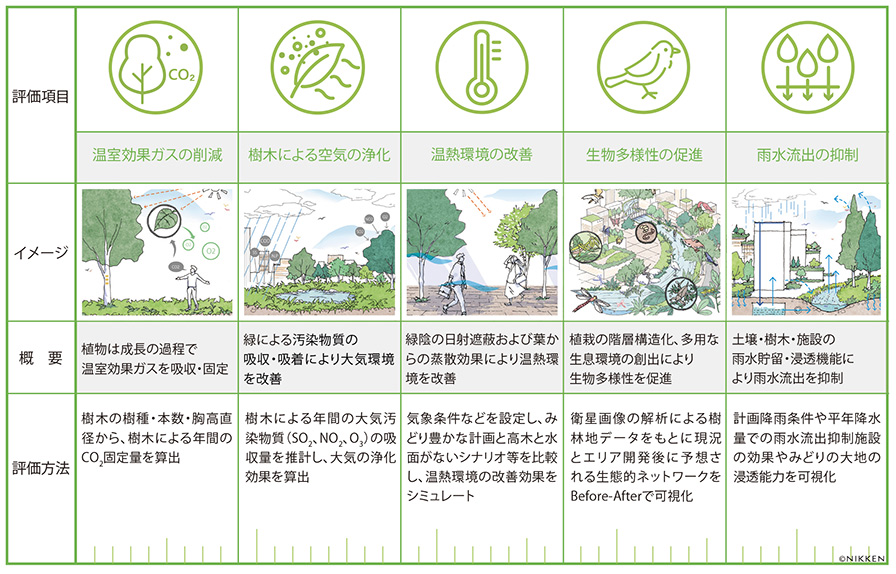 Figure 2. Details on the “Green Ruler” Evaluation Criteria and Methods
Case Study of an Evaluation Using the “Green Ruler”: “GRAND GREEN OSAKA,” a project currently under development in front of JR Osaka Station
The “GRAND GREEN OSAKA,” currently underway on the north side of JR Osaka Station as part of the Umeda Phase 2 urban redevelopment project, features over 1,600 tall trees planted throughout the entire district, centered around the 4.5-hectare Umeda Park. Through the microclimatic effects of tree shade, landscaping, andwater features to create a “cool spot” in the city center. Furthermore, by integrating the park with private land, the project addresses rainwater runoff control, CO₂ sequestration, and biodiversity conservation. Using the five indicators established for this project, we have quantified and visualized these environmental values, thereby demonstrating the environmental contributions of “GRAND GREEN OSAKA.”
Furthermore, “GRAND GREEN OSAKA” has received plan certification under the “ND(Neighborhood Development) category under LEED—an international environmental performance certification system operated by the U.S. Green Building Council (USGBC)—as well as preliminary certification under SITES® (The Sustainable SITES Initiative), an environmental certification system that primarily evaluates landscape sustainability. This marks the first time in Western Japan that a project has simultaneously achieved Gold certification under both programs.
Furthermore, “GRAND GREEN OSAKA” has received plan certification under the “ND(Neighborhood Development) category under LEED—an international environmental performance certification system operated by the U.S. Green Building Council (USGBC)—as well as preliminary certification under SITES® (The Sustainable SITES Initiative), an environmental certification system that primarily evaluates landscape sustainability. This marks the first time in Western Japan that a project has simultaneously achieved Gold certification under both programs.
<Evaluation and Summary of Results at GRAND GREEN OSAKA >
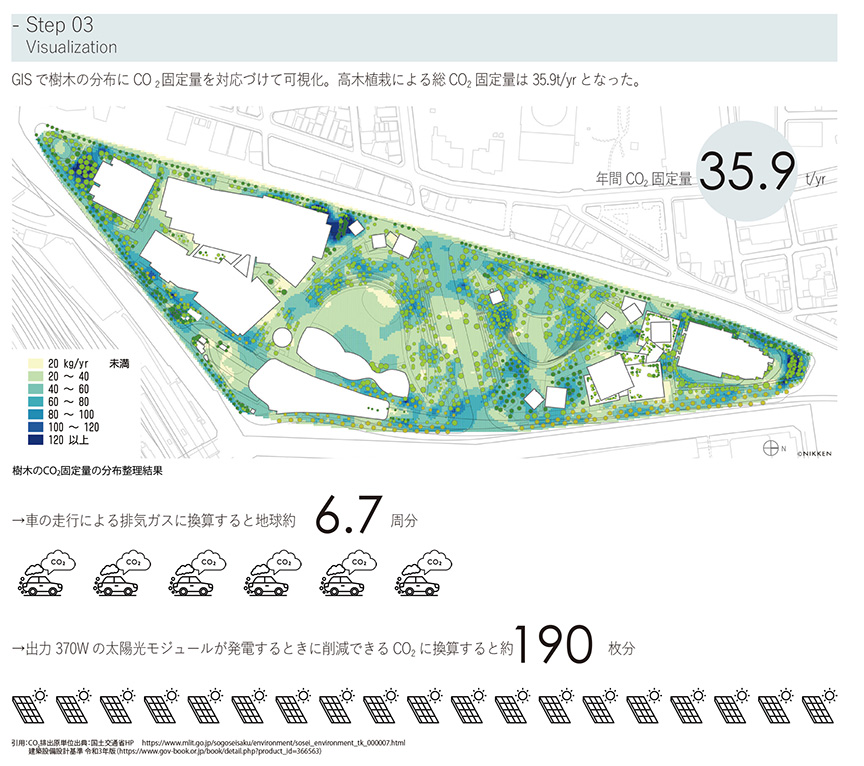
1. Reducing Greenhouse Gas Emissions
Based on the tree species, number of trees, and diameter at breast height, the annual CO2 sequestration by the trees on the entire site was calculated using GRAND GREEN OSAKA. The total annual CO2 sequestration is 35.9 metric tons.※1The result was that this is equivalent to the exhaust emissions from driving a car around the Earth approximately 6.7 times.※1...which is equivalent to the CO2 reduction achieved by approximately 190 solar modules with an output of 370W when generating electricity※2This is equivalent to... With more than 1,600 trees planted, the site is not only expected to contribute to carbon neutrality but also, through the effect of the green space ratio, to stimulate creativity and memory—qualities befitting a hub of “innovation.”※3※4。
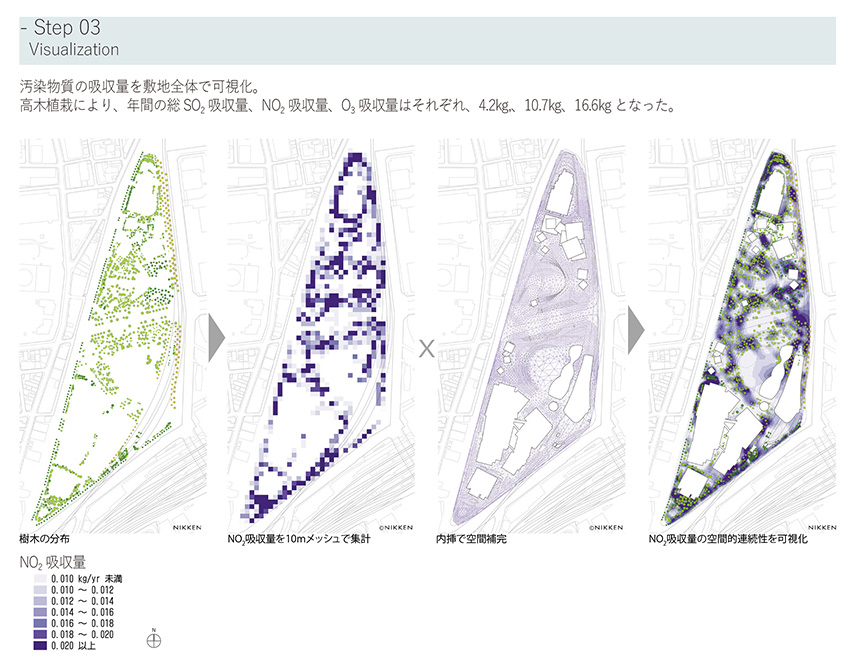
2. Air Purification by Trees
We estimated the annual amount of air pollutants (SO₂, NO₂, and O₃) absorbed by trees and calculated their air purification effect.Planting tall trees results in annual total SO₂ absorption, NO₂ absorption, and O₃ absorption of 4.2 kg, 10.7 kg, and 16.6 kg, respectively. The NO₂ absorption is equivalent to the amount of exhaust emissions produced by driving around the Earth approximately 3.1 times annually.By adsorbing and absorbing air pollutants generated in areas such as those surrounding major roads, the trees at GRAND GREEN OSAKA are expected to absorb SO₂, NO₂, and O₃, contributing to the creation of a comfortable living environment within the park and the surrounding community. Furthermore, the effects of forest bathing suggest an increase in NK cells (a type of immune cell) and the activation of the parasympathetic nervous system.※5※6。
3. Improving the Thermal Environment
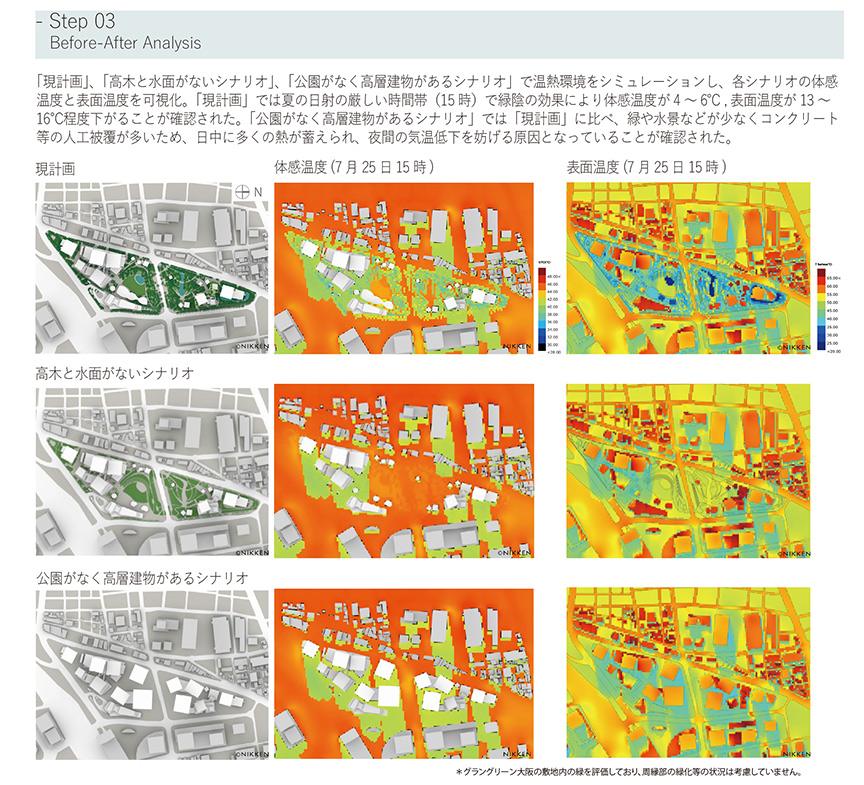
We simulated the perceived temperature and surface temperature in Osaka during the summer based on meteorological conditions. We confirmed that during the peak hours of summer solar radiation (3:00 p.m.), the effect of tree shade reduces the perceived temperature by 4–6°C and the surface temperature by approximately 13–16°C.Shade provided by tall trees not only lowers surface and perceived temperatures but is also thought to allow cool air to seep into the surrounding area at night. As such, these trees are expected to serve as valuable “cool spots” in the city center that help mitigate the urban heat island effect.
4. Promoting Biodiversity
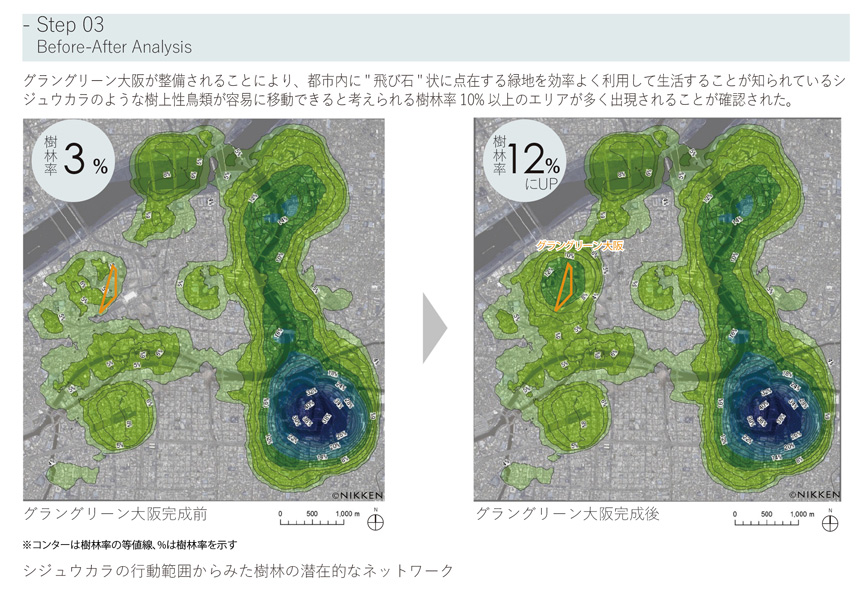
Based on forest area data derived from satellite image analysis, we have visualized the current state and the ecological network expected after the completion of GRAND GREEN OSAKA in a “before-and-after” comparison. GRAND GREEN OSAKA is projected to increase the forest coverage rate to 12%; this increase is expected to contribute to the formation of Osaka’s biological network and generate a net positive impact, including on the surrounding wildlife habitat networks.By creating an environment where diverse wildlife thrives in a prime downtown location, the project will provide visitors with opportunities to interact with nature and foster environmental education. Furthermore, evidence suggests that the sounds of birdsong and other diverse natural sounds can help alleviate stress and enhance brain function.※7※8。
5. Reducing Stormwater Runoff
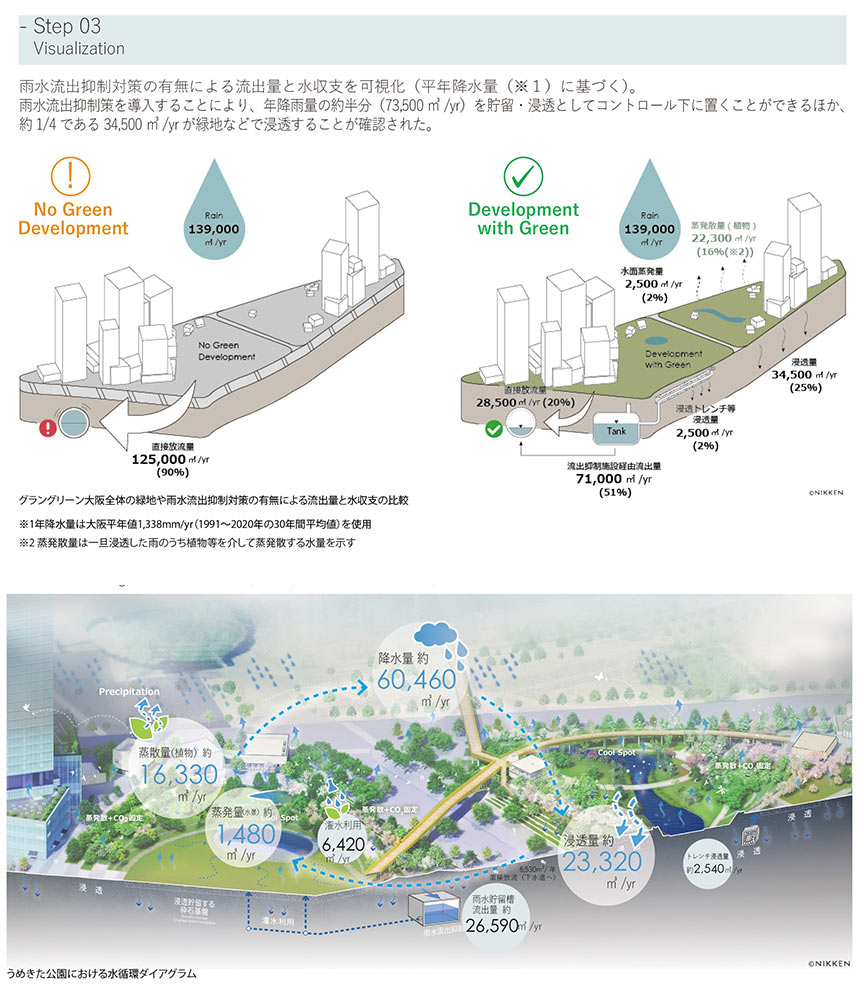
Visualize the effectiveness of stormwater runoff control facilities—such as stormwater retention basins, infiltration trenches, and crushed stone retention basins—as well as the infiltration capacity of green spaces.Approximately half of the annual rainfall (about 73,500 m³/yr) is retained and managed through runoff control facilities, and a portion of the stormwater is effectively utilized for irrigating plantings.Rainwater infiltration reaches approximately 34,500 m³/yr, contributing to a healthier water cycle through infiltration and evapotranspiration via green spaces, and suggesting improvements in the soil and air environment.
*Annual precipitation is based on the Osaka long-term average of 1,338 mm/yr (30-year average from 1991 to 2020).
*Evapotranspiration refers to the amount of water that, after initially infiltrating the ground, is released through evaporation and transpiration via plants and other sources
*Annual precipitation is based on the Osaka long-term average of 1,338 mm/yr (30-year average from 1991 to 2020).
*Evapotranspiration refers to the amount of water that, after initially infiltrating the ground, is released through evaporation and transpiration via plants and other sources
Future developments
Greenery not only contributes to creating environmental value, but also reduces stress and increases well-being.※9, Enhancing Creativity (Intellectual Productivity)※3, Improve Memory※4Among other things, urban greening is expected to have positive effects on people. For this reason, we believe it is important going forward not only to highlight environmental value but also to visualize the social value—specifically, how urban greening impacts people.Our goal is to evaluate the value of urban greening from multiple perspectives and communicate it clearly, thereby increasing not just the quantity but also the quality of green spaces, and contributing to the creation of a society that helps solve environmental issues. At Nikken Sekkei, which champions “Social Environmental Design,” we will continue to promote initiatives aimed at solving environmental and social challenges.
※1:CO2排出原単位出典:国土交通省HP https://www.mlit.go.jp/sogoseisaku/environment/sosei_environment_tk_000007.html(参照2024-03-01)
※2:建築設備設計基準 令和3年版(https://www.gov-book.or.jp/book/detail.php?product_id=366563
※3:Jie, Yin; Nastaran, Arfaei; Piers, MacNaughton. et al. Effects of Biophilic Interventions in Office on Stress Reaction and Cognitive Function: A Randomized Crossover Study in Virtual Reality. Indoor Air. 2019
※4:Jie, Yin; Shihao, Zhu; Piers, MacNaughton. et al. Physiological and Cognitive Performance of Exposure to Biophilic Indoor Environment. Building and Environment. 2018, Vol.132
※5:https://www.rinya.maff.go.jp/puresu/h17-10gatu/1013-b1.pdf, (参照2024-03-01)
※6:森林総合研究所(2017) https://www.ffpri.affrc.go.jp/research/saizensen/2017/20170309-03.html, (参照2024-03-01)
※7:Proceedings of the National Academy of Science, Canada. 2021
※8:https://www.env.go.jp/nature/nats/sound/pdf/panel_hypersonicsound.pdf,(参照2024-03-01)
※9:Chalmin-Pui, Laurianne Suyin; Roe, Jenny; Griffiths, Alistair. et al. “It made me feel brighter in myself”- The health and well-being impacts of a residential front garden horticultural intervention. Landscape and Urban Planning. 2021, Vol.205
※2:建築設備設計基準 令和3年版(https://www.gov-book.or.jp/book/detail.php?product_id=366563
※3:Jie, Yin; Nastaran, Arfaei; Piers, MacNaughton. et al. Effects of Biophilic Interventions in Office on Stress Reaction and Cognitive Function: A Randomized Crossover Study in Virtual Reality. Indoor Air. 2019
※4:Jie, Yin; Shihao, Zhu; Piers, MacNaughton. et al. Physiological and Cognitive Performance of Exposure to Biophilic Indoor Environment. Building and Environment. 2018, Vol.132
※5:https://www.rinya.maff.go.jp/puresu/h17-10gatu/1013-b1.pdf, (参照2024-03-01)
※6:森林総合研究所(2017) https://www.ffpri.affrc.go.jp/research/saizensen/2017/20170309-03.html, (参照2024-03-01)
※7:Proceedings of the National Academy of Science, Canada. 2021
※8:https://www.env.go.jp/nature/nats/sound/pdf/panel_hypersonicsound.pdf,(参照2024-03-01)
※9:Chalmin-Pui, Laurianne Suyin; Roe, Jenny; Griffiths, Alistair. et al. “It made me feel brighter in myself”- The health and well-being impacts of a residential front garden horticultural intervention. Landscape and Urban Planning. 2021, Vol.205
GRAND GREEN OSAKA About
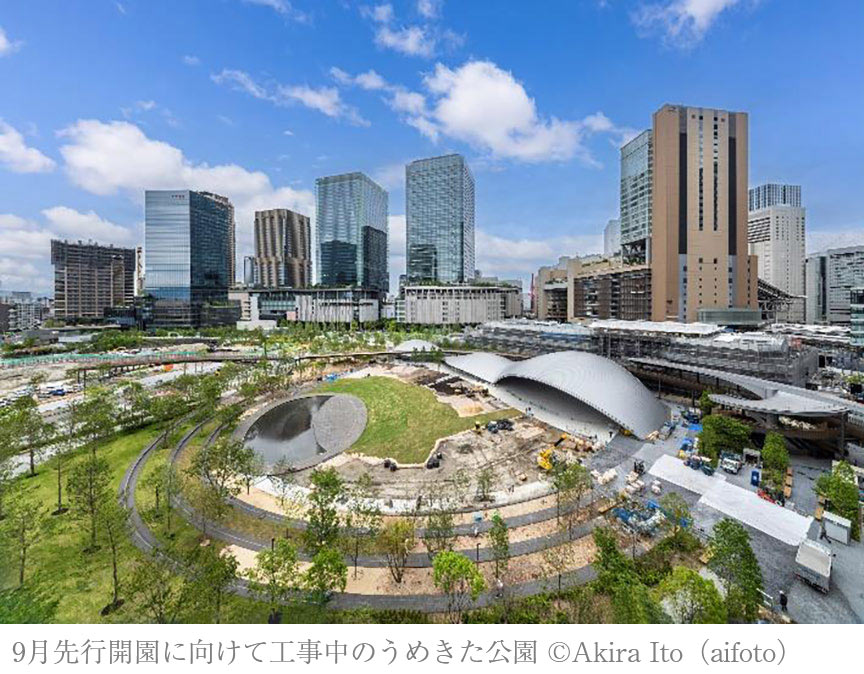 Umekita Park, currently under construction in preparation for its early opening in September ©Akira Ito (aifoto)
"GRAND GREEN OSAKA" is part of the "Umekita Phase 2 Development Project," led by Mitsubishi Estate Co., Ltd., and is scheduled to open in a phased manner on September 6, 2024.Located right next to JR Osaka Station—the largest transportation hub in Western Japan—this large-scale mixed-use development spans approximately 11.8 hectares. Centered around the urban park “Umekita Park,” it aims to create a vibrant urban space that blends seamlessly with nature, incorporating a variety of functions such as offices, retail facilities, and residential spaces.Nikken Sekkei is contributing to the realization of “design that transcends boundaries” across a wide range of areas, including landscape and architectural design as well as urban planning for “GRAND GREEN OSAKA.”※. Nikken Sekkei led this initiative as well, visualizing the overall environmental value of the GRAND GREEN OSAKA project by transcending the boundaries of the site and individual spaces.
About Nikken Sekkei
Nikken Sekkei is a professional services firm engaged in architectural and civil engineering design and supervision, urban design, and related research, planning, and consulting services.For 124 years since our founding in 1900, we have been committed to creating value through “social and environmental design,” which seeks to address both apparent and latent social issues in order to meet the needs of society and the diverse requests of our clients.To date, we have been involved in a wide range of projects in Japan, China, ASEAN, and the Middle East, and in recent years, we have expanded our operations to India and Europe as well.
Contact information regarding this matter
株式会社日建設計 広報室 Tel. 03-5226-3030 e-mail:webmaster@nikken.jp
SHARE