
What is TVD (Target Value Delivery)?
A project management strategy
to minimize risks for construction projects
and maximize investment efficiency
SCROLL DOWN
The rapidly shortening lifecycle of products and services is becoming a big risk for investment in building construction. Construction projects involve numerous client requests and restrictions, which results in an extremely complex business model. Due to its long duration from planning to completion to operation, investment could carry big risks in an environment where the market changes rapidly and predictions are difficult. Indeed, there are many cases in which the entire project becomes subject to reconsideration due to the rise of construction costs during the design or construction phase.
To avoid such a situation, Nikken Sekkei proposes “TVD (Target Value Delivery),” a new construction project management strategy that minimizes the risk of construction projects and maximizes investment efficiency.



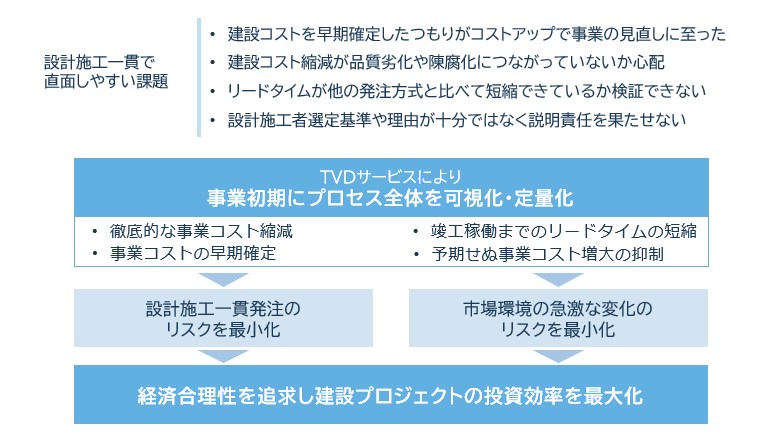
What is TVD (Target Value Delivery)?
A new project management strategy
originated from the target costing method of the manufacturing industry
and customized for building construction projects
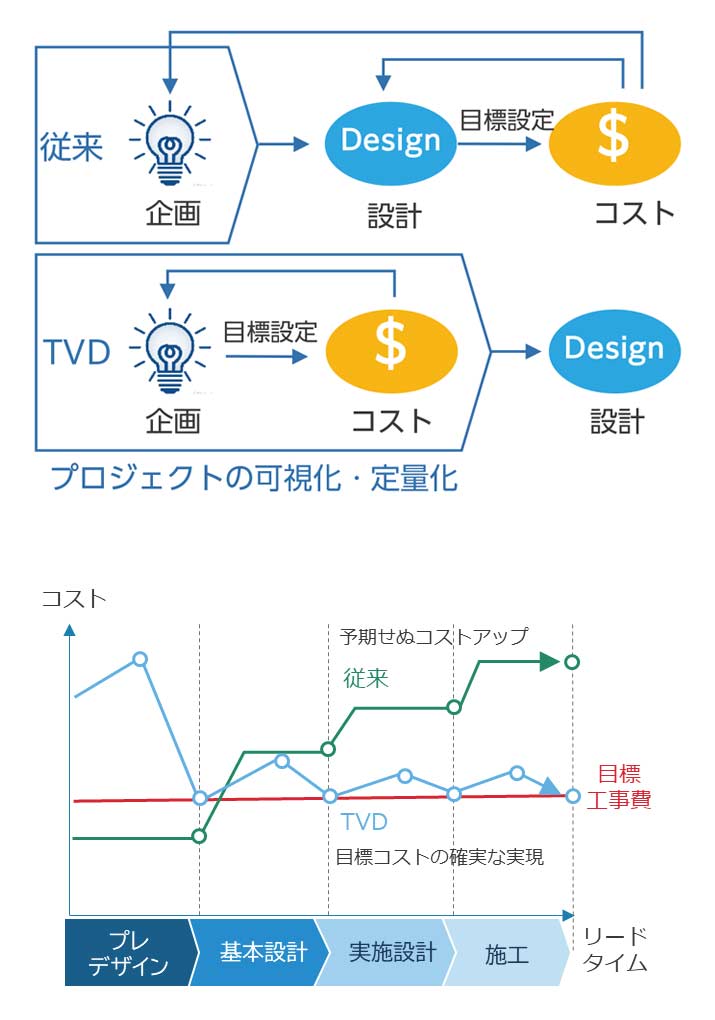
TVD is a project management strategy for building construction projects customized from the target costing method utilized in the manufacturing industry. This method involves considering costs in parallel with investment planning, deciding on target QCD (Quality, Cost, Delivery) before proceeding to design, and conducting multiple cost reviews during the design phase to achieve target costs. TVD is an application of this method to the building construction sector and is starting to spread worldwide in recent years. The conventional method calculates cost based on design documents, so when there is a significant gap between the cost estimate and target cost, the project is subject to re-design or even a return to the planning phase to reconsider the project’s prerequisites. Meanwhile, the TVD method prevents the quality and cost from deviating substantially from the target as this balance is simultaneously considered during the pre-design phase, pursuing economic rationality before commencing on the design. It also works to prevent re-design, shortening the lead time of design and construction.
Supporting accurate decision-making through visualization and quantification in early stages of the project
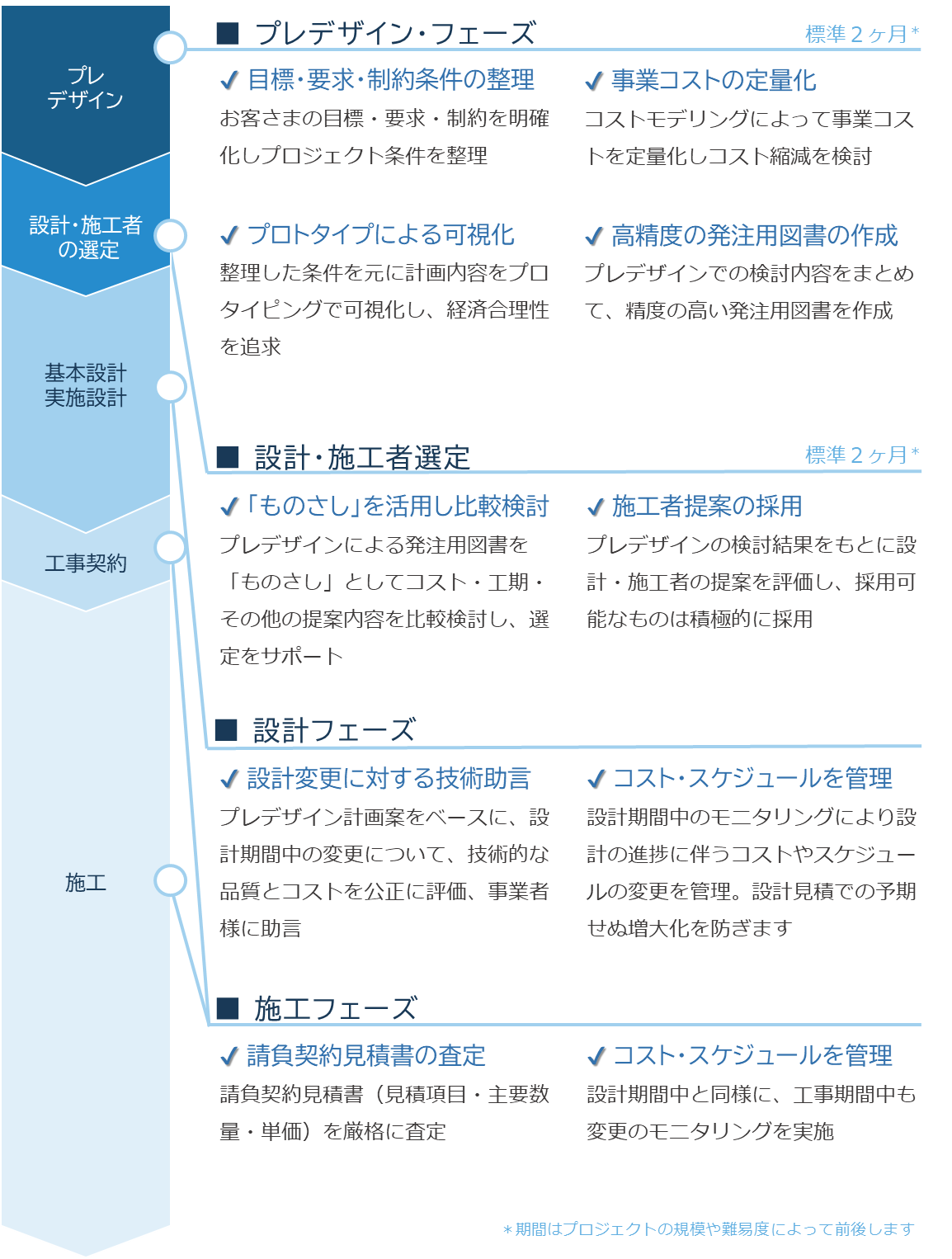
Project management flow with TVD
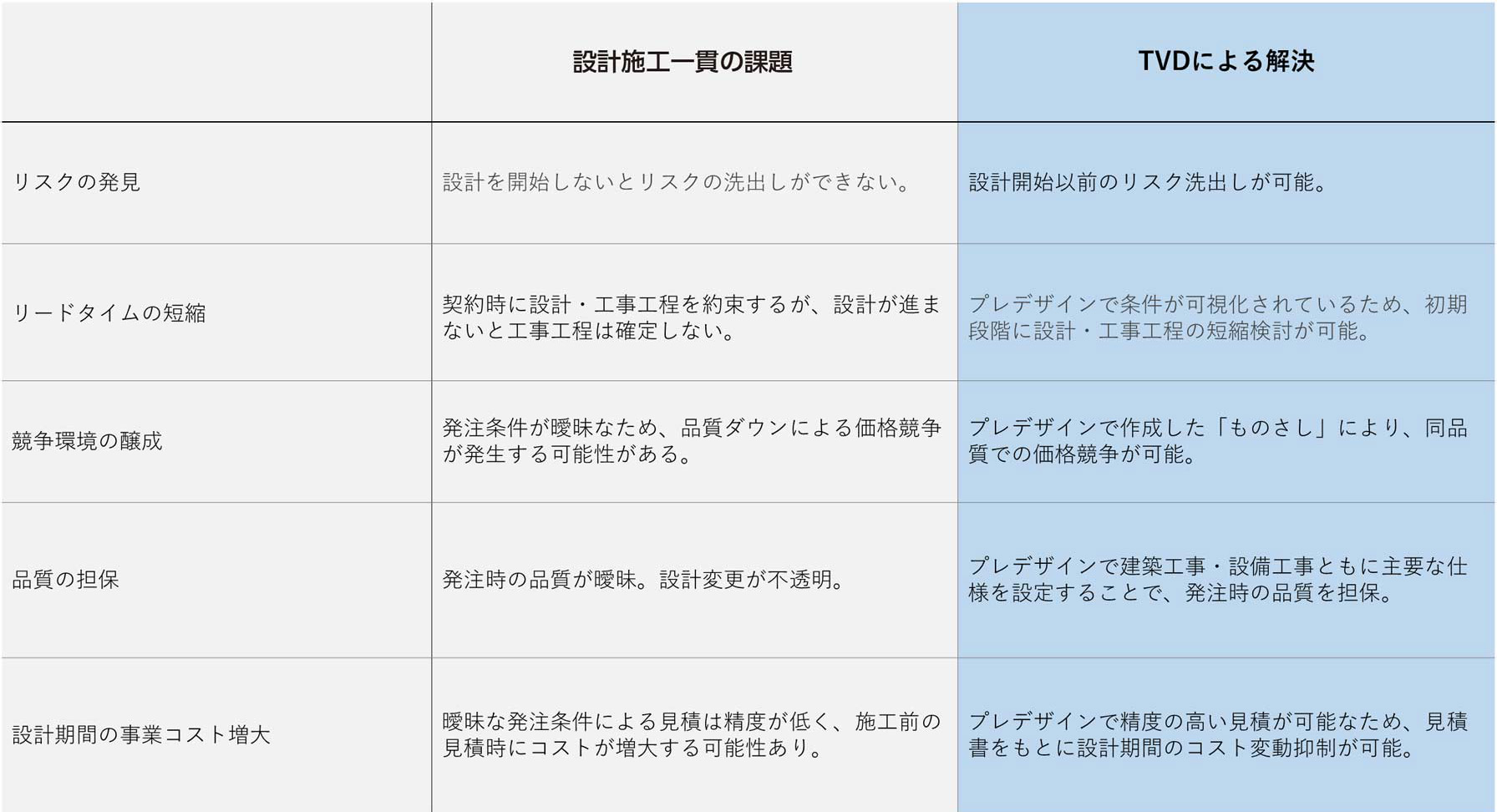
Roadmap of TVD services that begin in the pre-design phase
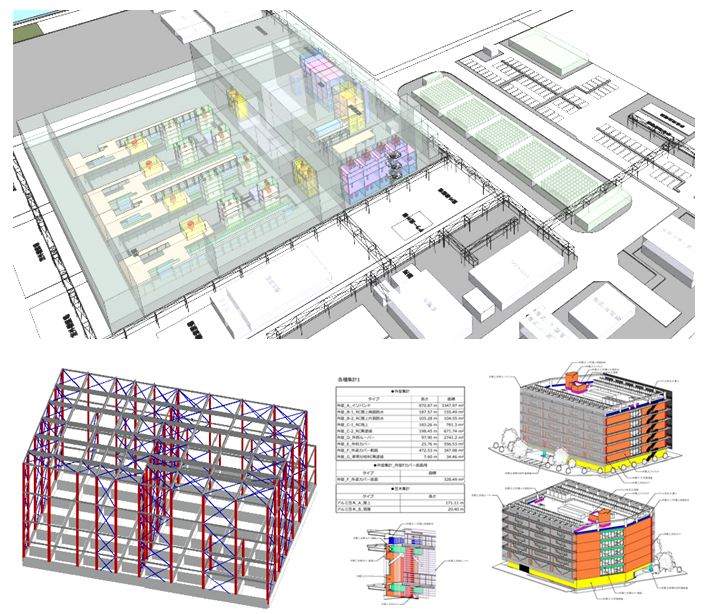
Prototyping structural and MEP performance
that tends to be ambiguous in the design-build project delivery
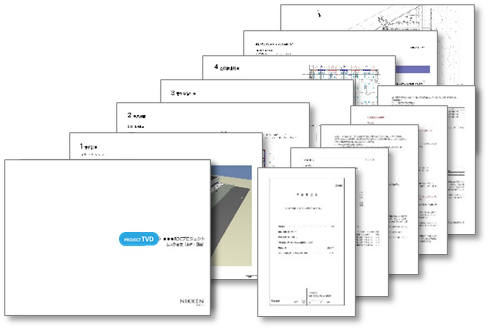
Selecting the design-builder partner
from a stringent and diverse perspective
Preventing cost increases by managing changes in the design and construction phase using a “yardstick”
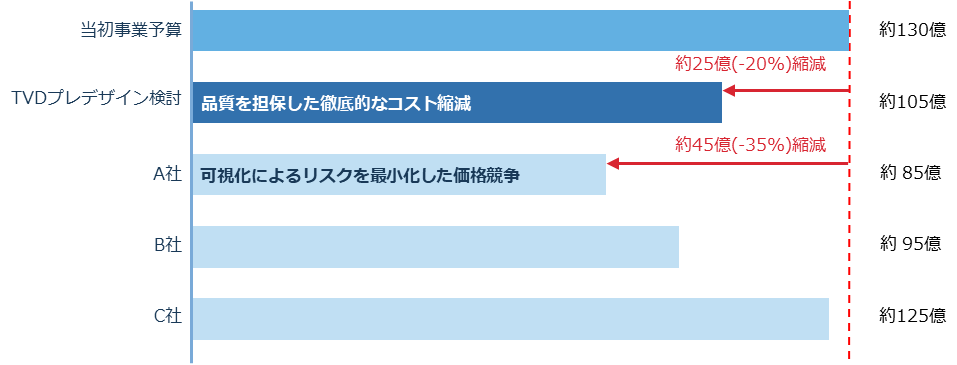
Example case of construction cost reduction
<画像を拡大>
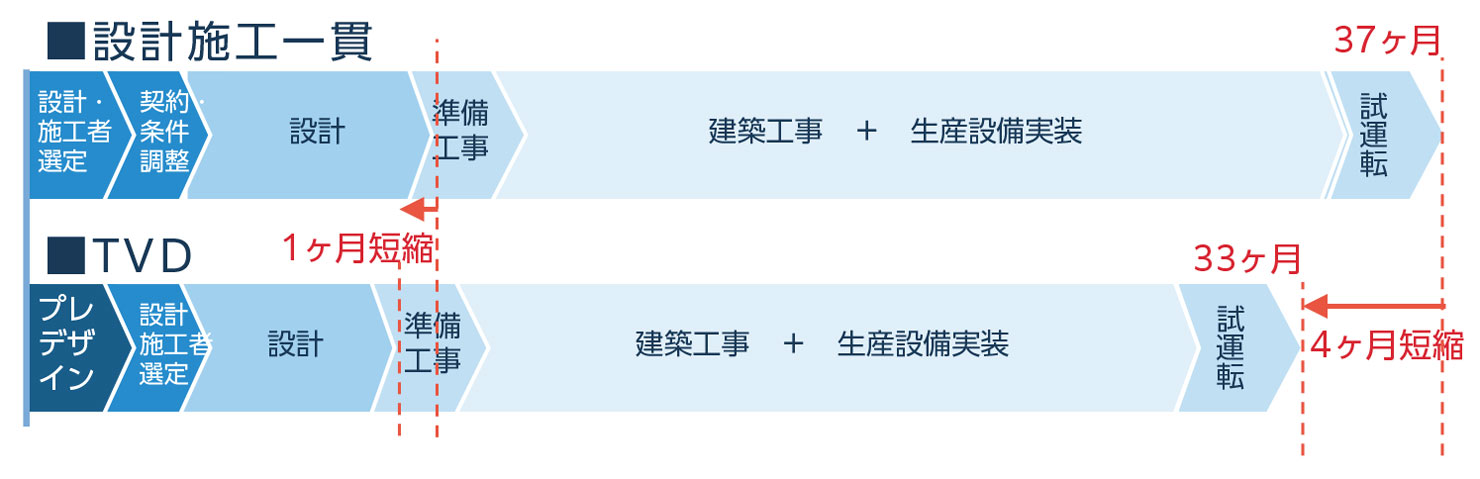
Example case of shortening lead time
<画像を拡大>