
What is Emotionscape?

An Approach to Designing “Emotion” and “Space” as a Unified Whole

SCROLL DOWN

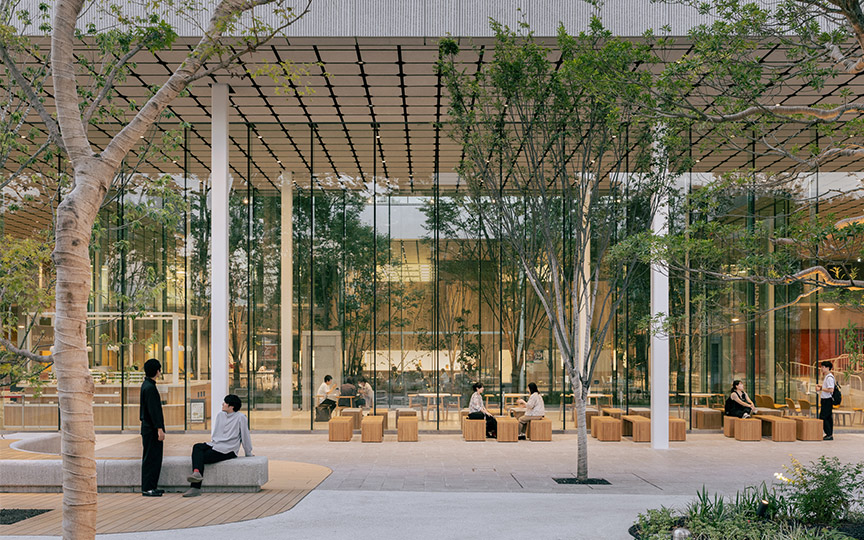
Since its founding, Nikken Sekkei has continued to bring the future to life by carefully interpreting the context of a site and the characteristics of a project, while leveraging cutting-edge technology. By inheriting this wisdom, methodology, and foresight—and delving deeper into the essence of perception—we identify challenges and needs that are difficult to put into words.By focusing on the emotions that underlie people’s behaviors and value judgments—and by designing with an awareness of the sensory experiences that form the backdrop of perception—we create spaces and states that resonate deeply with people, as well as spaces and states that serve as catalysts for unprecedented sensory experiences (Emotionscapes), thereby working to create new value for the future.
When unprecedented innovations and enduring brand value are created, what they all have in common is emotion—whether it be a passionate, surging fervor or a deep, heartfelt empathy.Emotions arise not only from physical characteristics but also within social and historical contexts. When emotions become one with a space to form an “Emotionscape,” the underlying stories and people’s feelings—which cannot be fully conveyed through isolated fragments—permeate society more deeply and widely.In a society marked by increasing uncertainty, where problems—such as fostering innovation and building brand value—cannot be solved solely through the accumulation of rationality and efficiency, we believe it is crucial to adopt an approach that designs emotions and spaces as an integrated whole.

We maximize the value of the project (business value) from a long-term perspective that extends beyond its completion.
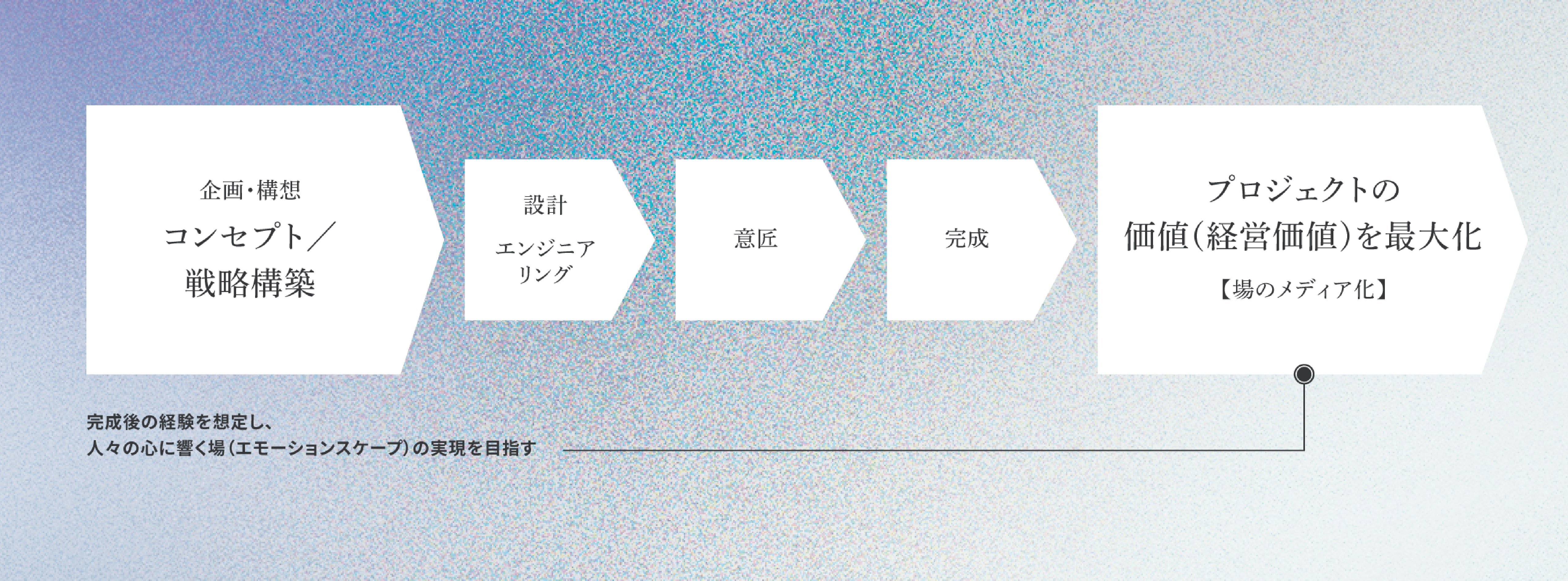
To create services and environments that resonate with people’s emotions, we develop concepts and strategies that serve as guidelines for the project, taking into account the user experience after the project is completed.

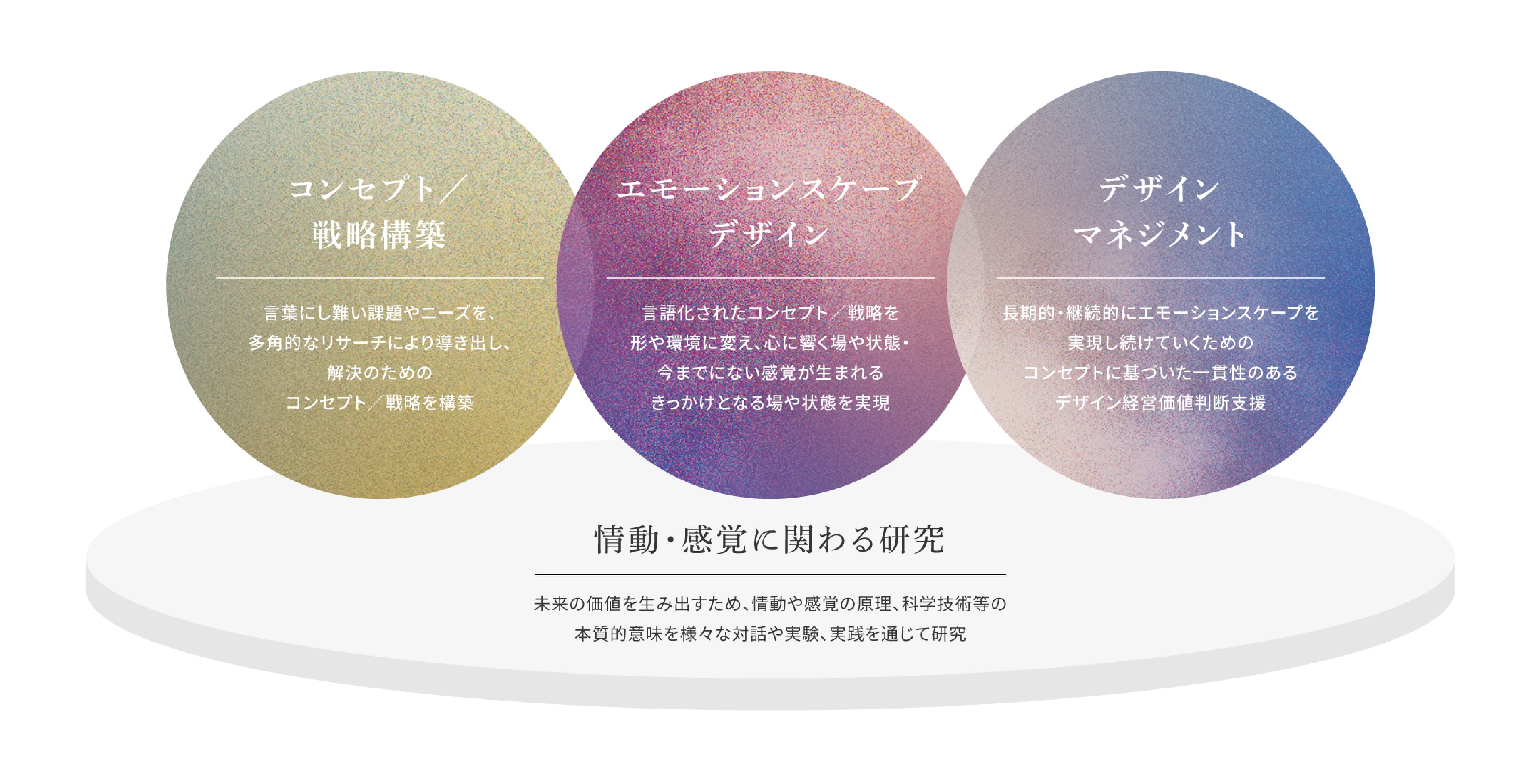
Based on multifaceted research, we transform concepts and strategies—designed to solve challenges that are difficult to put into words—into tangible forms and spaces. In doing so, we create spaces and states (Emotionscapes) that resonate deeply with people and serve as catalysts for unprecedented experiences, and we provide comprehensive support for their long-term and ongoing realization.

Design Management for Realizing Long-Term, Sustainable Emotional Experiences
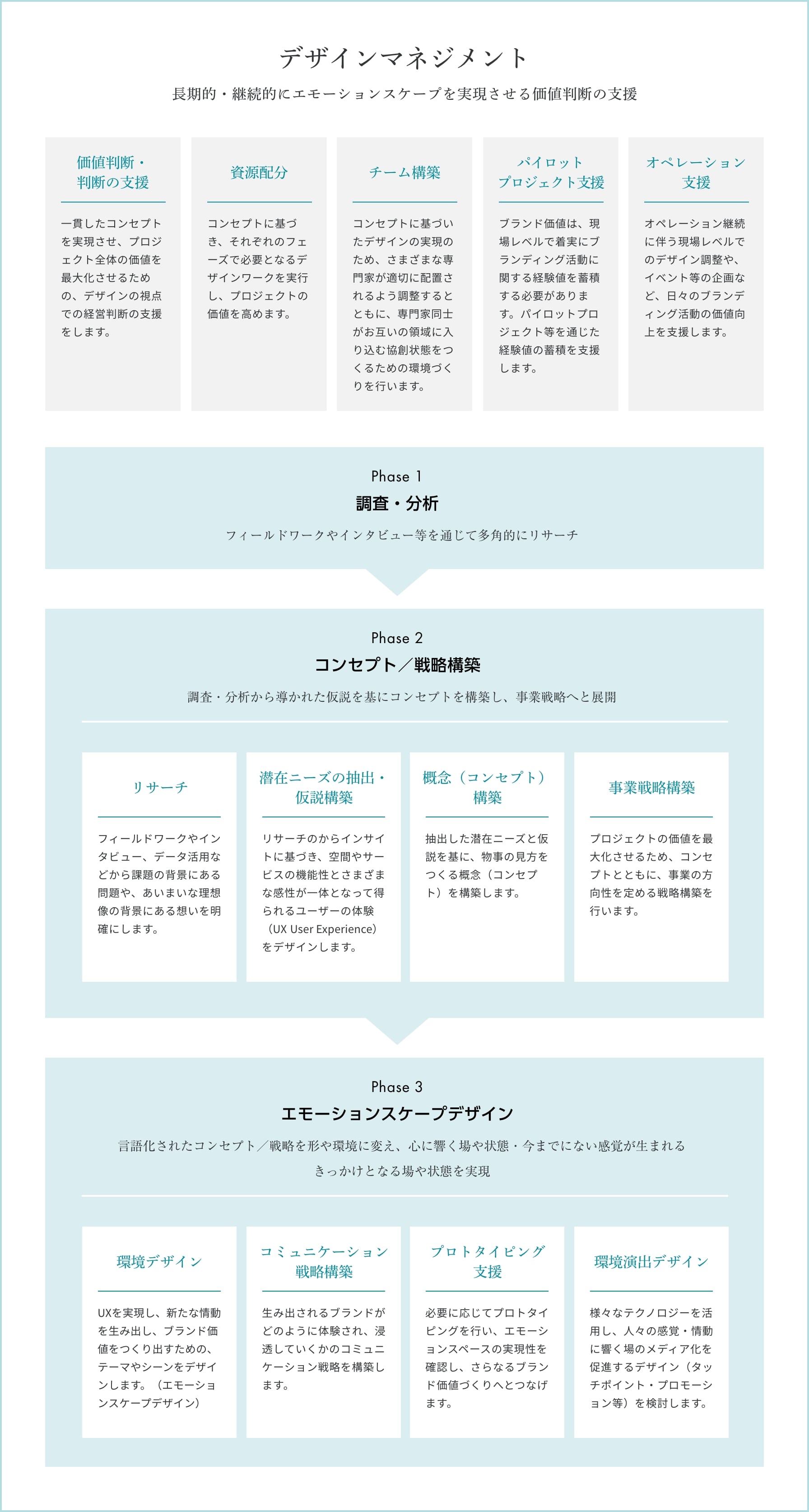
Based on a consistent concept, we build processes to realize “EmotionScapes” over the long term and on an ongoing basis, and provide support for value-based decision-making.

Management of a Wide Range of Designs
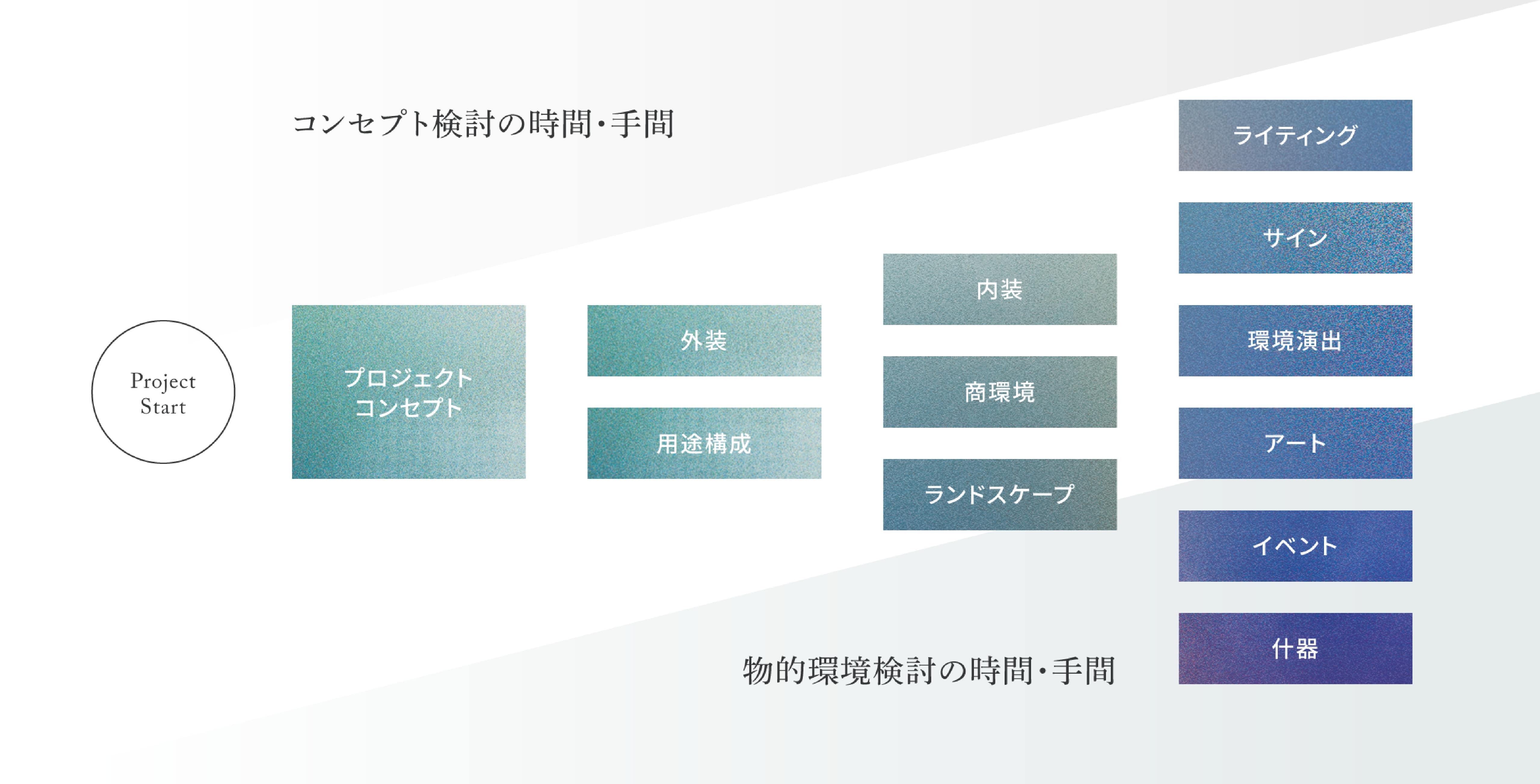
In projects involving design experts from various fields, different concepts tend to become intertwined, making it easy to lose sight of the overall design value the project aims to achieve. Management is needed to create harmonious brand value by understanding the potential and constraints of the architectural space and making comprehensive design value judgments based on the concept.

Achieving Consistent Branding Through Concept-Based Design Management
Achieving Reliable Branding

A wide range of design adjustments

Design elements other than architecture also play a crucial role in branding. Relying solely on individual coordination with a wide range of designers can lead to inconsistencies in design coordination among them or deviations from the concept. Design management based on the concept ensures that branding is successfully achieved.

Support for Value Judgments

It is common for design measures to be reviewed at each stage of a project through value engineering (VE) and other processes. If decisions to cancel initiatives or explore alternatives are made on a case-by-case basis during budget cuts, branding efforts will not succeed. We help evaluate the value of design initiatives holistically across the entire scope of the project, always returning to the core concept and taking into account cost and production constraints.

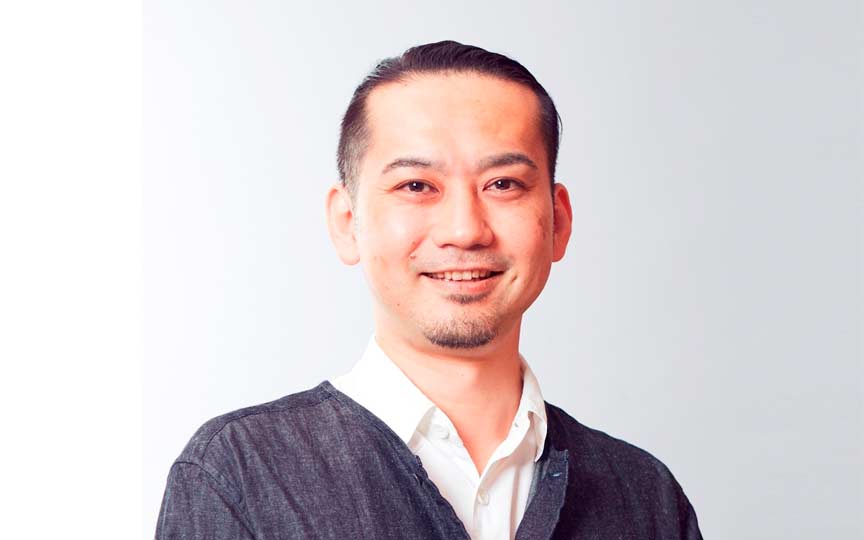
Yasuda Hiroki

EmotionScape Lab Director Strategist

Tokyo Station Area Urban Development Guidelines / Futako-Tamagawa RISE Concept Design / Shibuya, Daikanyama, and Nakameguro Area Concept Design / Tokyo Metro Ginza Line Concept Design / Park Axis Premier Minami-Aoyama Concept Design, etc.
[External Committee Members]
Member, 2020 Future Development Subcommittee, Industrial Structure Council, Ministry of Economy, Trade and Industry / Member, Steering Committee, JR Mobility Transformation Consortium / Ultra-Immersive Communication Industry-Academia-Government Forum (URCF) / Leader, 2020 Working Group

This site uses cookies. By continuing to use this website, you consent to the use of cookies.Our policy.