
Enoshima Aquarium's 20th Anniversary: Renovation of the Dolphin Show Stadium
Beyond the beloved local aquarium
SCROLL DOWN
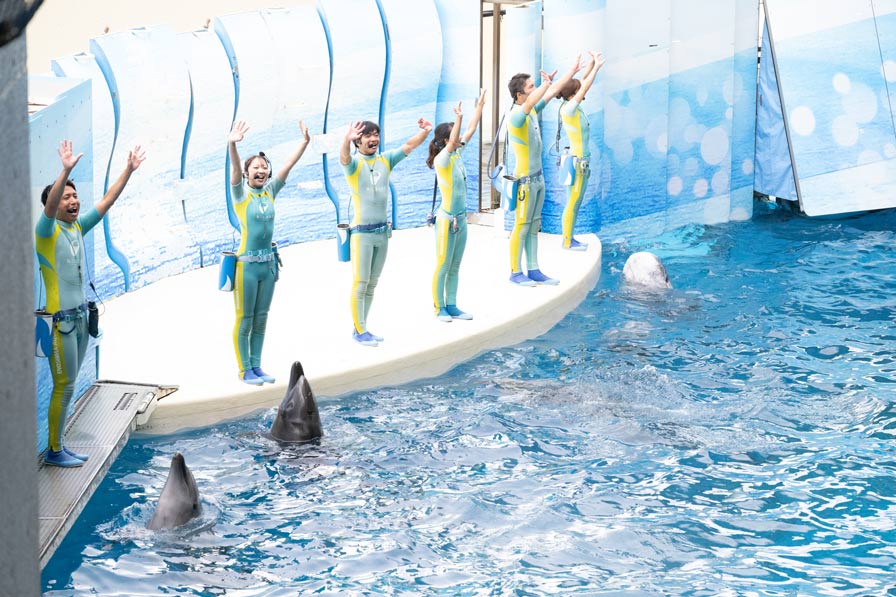
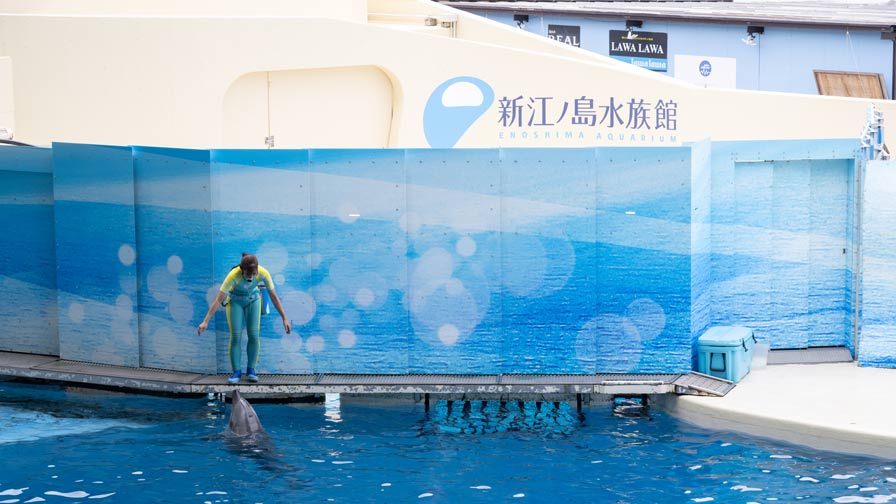
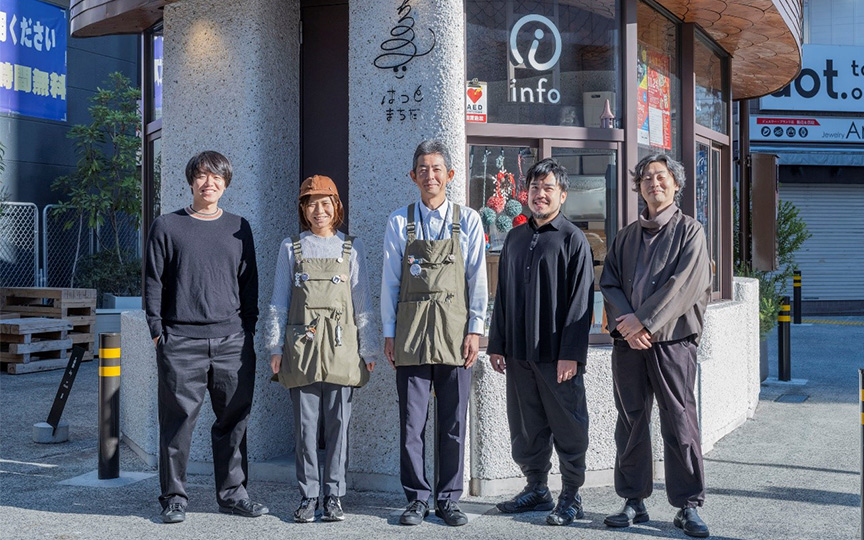
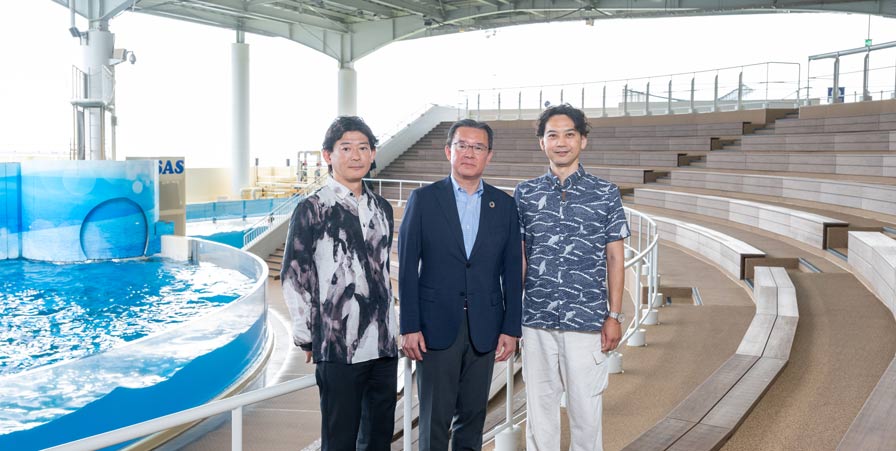
The dolphin show stadium at the Shin-Enoshima Aquarium reopened in April 2024 after approximately four months of renovation work. As the aquarium celebrated its 20th anniversary, its aim was to create an even more comfortable and inviting space that would encourage repeat visits. This embodies the management philosophy and aspirations for the future that have been passed down through generations. We spoke with Kazuhisa Hori, President and President and CEO of Enoshima Marine Corporation/Shin-Enoshima Aquarium Co., Ltd., Takayuki Sakamoto, General Manager of the Emotionscape Project Development Department Director and Hiroki Yasuda, Director of the same department, about the specific initiatives undertaken.



It has grown into an aquarium that attracts approximately 1.5 million visitors every year.
Kazuhisa Hori (hereinafter referred to as Hori): My grandfather (Hisakatsu Hori) founded the “Enoshima Aquarium” in 1954, and I took over the business that my mother (Yukiko Hori) had carefully laid the groundwork for. Above all, I’ve worked tirelessly to ensure its sound growth.
When we renovated the facility as the New Enoshima Aquarium, we adopted Kanagawa Prefecture’s PFI (Private Finance Initiative) model and established a special-purpose company in partnership with Enoshima Marine Corporation and the ORIX Group. We entered into a 30-year business contract with the prefecture, but at the time, I was anxious because 30 years seemed like an unimaginably long time.But my mother just laughed it off, saying, “Thirty years will fly by.” Now that 20 years have passed, I can say she was absolutely right—it really did go by quickly.
For facilities like aquariums, visitor numbers typically peak right after opening. It’s a general trend for them to decline from there. So, for the first 10 years, that was a pressing management challenge, and all I could think about was how to stop the decline in visitors and stabilize attendance.
Upon reaching our 10th anniversary, we reviewed the facility’s ownership structure and were able to return to a business model led by the founding family. From then on, I moved into a position where I could take full responsibility for managing the business, and I was able to freely apply innovative ideas to our operations. The pace of our work accelerated, and the results followed. From that point on, time flew by.
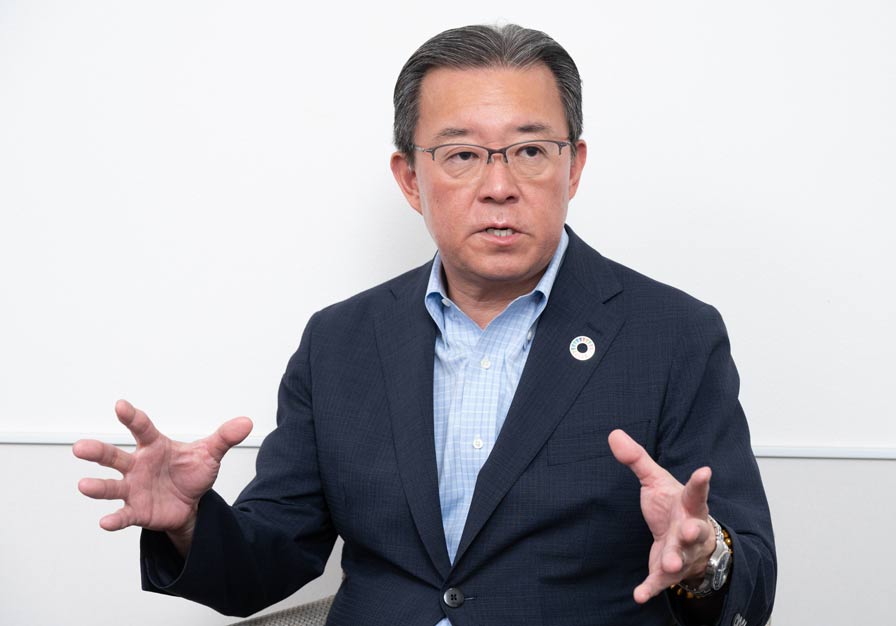
Hori: Since this is an aquarium, the animals are naturally the stars of the show. We focused on how best to convey the diversity and value of these creatures. At the same time, since this is a space where visitors pay an admission fee to enjoy themselves, we refined our service to be full of hospitality so that guests would feel comfortable. Thanks to everyone’s support, we now welcome an average of about 1.5 million visitors annually.
——When Enoshima Aquarium was reborn as New Enoshima Aquarium, what concept did you put forward?
Hori: The overarching theme of the exhibition was to bring to life the hopes and dreams that my mother—who was the director at the time—had nurtured. As an aquarium located on the Shonan coast, we placed the greatest emphasis on faithfully recreating, through our exhibits, the connection between Sagami Bay, which stretches out before us, and the Pacific Ocean, and on conveying that sense of the world.
In addition, our aquarium has long championed the theme of an “edutainment aquarium.” This is a portmanteau combining “education” and “entertainment,” and our commitment to creating a facility where visitors can have fun while learning about—and learn while having fun with—the many creatures inhabiting Sagami Bay has remained unwavering.
——Mr. Sakamoto, you were one of the designers involved 20 years ago, working to bring that concept to life, weren’t you?
Sakamoto: Aquariums are relatively unique types of buildings, and there aren’t many people—either within the company or outside it—who possess the design expertise required. Furthermore, since each aquarium has its own policies and philosophy, I spent a considerable amount of time first being taught and learning about those aspects.
I myself had only been with the company for a few years, and Mr. Hori had just joined the family business from a different industry. For the ORIX Group as well, the aquarium business was a new challenge. We were feeling our way through everything, but everyone was free from preconceived notions in the best sense of the word, which made it incredibly exciting.
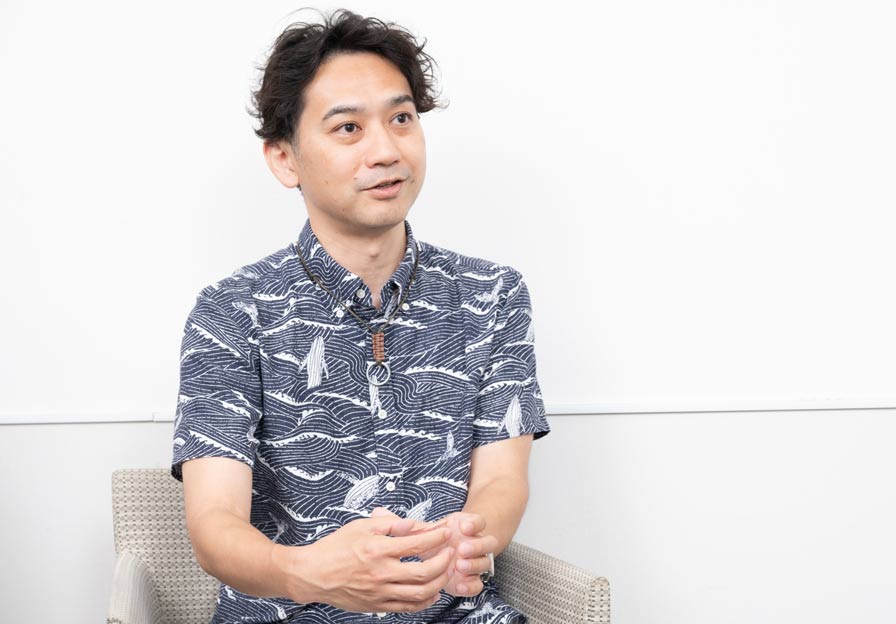
We want to avoid the situation of "seeing the trees but not the forest."
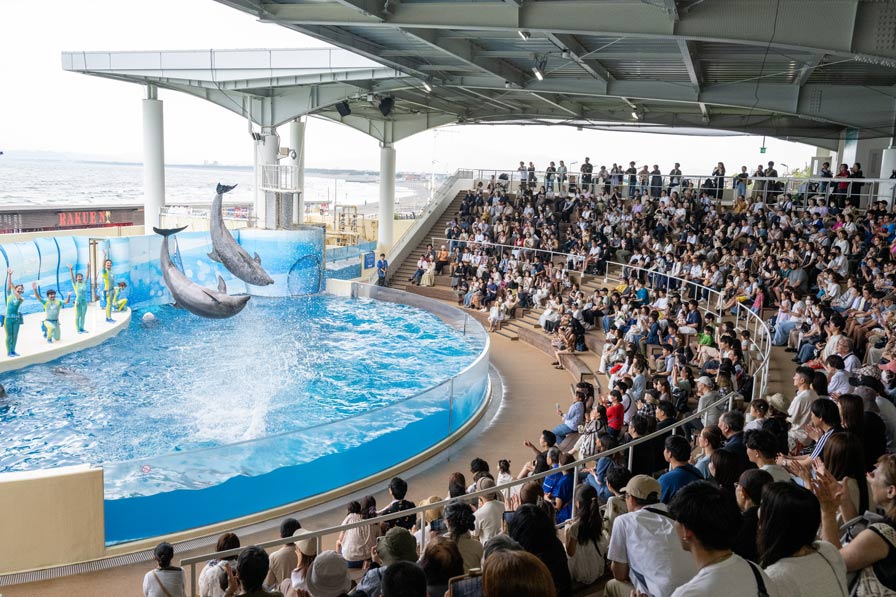
Hori: When we considered our 20th-anniversary initiatives, adding new, innovative exhibition spaces proved physically difficult, so we decided instead to focus on enhancing the overall aesthetic appeal of the facility.After 20 years, a building naturally shows significant signs of aging. The cost of repairs needed to properly maintain the facility had been rising year by year. The Dolphin Show Stadium, in particular, was the most severely deteriorated area.
At the same time, we promote ourselves as a “comfortable aquarium” that makes visitors want to come back. We wanted to reaffirm that message at this 20-year milestone. The Dolphin Show Stadium was also the largest space where visitors spent time, and it truly offered a wonderful view. It was the perfect opportunity to renovate this area and make it even more comfortable.
Hori: At first, Nikken Sekkei wasn’t even on the radar. But about a year and a half ago, I had the opportunity to meet Mr. Sakamoto again after a long time, and that’s where I first met Mr. Yasuda as well. I asked them about urban redevelopment projects, including the branding initiatives along the Shibuya and Daikanyama lines.
Fujisawa City is currently working to develop itself as a tourist destination, but there are still a mountain of challenges to overcome. Given that context, it was extremely interesting to hear from these two professionals who are actively involved in urban development.
Also, regarding the renovation, if we simply focus on sprucing up the dolphin show stadium, it would be like “missing the forest for the trees”—we’d end up getting bogged down in details like “let’s design the stadium roof this way” or “this paint color would be best.”Instead, I wanted to consider what the aquarium should be like by taking a bird’s-eye view of the grand design for the entire region. That’s why I have such high hopes for Nikken Sekkei’s efforts.
Sakamoto: I was personally involved in the project to open the facility 20 years ago, but our relationship didn’t continue on a regular basis after that.However, during that time, Mr. Yasuda and I have been working to articulate people’s unspoken feelings, establish the direction—in other words, the concept—that cities and facilities should aim for, and carry out the design management necessary to bring those concepts to life. When I shared these experiences with Mr. Hori, he chose me as a partner for this project.
Putting into words the vague thoughts in your head
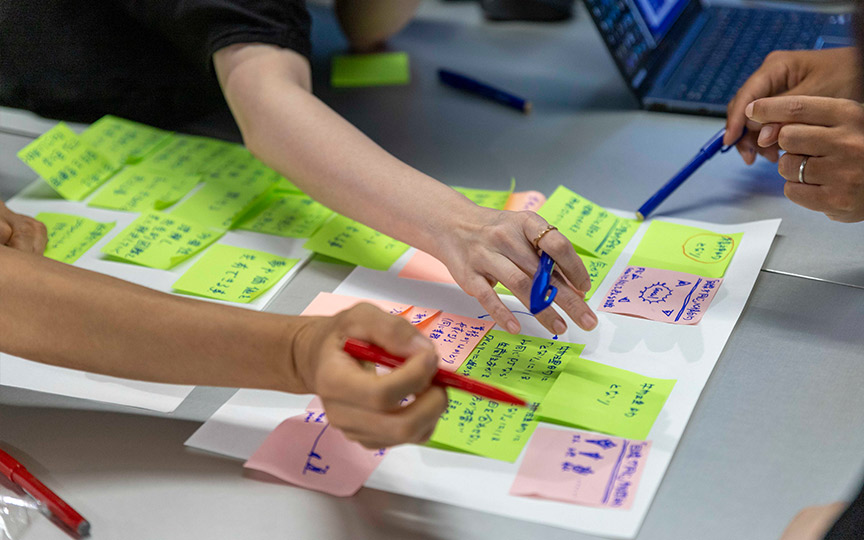
Yasuda: First, we develop a concept for what kind of facility we want to create, but we don’t come up with it on our own—it’s based on the input from the aquarium staff who participated in the workshop.
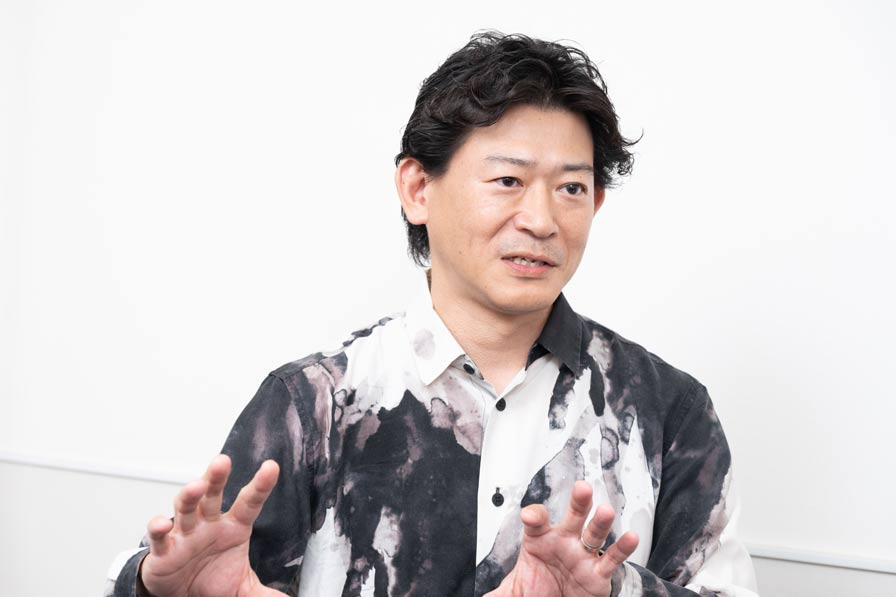
However, since it's quite difficult to express these feelings in words, we asked them to freely photograph their favorite or interesting places within the facility. The important thing is not who photographed what, but to notice how the subject is framed. Through this method, everyone gradually began to verbalize the vague feelings they had in their minds that they couldn't put into words.
Next, we identified common concepts for such places, and then, based on those concepts, we all worked together to come up with concrete images.
(Shows Mr. Hori the thick booklet of documents)
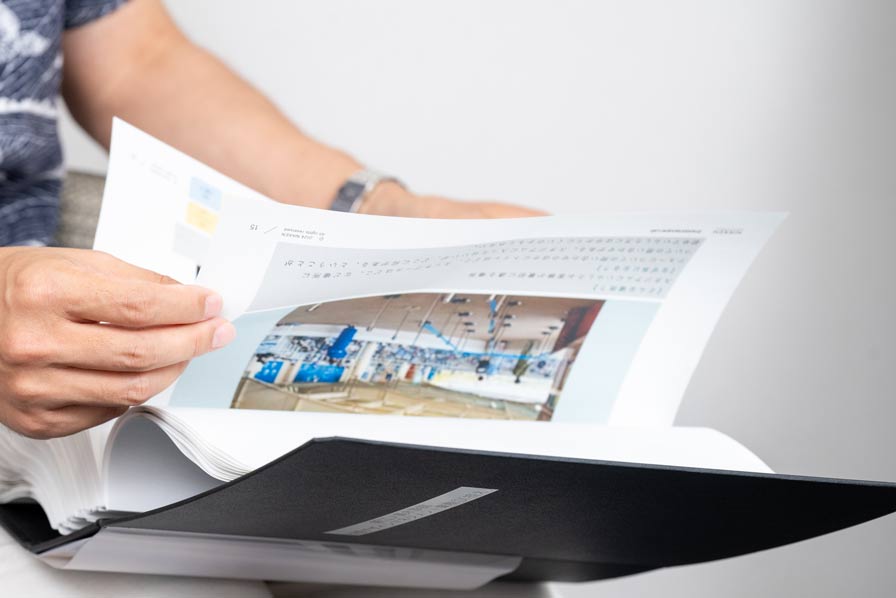
Yasuda: This document summarizes the process of developing the concept during the workshop. As professionals in environmental design, we don’t just articulate ideas—we take it a step further by translating those ideas into the physical environment. We handled the organization of concepts, the design of the environment, and the design of physical elements (such as buildings) as a single, integrated process. If we didn’t go that far, people would end up saying, “Somehow, this isn’t quite what I imagined.”
Hori: I spent an enormous amount of time on the workshop, but I realize once again that this process was the most important part.
Sakamoto: The schedule was fairly tight; we were approached in the summer of 2023. From there, we had to decide what to build and how to do it by the end of the year and then begin construction.Although we weren’t building the facility from scratch this time, time was still limited, so we needed to proceed without having to go back and redo anything. To ensure that our approach and goals didn’t end up being “off the mark” partway through, we worked to build consensus so that everyone would be satisfied with the final result.
Hori: I believe buildings are living things. While I realize that in many cases, the relationship with an architectural firm ends once a building is handed over, this aquarium was originally designed by Nikken Sekkei, and it truly showcases the exceptional creativity that Mr. Sakamoto and his team possessed at the time.So, if we were going to renovate, rather than hiring a different designer, I was convinced that asking Mr. Sakamoto himself—who has gained so much experience over the past 20 years—would not only create a bridge from the past to the future but also lead to the best possible result.
I might be getting a little ahead of myself here, but I’m already looking forward to seeing what it will be like in 10 years. I’m so excited to see how Nikken Sekkei will evolve the design and create the “New New Enoshima Aquarium” that I’d almost like them to hold a workshop right away (laughs).
Yasuda: We'll have to get started right away if we want to make it in time.
Designed to allow you to fully experience the scenery of Shonan.
Sakamoto: I took a step back to consider the Dolphin Show Stadium’s role within this region.
The design philosophy 20 years ago was to create the best possible seating area for spectators watching the dolphins. However, it became clear from the workshop that the space could be used in a variety of other ways as well.Since the location is so wonderful, we want visitors to be able to relax there even when the dolphin show isn’t taking place. To create that kind of environment, we had to change our approach to what makes a place comfortable—a shift from the philosophy we had 20 years ago. That was the aspect we focused on most this time.
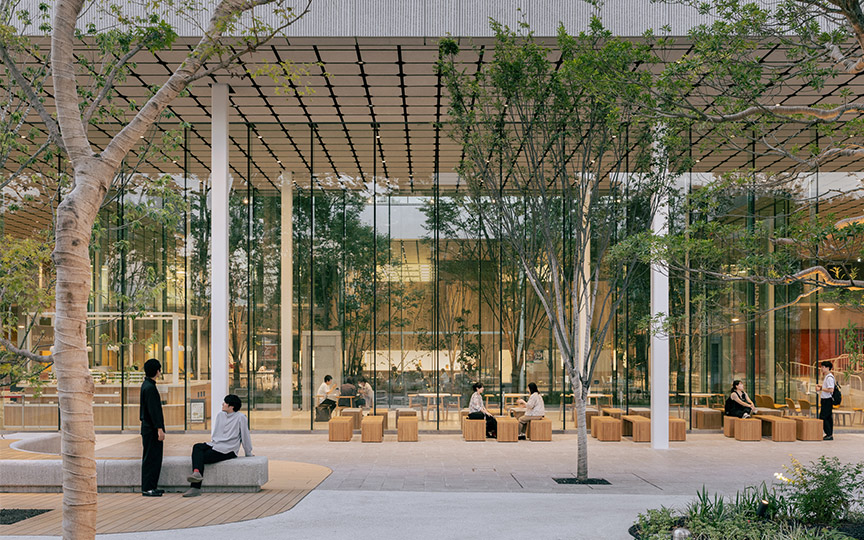
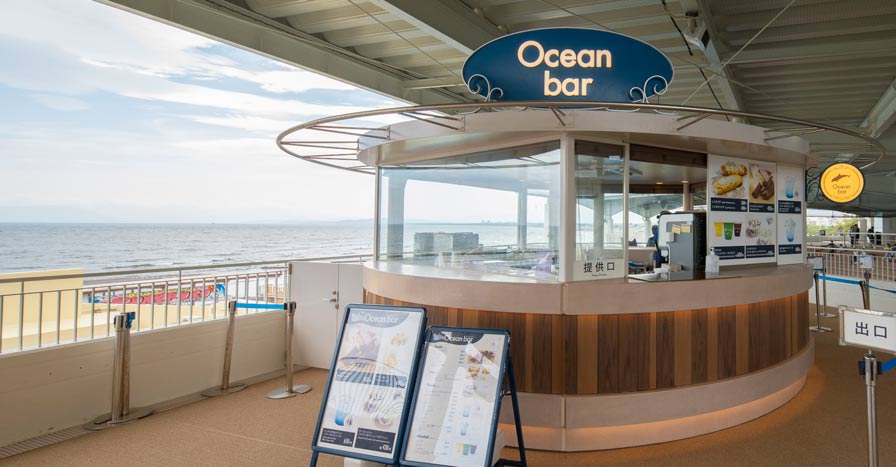
To encourage guests to stay longer, the comfort of the chairs is obviously important, and they’ll naturally want to enjoy delicious food and drinks. Therefore, it’s best for the food and beverage facilities to blend seamlessly with the venue and offer a rich variety of options—more so than ever before.
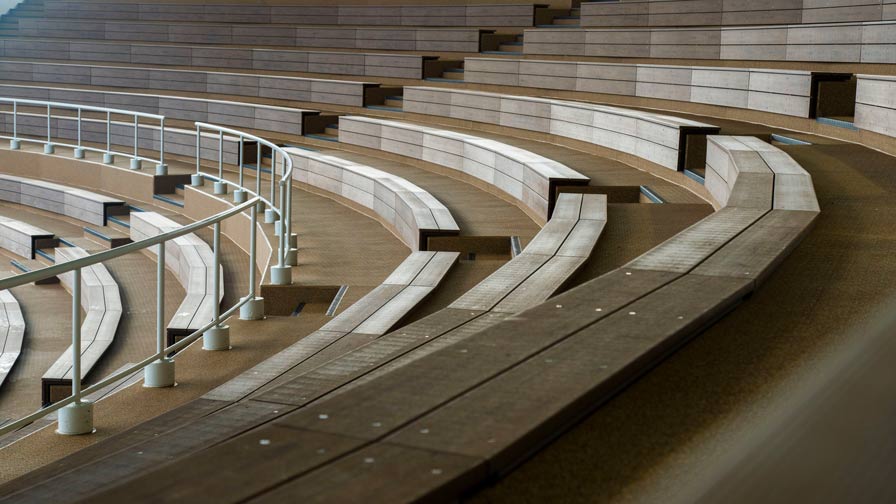
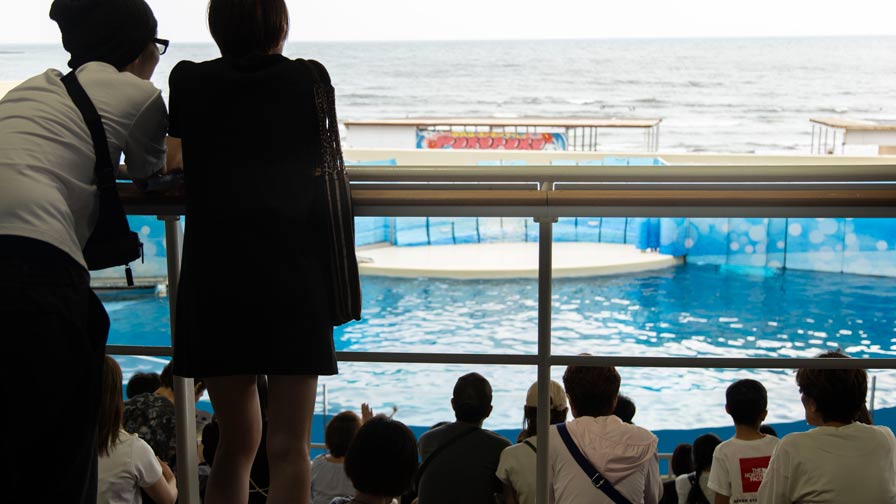
Hori: Even without the dolphin show, there are people who use that space. The seats are very comfortable, and I think the number of people taking a break there has really increased. The adjacent restaurant was also renovated, and thanks to that, sales have doubled.
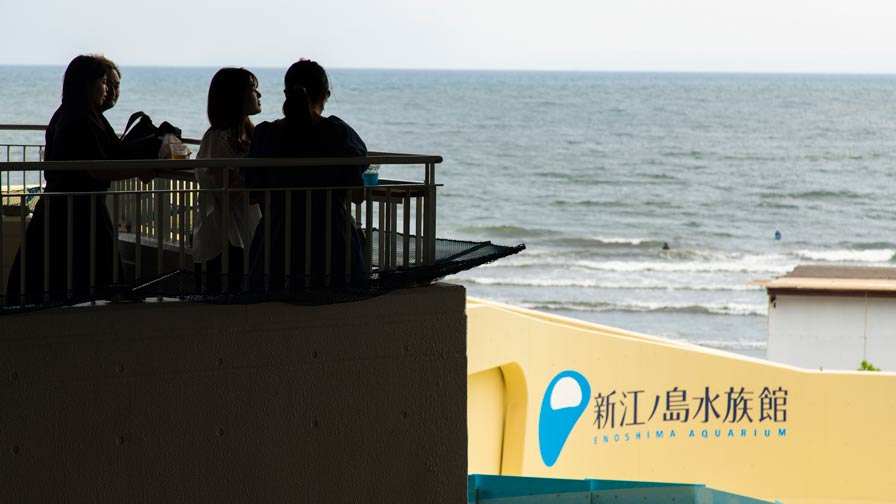
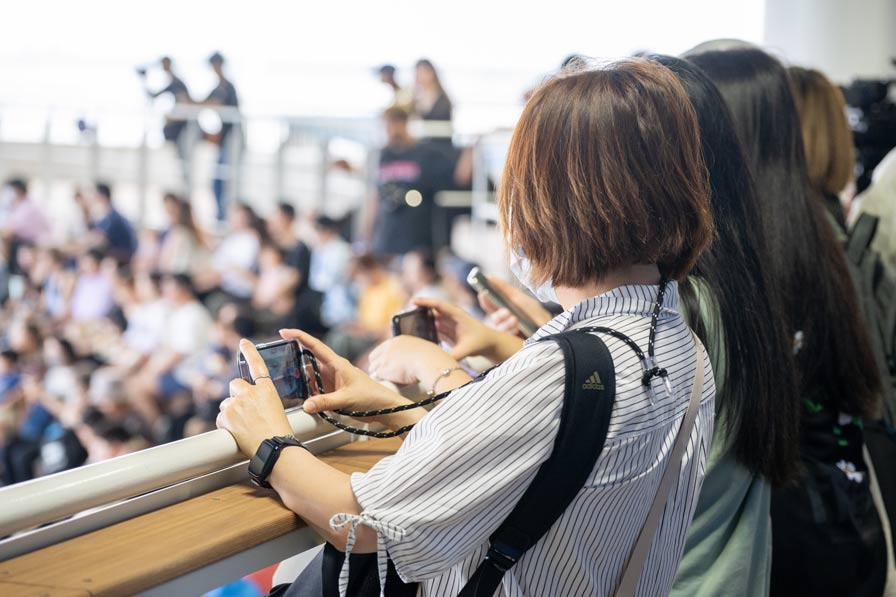
The view from the stadium is truly magnificent, offering a panoramic view of Mount Fuji, Enoshima, and Eboshi Rock. It’s helping to boost foot traffic in the area, as people think, “If Enoshima is this close, maybe I’ll take a little detour.” We can now wholeheartedly recommend it as a place where visitors can truly experience the Shonan area.
The value of aquariums will continue to grow.
Hori: With Kanagawa Prefecture and Fujisawa City each promoting themselves as tourism-oriented regions, the Shonan-Enoshima area has been designated a priority region. Therefore, we believe it is our company’s mission to ensure that visitors’ experience of Shonan at this aquarium contributes to enhancing the tourism reputation of both Kanagawa Prefecture and Fujisawa City.
To achieve this, regional collaboration is essential. For example, we will work together with both the public and private sectors—including the Enoshima Electric Railway, Odakyu Electric Railway, and the municipal government’s tourism division—to implement initiatives that make the attractions of the Shonan-Enoshima area even more enjoyable. As a result, we aim to increase the number of tourists visiting the entire region. We have already established a consortium dedicated to this goal.
The number of tourists visiting Fujisawa City, including the Shonan and Enoshima areas, reached 19.6 million in 2023. We are constantly evaluating our performance relative to this figure. If we can establish a relationship where 10 percent of tourists stop by the aquarium, that would amount to 1.96 million out of 19.6 million.With 20 million visitors, that would be 2.0 million. Therefore, increasing the overall visitor base for the region is also crucial for our company. Our external relations and sales team is actively collaborating with the local community, working hard alongside everyone to attract more people to Fujisawa City.
——Nikken Sekkei has long been engaged in urban concept development and design management. From that perspective, how do you view “regions” and “places” now?
Yasuda: Earlier, Mr. Hori mentioned the concept of “exploring.” We’ve often discussed what exactly “exploring” means. I don’t think many people would say, “Today, I’m going to explore this city!”However, it’s certainly possible to move from one destination to another. In other words, what’s important is that these destinations are connected by a purpose. Furthermore, if there are about three purposes—such as sightseeing to experience history and culture, shopping, and dining—people will want to visit that city again and again. When various people engage in such behavior, it ends up looking like “roaming.”
Amid these various discussions, another keyword that emerged was “polysemy.” My perception of an aquarium differs from Sakamoto’s. Therefore, even regarding the dolphin show stadium, it’s perfectly valid to view it as something other than just a place to watch dolphins.If there are people who think that way, this place takes on two different meanings. As those meanings grow to three or four, the reasons for visiting here will increase accordingly. I think there’s a possibility that aquariums could offer a value completely different from what they’ve provided so far, and I’d be delighted if we could work together on that as well.
Hori: It’s true that in Japanese it’s called “aquarium,” but the word actually comes from the Latin “aquarium.” “Aqua” means water, and “rium” means place. When viewed this way, the diversity of the New Enoshima Aquarium expands even further, and I want to give more thought to how we can utilize it as a space for engaging with our visitors.
The renovation of the Dolphin Show Stadium has been completed for now, marking our 20th anniversary. However, since facilities and spaces are living entities in their own right, we must continue to evolve them moving forward. To that end, I’m very much looking forward to continuing our partnership with Nikken Sekkei and moving forward together.
——Thank you very much for your time today.