
Supercomputer "Fugaku"
Hyogo Prefecture Government, Japan
Scroll Down
From "K" to "Fugaku": Driving the Evolution of Supercomputers
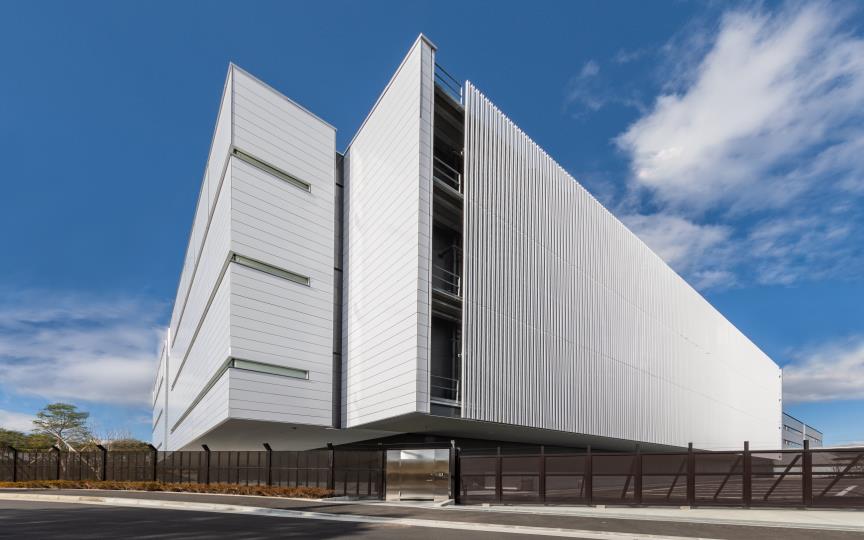
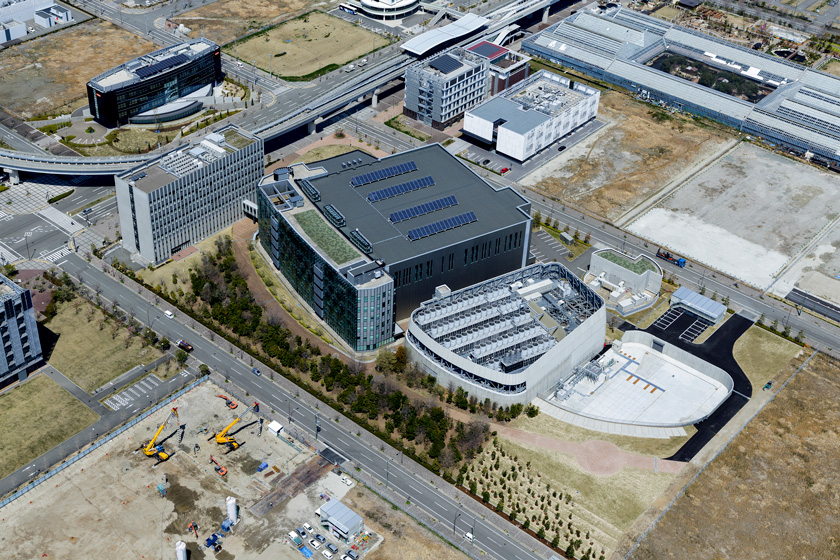
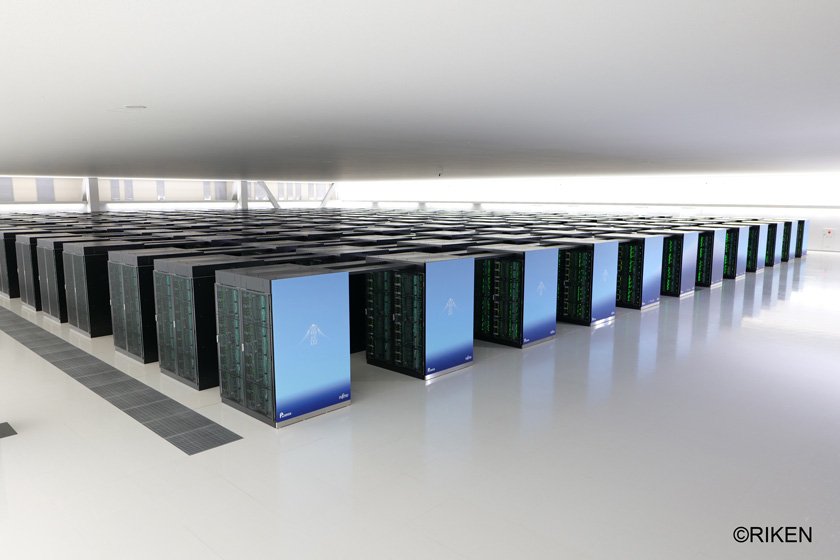
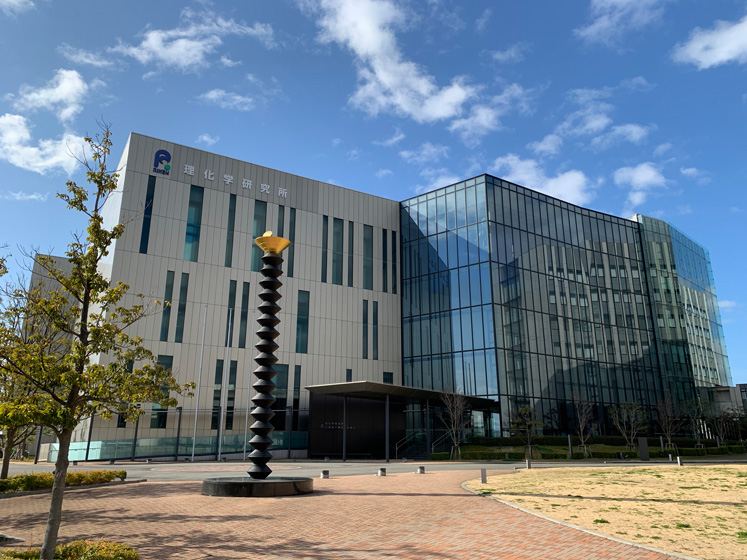
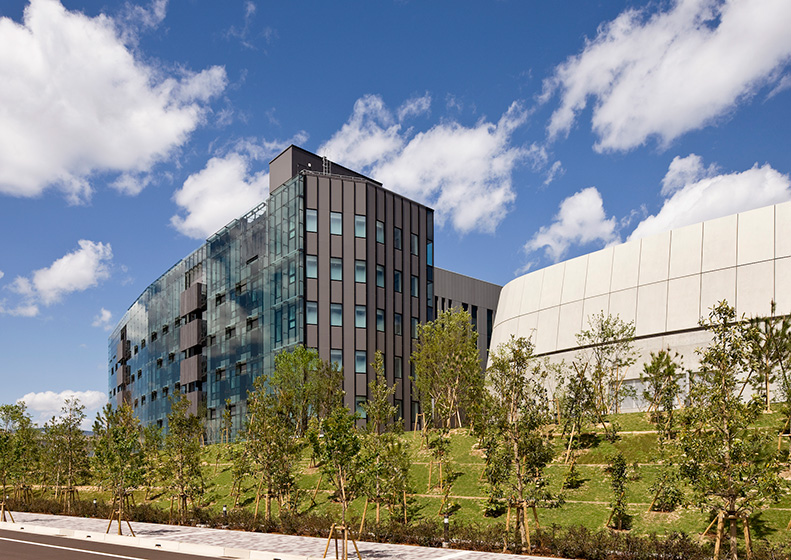
Supercomputer "Fugaku" It is planned as the successor to “K,” which was recognized as the world’s fastest supercomputer in 2011, and aims to achieve up to 100 times the effective application performance of “K,” which was retired in 2019.Nikken Sekkei designed the building and facilities that housed “K,” and subsequently supported the design of the expanded building and facilities for “Fugaku.” Although “Fugaku” was installed in the same 50-meter-by-60-meter computer room as “K,” the design was carried out to create a building and facilities environment commensurate with its capabilities.
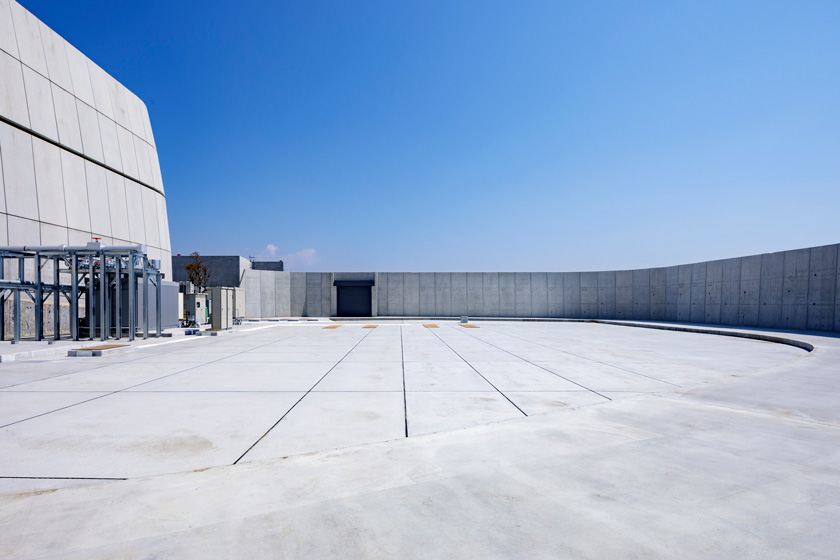
In supercomputers, rapid fluctuations in CPU power consumption generate heat, which is cooled instantly using cooling coils. While the ratio of air cooling to water cooling was 1:2 in “K,” it has shifted to 1:9 in “Fugaku,” enabling efficient and stable cooling through the use of cooling water.We have simulated the operation and control methods for these heat sources and the cooling water circulation system. “Fugaku” achieved approximately 40 times the LINPACK (direct solution of dense matrices) performance of “K” while keeping power consumption to about half that of “K,” earning it the top spot in the June 2020 Supercomputer World Rankings.
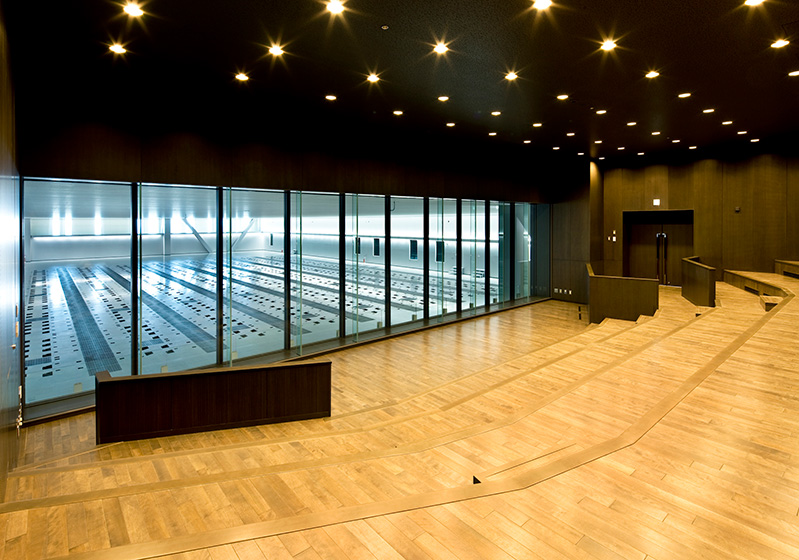
Because this building was designed as an integrated research and development facility supporting the supercomputer, it has become a hub for simulation science.
It has achieved results not only in academic research but also in industrial applications such as materials development and new drug development, and there are currently high expectations for its role in the development of a COVID-19 vaccine.
In supercomputers, rapid fluctuations in CPU power consumption generate heat, which is cooled instantly using cooling coils. While the ratio of air cooling to water cooling was 1:2 in “K,” it has shifted to 1:9 in “Fugaku,” enabling efficient and stable cooling through the use of cooling water.We have simulated the operation and control methods for these heat sources and the cooling water circulation system. “Fugaku” achieved approximately 40 times the LINPACK (direct solution of dense matrices) performance of “K” while keeping power consumption to about half that of “K,” earning it the top spot in the June 2020 Supercomputer World Rankings.
Because this building was designed as an integrated research and development facility supporting the supercomputer, it has become a hub for simulation science.
It has achieved results not only in academic research but also in industrial applications such as materials development and new drug development, and there are currently high expectations for its role in the development of a COVID-19 vaccine.
| ARCHITECT | RIKEN Center for Computational Science |
|---|---|
| Location | Hyogo Prefecture Government Kobe City |
| SITE AREA | 20,000.01 m² |
| TOTAL FLOOR AREA | 22,640.72 m² |
| BUILDING HEIGHT | GL +32.730 m |
| COMPLETION | 2010 / (Renovated) 2020 |
SERVICES
DOMAIN
AWARD
- Society of Heating, Air-Conditioning and Sanitary Engineering Award
- The Institute of Electrical Equipment Award
- Cogeneration Grand Prize
- Energy Conservation Grand Prize
- Kobe City Urban Design Award
SHARE



-
 SS Co., Ltd.
 -
 SS Co., Ltd.
 -
 ⓒRIKEN
 -
 Kazuo Natori [Studio Natori]
 -
 Courtesy RIKEN Center
 -
 Kazuo Natori [Studio Natori]
 -
 Kazuo Natori [Studio Natori]
 -
 Kazuo Natori [Studio Natori]
1 /
1