The COVID-19 pandemic seems to be questioning the very essence of cities, which create value and appeal through the gathering of people. We have come to recognize the importance of systematically dispersing and leveling out people, goods, and information that have previously been concentrated and accumulated. I think we all remember the planned power outages implemented in the Tokyo metropolitan area after the Great East Japan Earthquake, which forced society as a whole to reduce its use of electricity. After that, the idea of controlling the peak demand for electricity as a whole became widespread, but we were able to get through it without having to change the concentration in cities or work styles. However, in the post-COVID era, with social distancing required, it will become common sense to eliminate concentration and disperse not only energy but also the flow of people, leveling out peaks and densities. In other words, it is the realization of a low-peak society.
IoT and AI are driving a major transformation in the manufacturing industry towards Industry 4.0. Since mechanization, automation, and robotics are being promoted as means of avoiding the "three Cs" (closed spaces, crowded places, and close-contact settings), we believe that the direction of Industry 4.0 and the post-COVID-19 era align. The mass customization achieved in Industry 4.0 involves the small-scale production of unique items desired by consumers, delivered to them through an optimized supply chain. This concept involves efficiently moving things and services to the most optimal locations, rather than concentrating all processes in one place. In other words, considering the ongoing trend from centralization to decentralization in the manufacturing industry, the post-COVID-19 low-peak society is not unusual, but rather an extension of Industry 4.0.
In Industry 4.0, a Cyber-Physical System (CPS) will be built, integrating the real world and the cyber world, and the overall optimized supply chain will become more fragmented and decentralized. Factories and logistics facilities may be located in urban centers, and manufacturing and sales may even take place within office buildings. The COVID-19 pandemic has led to a shift in the boundaries of building use, such as hotels taking on hospital functions and offices being incorporated into residential buildings. Industry 4.0 and the post-COVID-19 society share similarities in that they require changes in the concept of building use and the development of new laws and regulations.
Real-world social systems require significant transformations and value shifts. Until now, social infrastructure had to be built to accommodate peak demand in order to absorb holiday schedules tied to specific days of the week and seasonal fluctuations. However, if a low-peak society can be realized, unnecessary costs and energy can be eliminated. Taking airport design as an example, while previous plans were based on passenger concentration due to airline arrival and departure schedules, changes in social systems and people's behavior will likely lead to a direction that minimizes the creation of extreme peaks in passenger concentration. Leveling out arrival and departure schedules will reduce peaks and create more space in terminals. This extra space can then be used to strengthen disease prevention measures in arrival routes.
In urban planning, the concept of high floor area ratios in city centers, which attract concentration, may also need to be re-evaluated. If teleworking and suburban offices increase, the one-way commute, which is based on the assumption of going to the city center, will likely be balanced by reverse commuting, and the peak will decrease.
When designing cities and buildings, it is crucial to simulate and consider the concentration and peaks of people and energy. To achieve this, it is likely that we will shift from a design process that uses two-dimensional and three-dimensional drawings to one that considers architectural spaces as a collection of digital information. While BIM (Building Information Modeling) design is already becoming the standard, it is important to connect data not only in the architectural design phase but also in the construction phase and even after completion. Integrating architectural design and construction into a CPS (Cyber-Physical System) not only improves productivity and quality, but also allows for the visualization of pedestrian flow and density analysis, as well as environmental performance monitoring using BIM and big data during the maintenance phase, which is a great benefit for facility managers.
So, how can we foster innovation in a low-density environment? Innovation arises from interactive relationships between people. In architectural planning in particular, emphasis has been placed on providing spaces for direct, face-to-face discussions and interactions. In the post-COVID low-peak society, the question is how to create new interactive spaces for exchange that are not crowded, within offices and research facilities. I believe the hint lies in Japanese architecture, which features semi-outdoor spaces such as verandas and eaves. I would like to propose offices and research facilities that incorporate elements of semi-outdoor spaces that have continuity with the landscape and allow for interaction with the outside space. The Japanese painting below is the national treasure "Summer Evening Screen." This painting, which depicts a family gathering peacefully in a semi-outdoor space and may seem very crudely drawn at first glance, was selected as a national treasure because I believe it expresses the Japanese worldview of coexisting with nature and their view of family. In the post-COVID future Summer Evening Screen, each character is holding an IT tool and sharing a relaxed time while connecting with the CPS society. In a low-peak society where decentralization has progressed more than centralization, we can envision a landscape where the entire world coexists peacefully. (August 7, 2020)
* "Beyond Covid-19: Society, Cities, and Architecture" is a series. Going forward, architects, planners, engineers, consultants, and others will regularly share their visions from their respective professional perspectives.





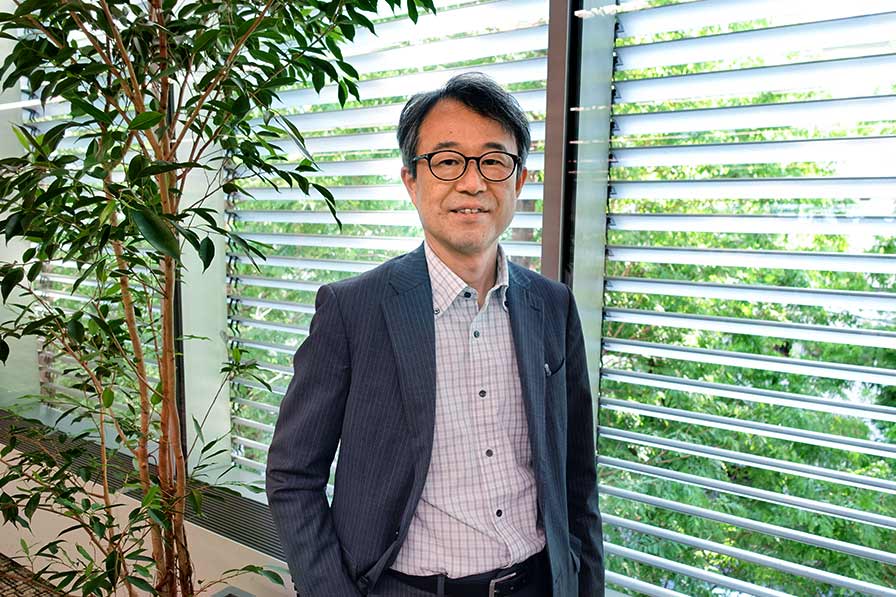 Nikken Sekkei Executive Officer Architectural Design Department Principal, Document Design Center, Principal
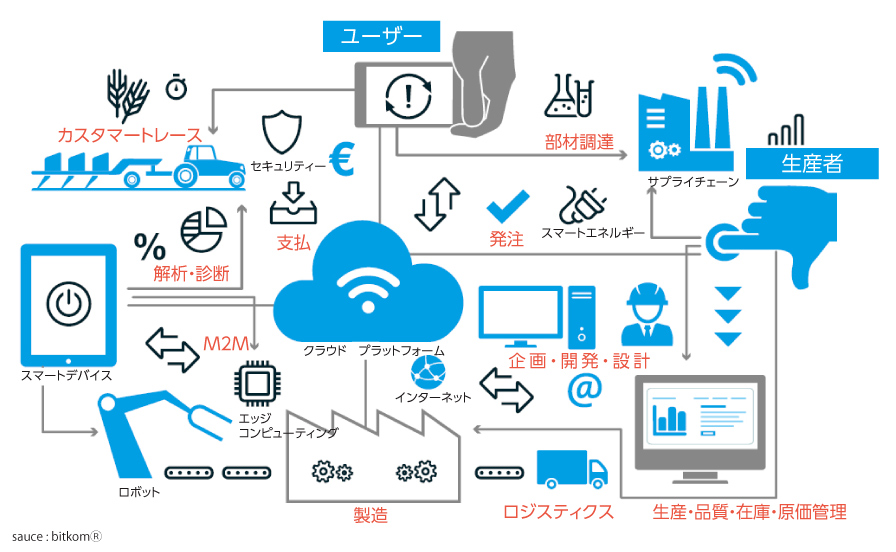 Diagram of manufacturing brought about by Cyber-Physical Systems (CPS) Source | Bitkom Japanese translation added by Nikken Sekkei
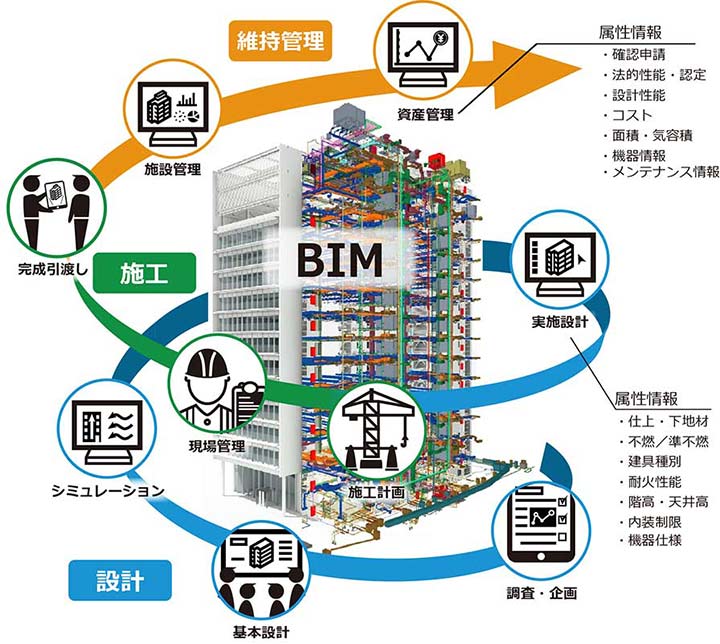 Connecting BIM
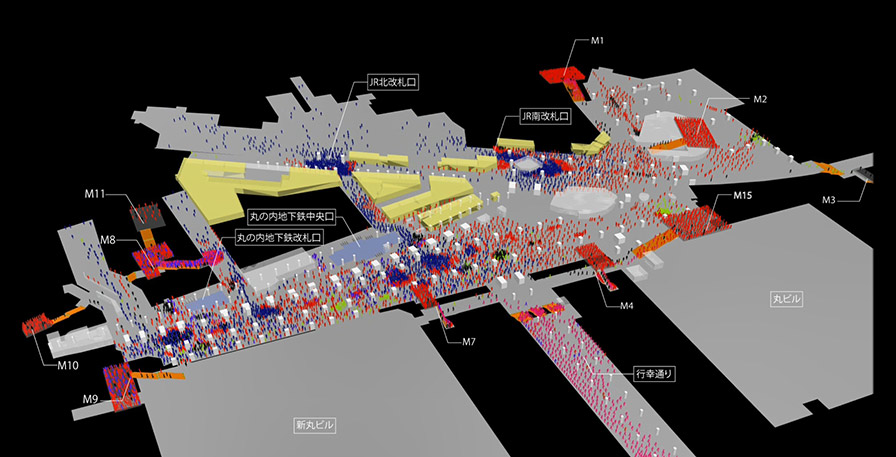 Example of pedestrian flow simulation in a railway station and underground space (Marunouchi, Tokyo)
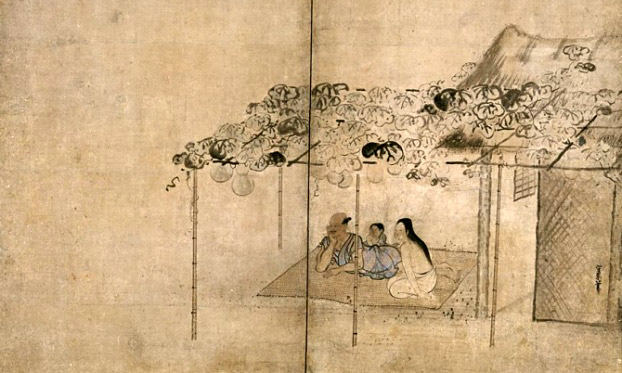 Source | Tokyo National Museum, "Summer Evening Scene Folding Screen," by Hisumi Morikage