
Series: What is Supervision? Part 2
A group of supervising engineers takes on the challenge,
Improving construction quality and streamlining construction processes

An Interview with Kei Kohinata (Design Construction Administration Group, Construction Administration Department Senior Director)

SCROLL DOWN

Project supervision by Nikken Sekkei, a firm with a history spanning more than 120 years since its founding.
Private Rather than relying solely on the expertise and skills of our staff, we compiled an in-house manual titled “Supervision Techniques” in 1992 to ensure that our supervision operations are conducted in a rational, systematic, and efficient manner.This document is packed with knowledge accumulated over many years—ranging from how to read design drawings to guidelines for inspecting and verifying various types of construction work—and serves as, so to speak, Nikken Sekkei’s “bible” of construction supervision. It continues to be revised to this day.

In this article, we will explain the “Four Functions of Construction Supervision” as defined by Nikken Sekkei in Chapter 1 of Part 1 of this document. In the latter half, we will also discuss the support system provided by the newly established “Construction Technology Office” within the Construction Supervision Group, which was created to help put these four functions into practice more effectively.

The Four Functions of Project Supervision as Defined by Nikken Sekkei
——Seamless Management from Design Through Construction
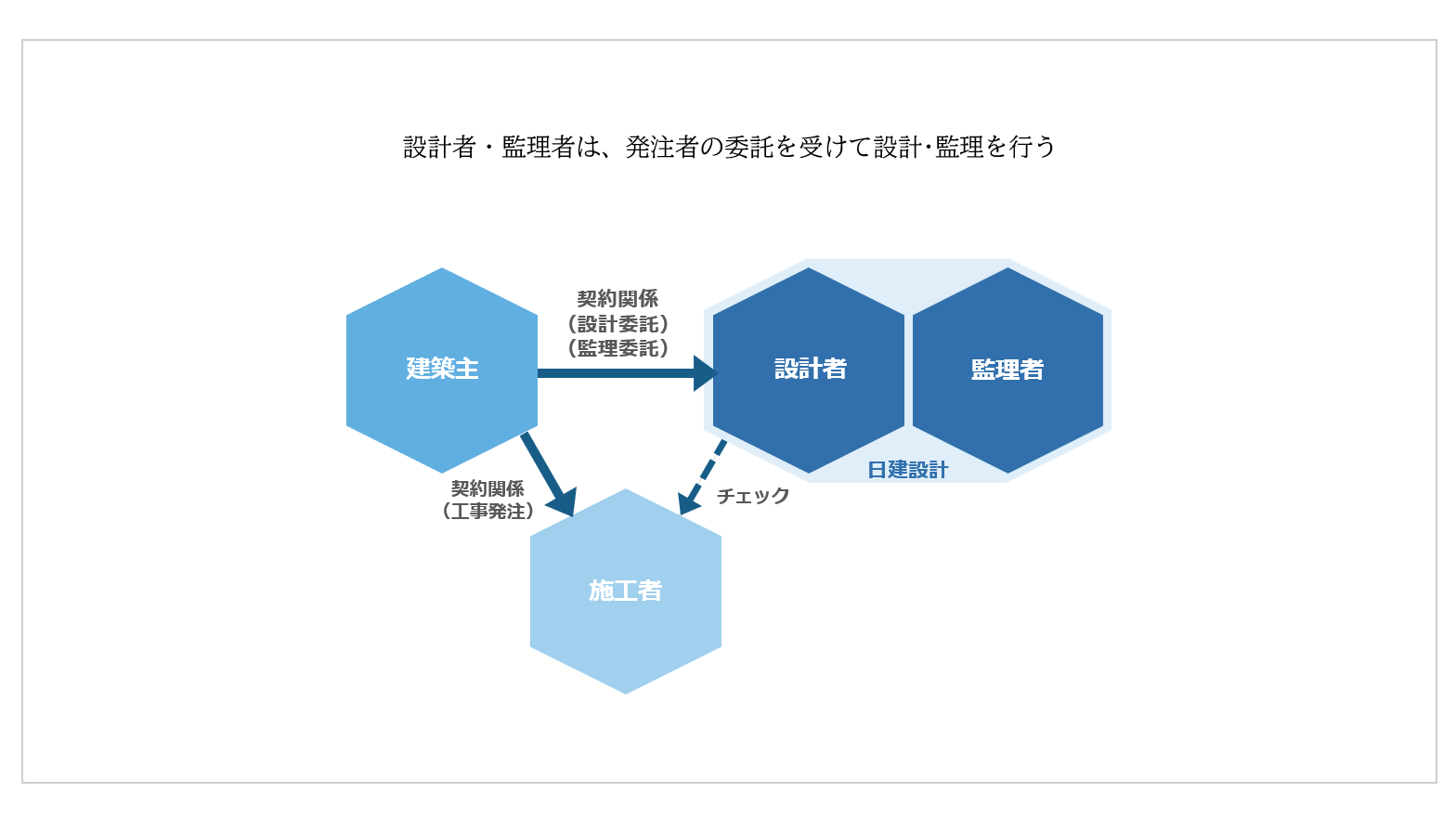
Nikken Sekkei’s construction supervision involves managing quality from a neutral standpoint with respect to various stakeholders, including the client, the designer, and the contractor. Nikken Sekkei’s construction supervision involves managing quality from a neutral standpoint with respect to various stakeholders, including the client, the designer, and the contractor.

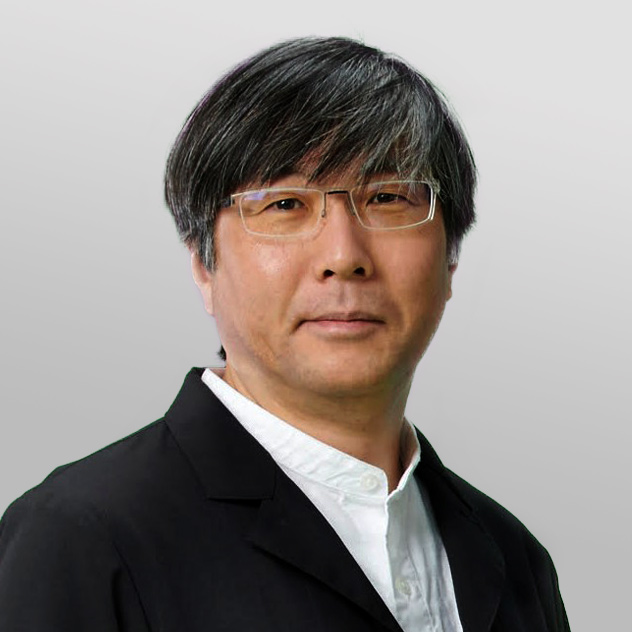
What are the benefits of having an architectural firm oversee construction? — Kei Kohinata, Senior Member of the Construction Supervision Group Director(At the time of the interview)He explains, “We can provide construction supervision that benefits the client by accurately understanding the designer’s intent and taking the contractor’s technical capabilities into account.”
On construction sites—where various stakeholders are involved from design through completion—construction supervision by an architectural firm involves ensuring the quality of the building by applying specialized expertise and maintaining a neutral, third-party perspective.

At Nikken Sekkei, we define the “role of construction supervision” as the following four elements.

Nikken Sekkei’s Supervision Process, Part 1: Confirming What to Build

In Japan, there is a cultural tradition of not including too many details in design drawings, leaving it up to the contractors to determine the specific construction methods. While this practice reflects respect for the contractors’ technical skills and creativity, it requires them to thoroughly interpret the designer’s intent as expressed in the drawings and accurately reflect it in the construction drawings. At the same time, they must verify that the quality and functionality specified in the design documents are consistent with the construction drawings.

Nikken Sekkei’s Supervision Role, Part 2: Verifying How It Will Be Built

Once the construction drawings are complete, we must review the construction methods. This is a process of collaborating with the contractor to determine the procedures that will ensure functionality and quality while enabling the construction work to proceed smoothly. To prevent defects in areas that will become hidden as construction progresses, we review construction plans, construction guidelines, and factory fabrication instructions at various stages of the construction process and conduct repeated inspections of the construction methods.

Nikken Sekkei’s Supervision Role (3): Verifying the Completed Work

During inspections conducted both during and after construction, we verify that functionality and quality meet design specifications. If any defects are discovered at this stage, it can lead to rework or delays in the construction schedule, causing disadvantages for all parties involved. “To prevent this from happening in the first place, we need to focus on steps ① and ②,” said Senior Kohinata. Director(At the time of the interview). Nikken Sekkei’s construction supervision safeguards the client’s interests by assessing the precision of the work from a perspective different from that of the contractor.

Nikken Sekkei’s Supervision Role (4): Providing Advice on Construction Management

Items ① through ③ fall within the scope of construction supervision as defined by the Building Standards Act; however, at Nikken Sekkei, we also consider providing advice to contractors regarding construction operations to be part of our supervision services.Construction management refers to “management at a construction site involving numerous stakeholders—including the client, designers, contractors, and manufacturers—that goes beyond mere construction planning and execution,” according to Senior Partner Kohinata. Director(At the time of the interview)I'll explain.
He explains the secret to putting this into practice by citing a management principle that has been passed down within the company: “Seventy percent planning, thirty percent skill.” “A supervisor who can effectively manage a job site has a solid plan in place. They don’t just think about tomorrow or next week—they have a clear vision of the entire process leading up to completion.”

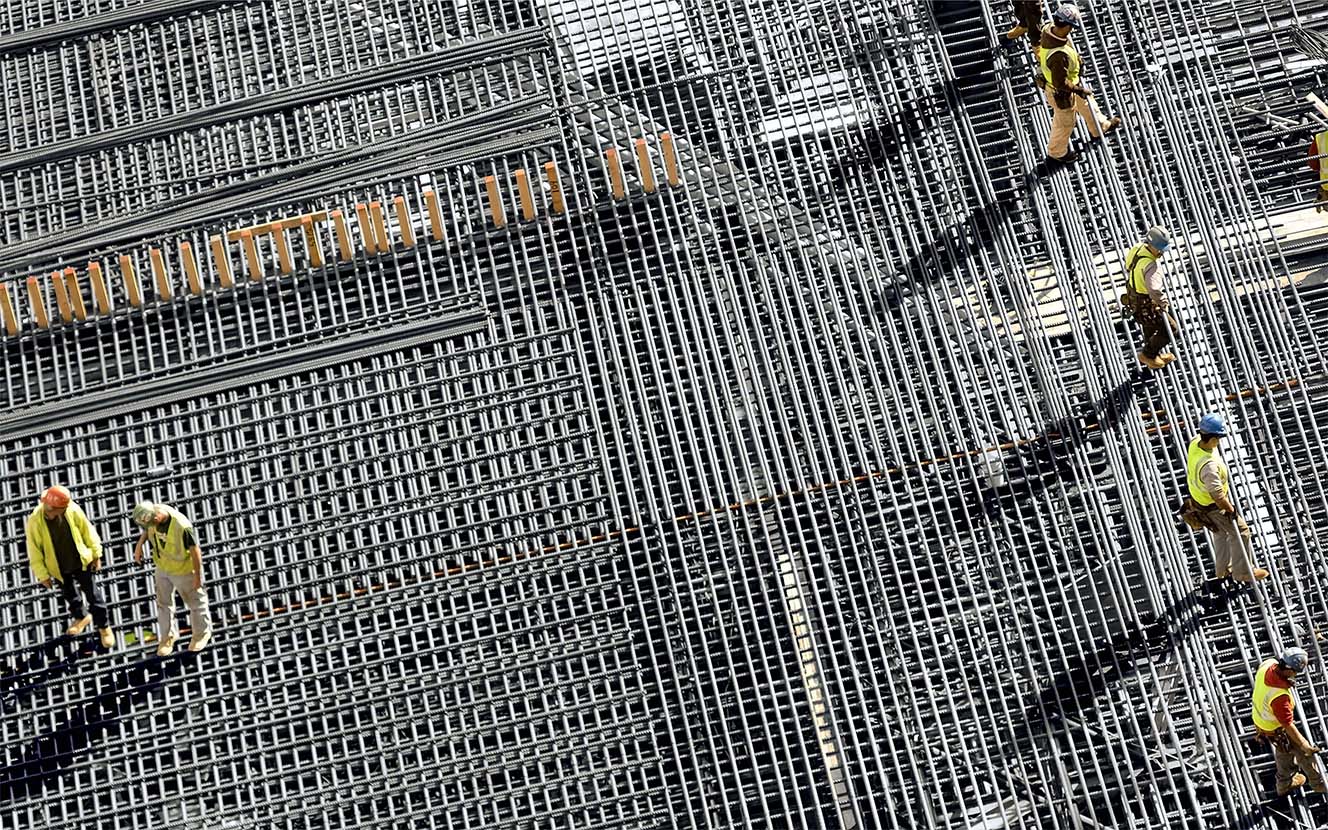
Here, “skill” refers to technical knowledge, such as checking construction drawings and conducting construction inspections.On the other hand, “planning” refers to “sharing a common understanding and resolving issues early on with contractors and other stakeholders.” For example, in rebar work, reviewing the intent of the structural drawings and the rebar installation guidelines with the contractor and discussing the procedures in advance ensures that on-site operations run smoothly. Kohinata Senior Director(At the time of the interview)He says, “The true appeal of construction supervision lies in earning the trust of those on-site and serving as a hub that ensures the work of all stakeholders proceeds smoothly.”

Nikken Sekkei aims to ensure quality while also streamlining, improving the efficiency of, and facilitating the construction process by having project managers implement these four elements in a well-balanced manner.
 

Comprehensive technical support from the initial concept through to completion
——Establishment of the Construction Engineering Office

In October 2020, we established the Construction Technology Office within Nikken Sekkei’s Engineering Department with the goal of “strengthening design documents” to ensure a smooth transition from design documents to construction.Although there had previously been points of contact within the Project Management Group, this new division was organized as a dedicated department. It serves as a cross-group platform that supports the entire building lifecycle—from the conceptual design phase through to post-completion—and provides technical support to both internal and external stakeholders. Senior Kohinata Director(At the time of the interview)In addition, several “Director s” serve as points of contact, creating a system where employees can easily seek advice on a wide range of topics—such as construction methods and project schedules—within the company. Furthermore, this is a groundbreaking initiative—the first of its kind among domestic design firms—in which engineers with advanced specialized knowledge collaborate as needed to solve problems in various situations.

Our main business activities consist of the following three areas:

Construction Engineering Department Responsibilities (1): Incorporating constructability studies into planning and design

Starting from the conceptual design phase, we establish appropriate construction schedules and evaluate constructability, providing phased support tailored to the level of detail and precision required for the project. For example, in large-scale urban development projects involving underground excavation, the construction schedule has a significant impact on the budget. By conducting technical assessments of the client’s interests and risks from the earliest stages, we incorporate these findings into the design to proactively prevent cost overruns and schedule delays.

Construction Engineering Department Operations (2): Providing Construction Engineering Support for Special Projects

For projects with a high level of construction complexity, members of the Construction Technology Support Office sometimes join the design team from the early stages and even give presentations to the client.
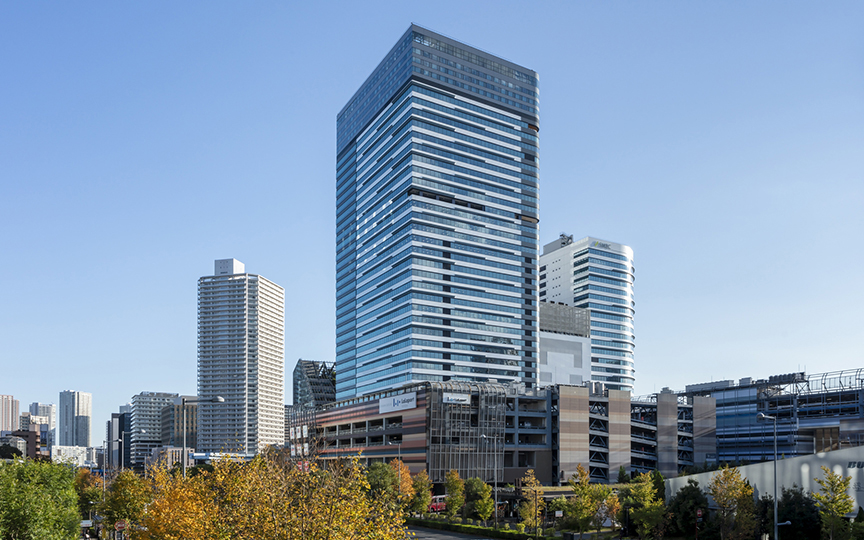
Regarding the Shibuya Station area redevelopment project, for which Nikken Sekkei provided consulting services, and the “Shibuya Scramble Square the First Phase (East Tower)” (2019), for which the firm served as design supervisor, Senior Partner Kohinata stated that various challenges—including complex underground construction, construction on a narrow site, and the reorganization of passenger flow—were “overcome through a three-way collaboration among the developer, the contractor, and the design supervisor.” Director(At the time of the interview)He says that such specialized skills will be put to use in future projects—such as redevelopment—that require advanced expertise.

Construction Engineering Department Operations (3): Deepening the Understanding and Knowledge of Designers and Others Regarding Construction Technology

Design drawings must take constructability into account. We are working to improve the robustness of our design drawings to prevent design changes caused by poor constructability, as well as the resulting problems such as increased costs and extended construction schedules.


Supporting Building Owners Through Technical Consulting
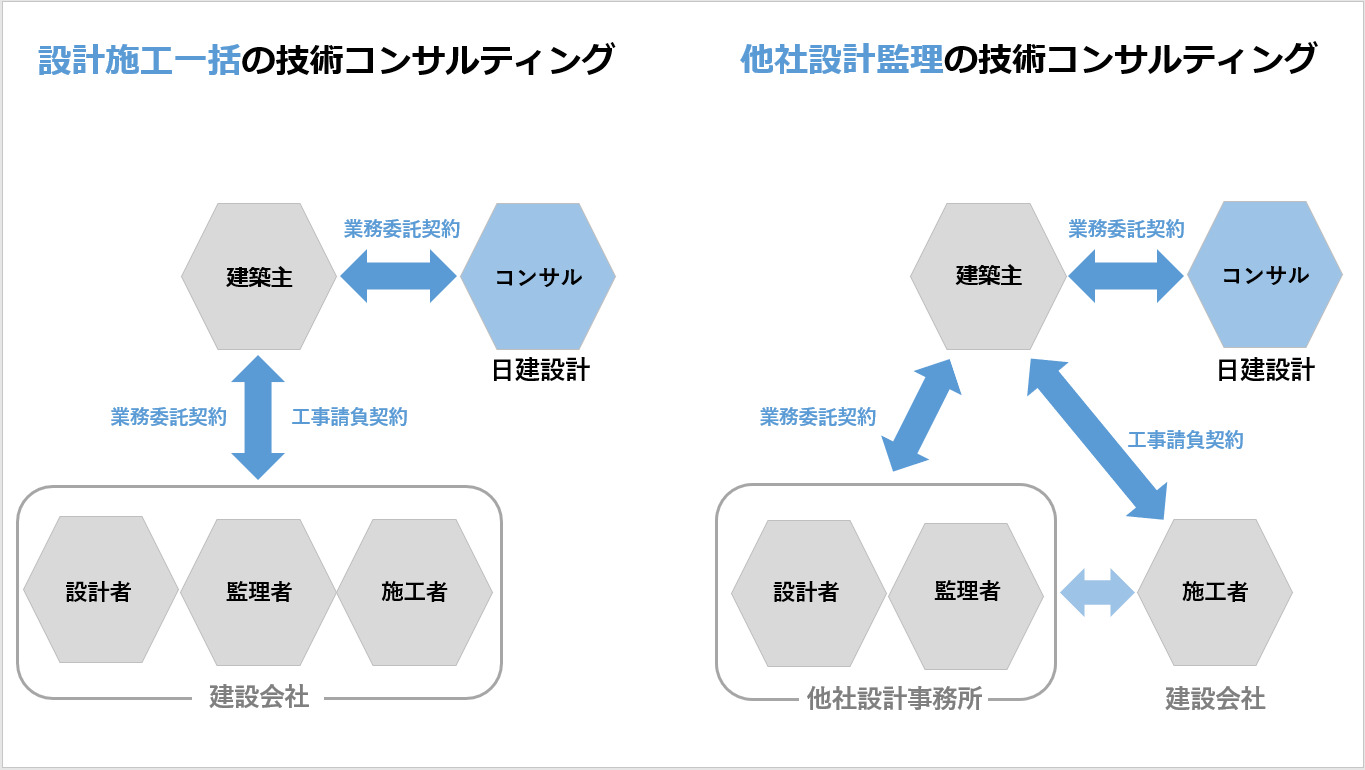
The Construction Engineering Department also provides technical consulting services commissioned directly by clients, including proposals for construction plans for the redevelopment of large shopping centers and the design of special structures for massive underground shopping malls in front of train stations.
 

Organizational Chart of Nikken Sekkei's Technical Consulting Division Organizational Chart of Nikken Sekkei's Technical Consulting Division

As an independent third party separate from the design, supervision, and construction teams, we provide effective and appropriate advice to ensure reliable quality and the smooth progress of construction projects, thereby supporting building owners. The Construction Technology Department is a group of experts that transcends internal and external boundaries to provide technical support for a wide range of challenges—from planning through design and construction to post-completion.

In our next post, we’ll discuss sustainable organizational management.
This site uses cookies. By continuing to use this website, you consent to the use of cookies.Our policy.