
Communicating a unique culture only found here
SCROLL DOWN
On 7th February 2014, The Ritz-Carlton, Kyoto, was opened on the banks of the Kamogawa River, a location with a panoramic view of the Higashiyama Mountains.
Hiroaki Otani, who was in charge of the hotel’s design, represents the design team in speaking about the concept and work that went into the construction of this hotel.



Building a hotel in a place of cultural traditions
Meanwhile, The Ritz-Carlton, a global name in luxury hotels, desired a hotel of unrivaled stature at a location that is exceptional even within Japan.
All the parties involved in the construction of this hotel had one common aspiration: to create a hotel where the guests can sense that “Japan has such extraordinarily attractive places like this; Japan’s beauty is truly exceptional; and the quintessence of that beauty lies in Kyoto.” In the design stage, we worked with the staff of Sekisui House under the slogan of “beauty with age,” to create a design for a building that could slip quietly into this environment as if it had always been standing there.
We wanted to communicate an air of beauty
This air is expressed most notably in the border areas straddling the exterior and interior of the building. For instance, in the intricate details of the balustrade surrounding the building, the thin concrete soffits, and the slight upward curvature at the edge of the eaves. These elements compose the building and maintain a fine sense of tension. We succeeded in creating an architectural expression that can only be found in Japan by mobilizing the full skills of Japan’s superb tradesmen.
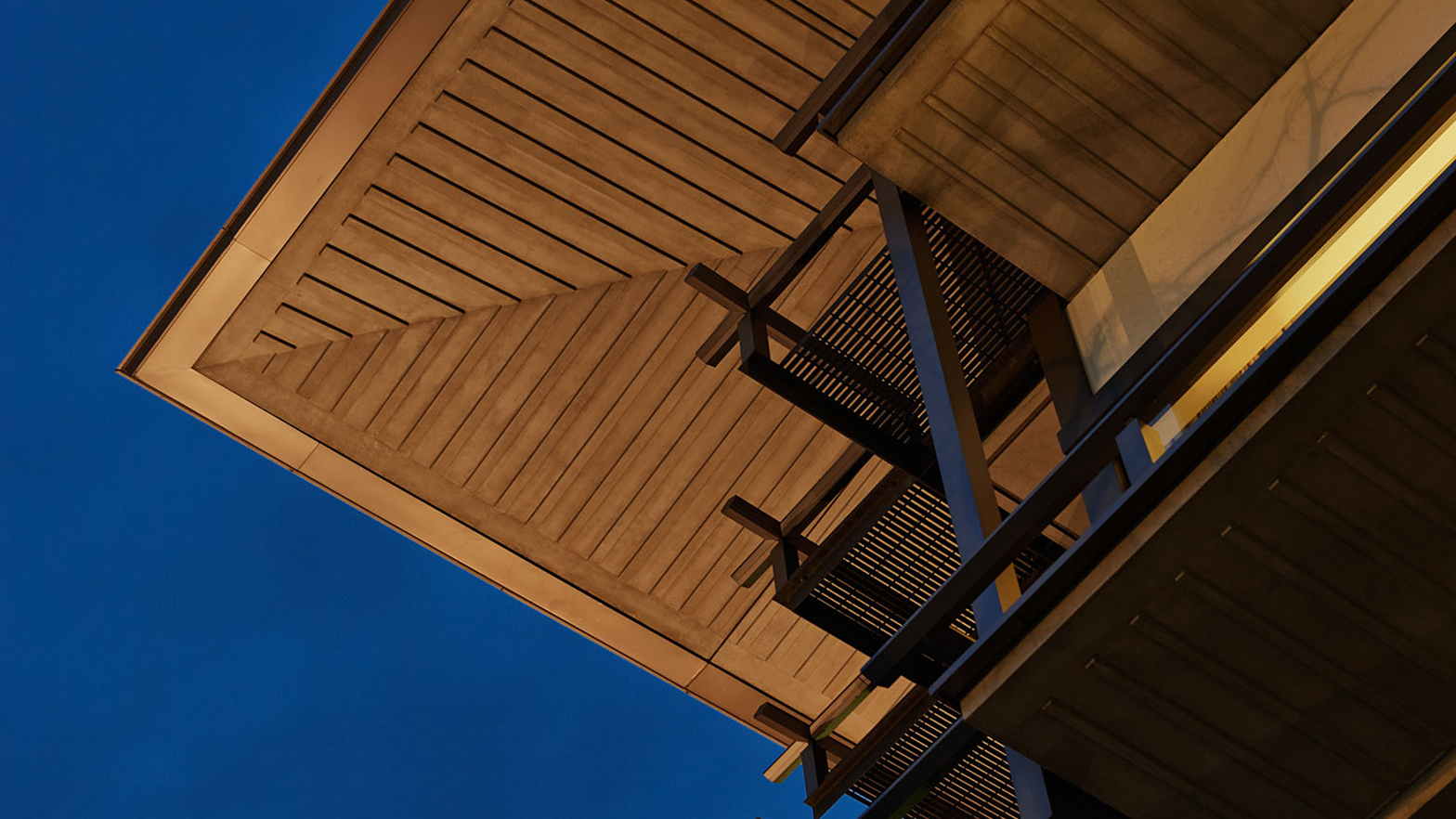 Not ornamental, the thin concrete supporting the roof become the soffits.
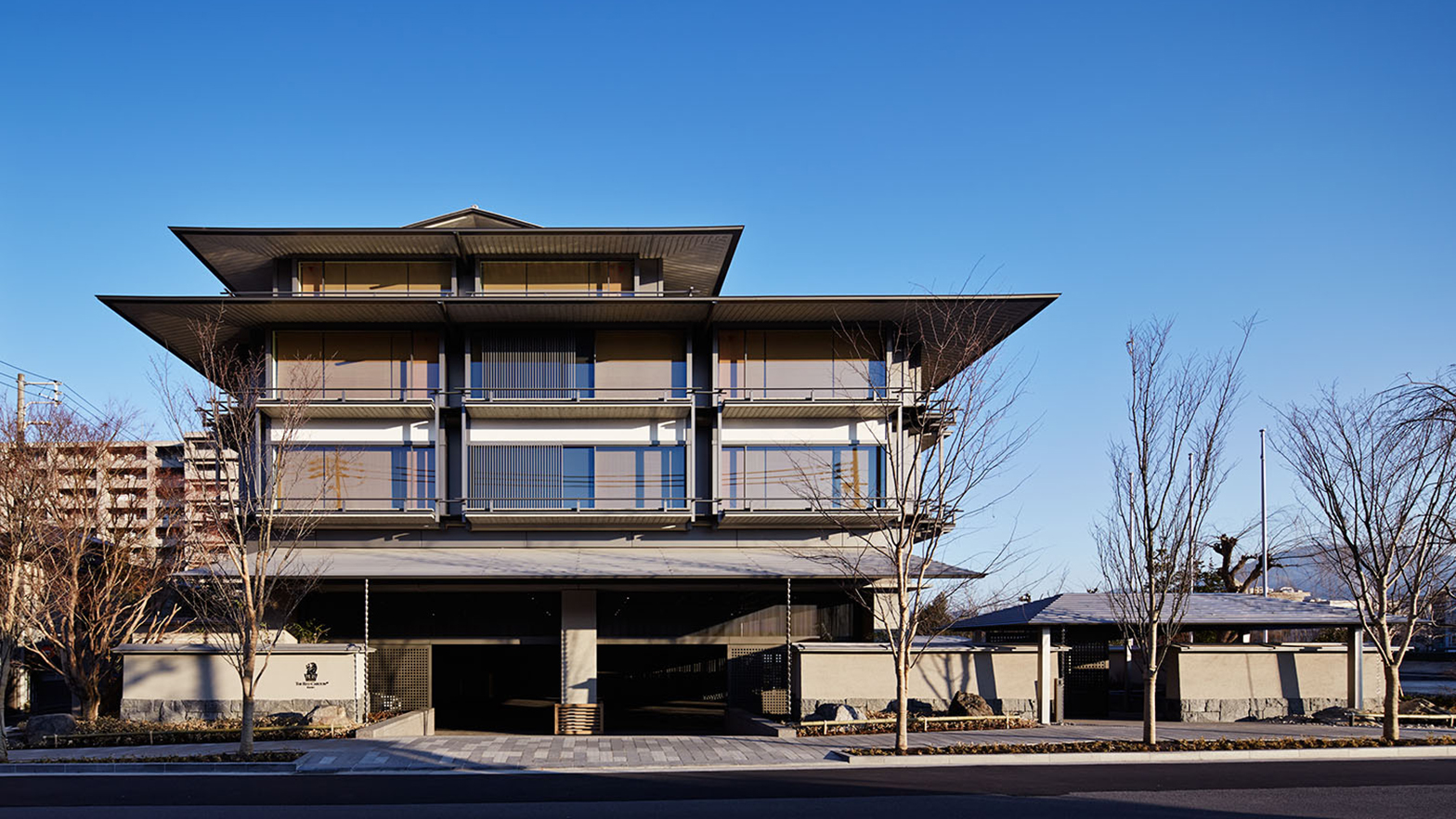 The very slight upward curve at the edge of the eaves adds a tension to the entire structure.
Communicating a unique culture only found here
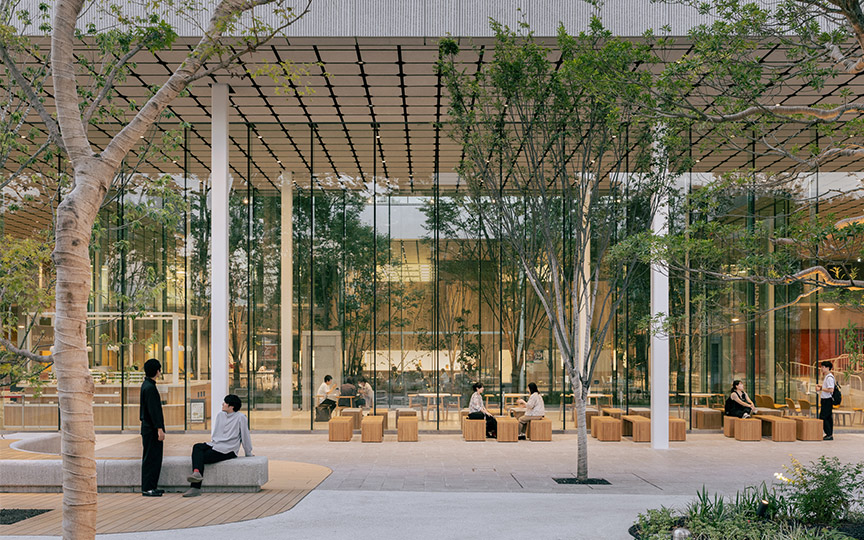
This low-rising building maintains a human scale that blends into the environment of Kyoto. This is a sense of scale that cannot be found in other major cities of Japan like Tokyo or Osaka, and here, as well, the unique atmosphere of Kyoto is apparent.
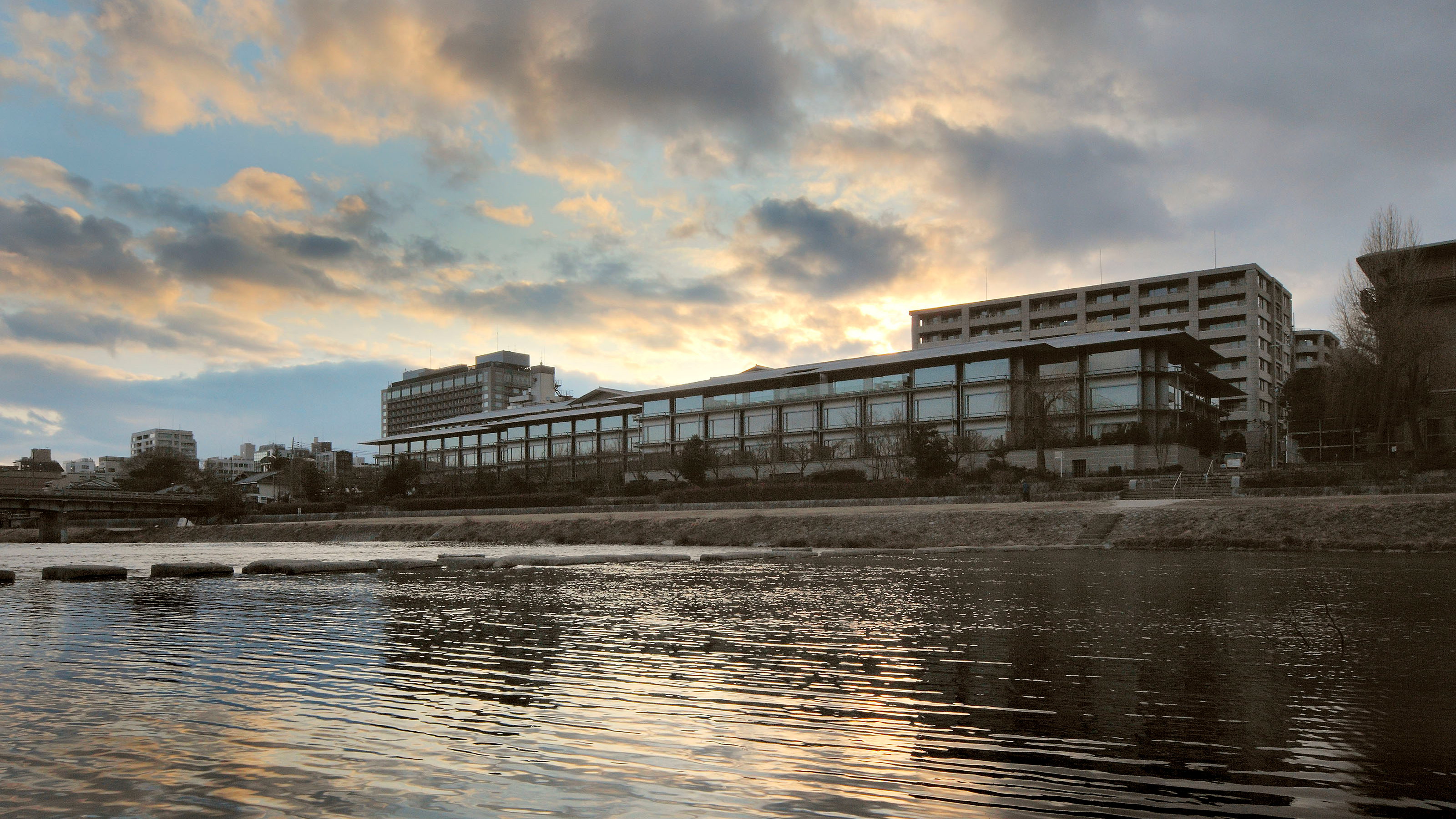 The exterior incorporates the simple straight lines and sense of tension of the traditional sukiya style of architecture. The 130-meter long frontage faces the river
A hotel that is worthy of representing Kyoto and Japan
Everyone engaged in this work from the design to all stages of construction had to endure many trials and tribulations. But we also felt an incredible joy when the building was completed. (Talk by Hiroaki Otani, Executive Officer, Principal, Architectural Design Department)
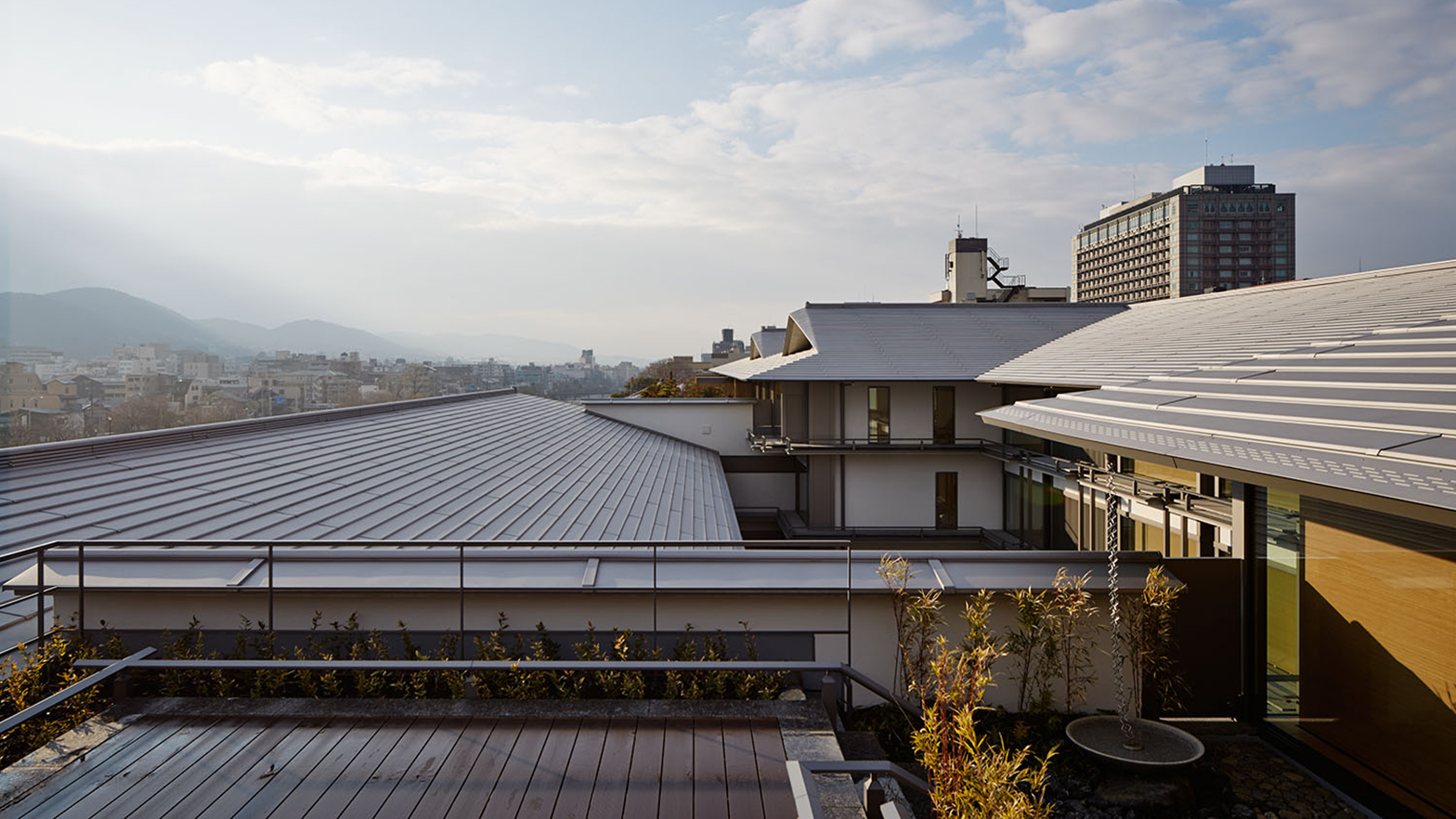 The aura created by the roof is indispensable in Japanese architecture.
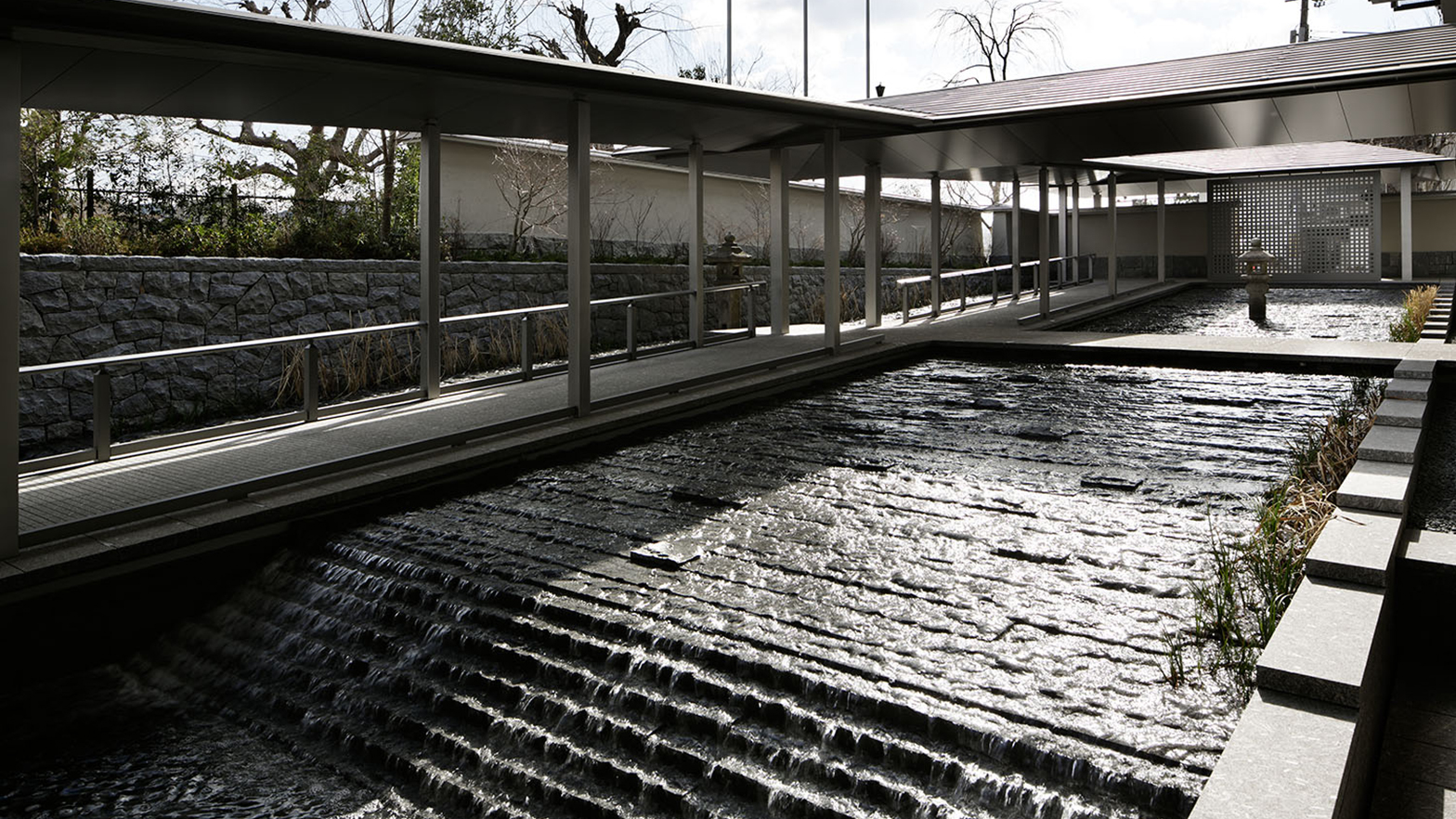 Approach
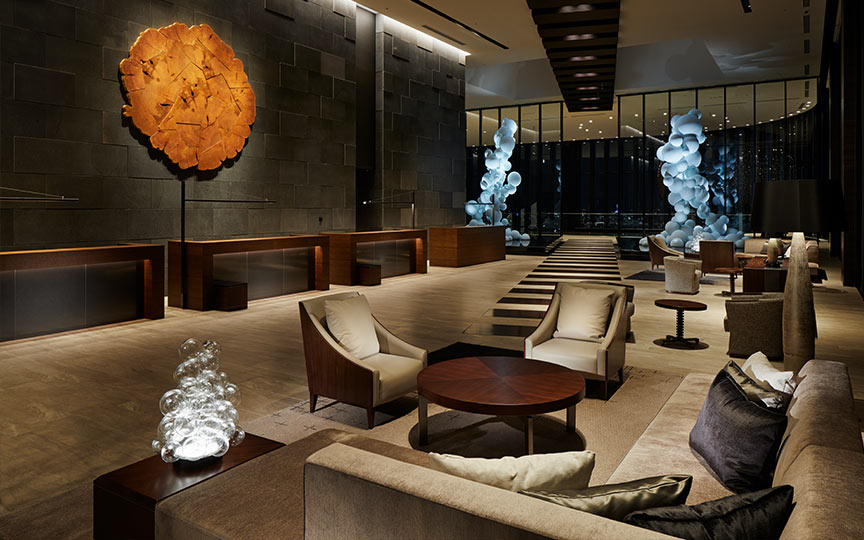
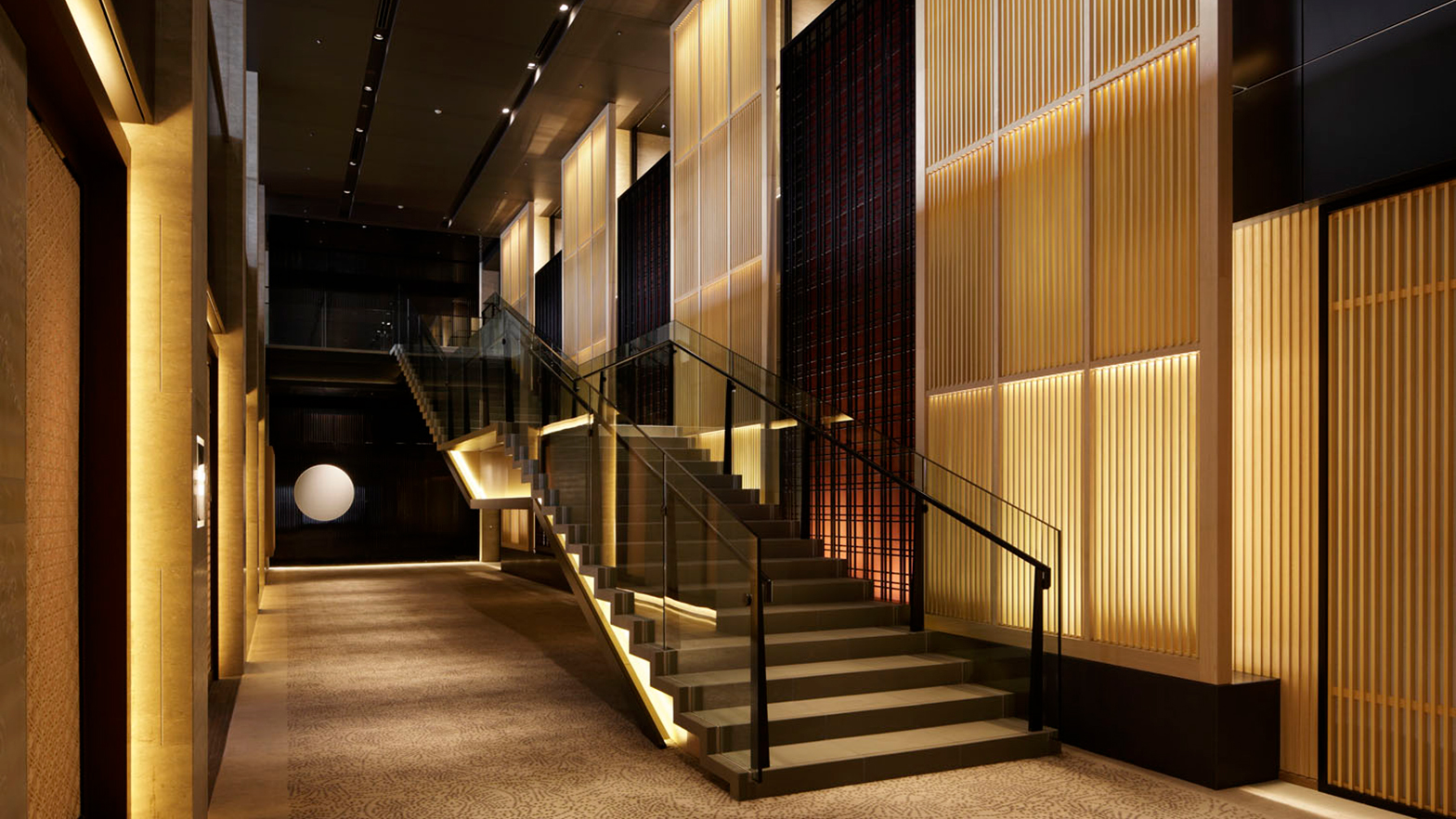 Lobby floor atrium
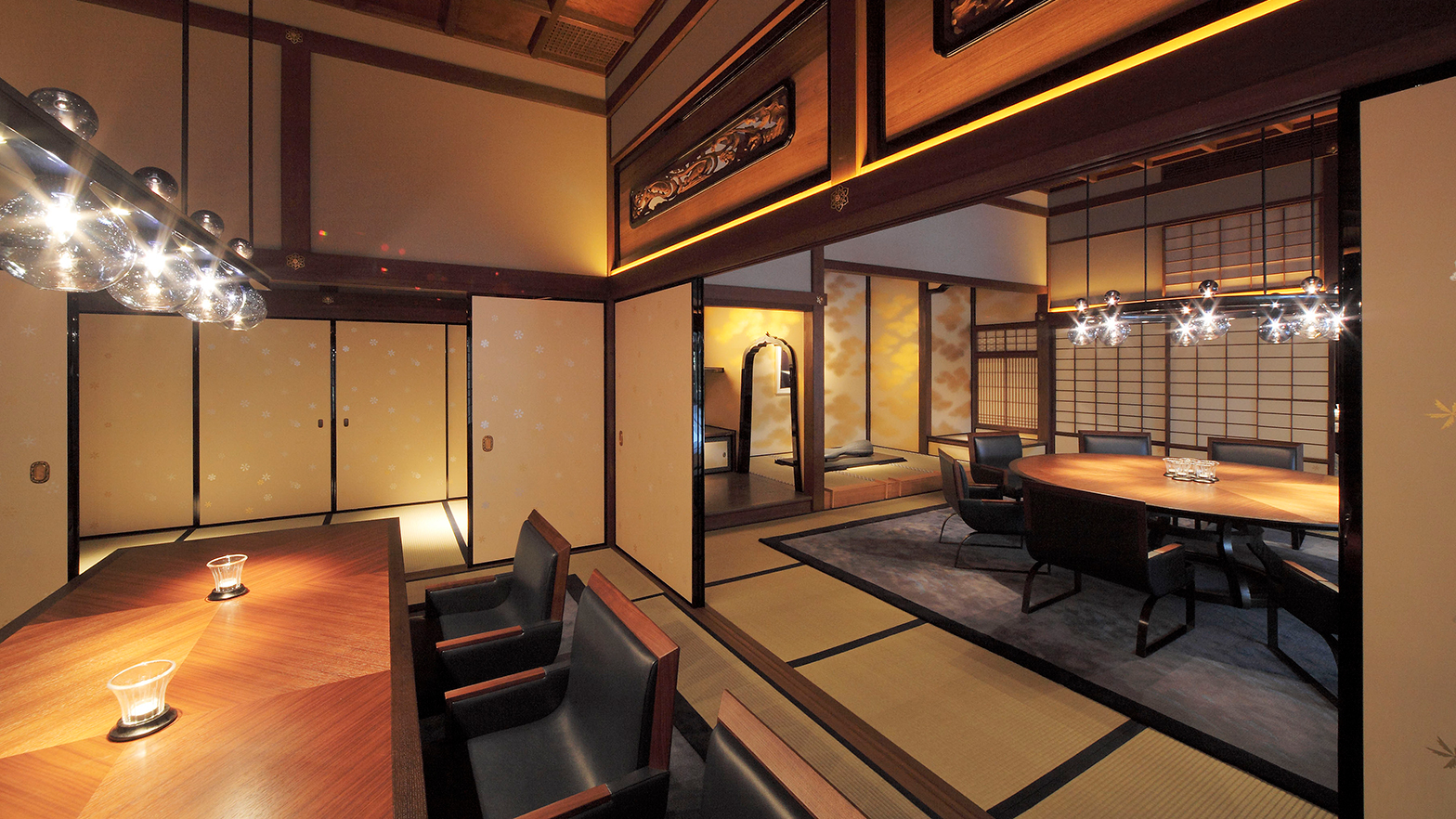 The drawing room of the former Ebisugawa-tei (residence of Baron Fujita) was reassembled here.