
Untold Proposals for the Future – Nikken Sekkei's Professional Services
Part 1: Nikken Sekkei's DX and the Future of Architecture (Part 2)
SCROLL DOWN
In the world of architecture, what is now possible thanks to DX (digital transformation)?At Nikken Sekkei, we are taking on a variety of challenges by making full use of digital technology. For example, we are creating new forms of expression and services in every context—from geometry engineering to realize complex shapes, to dynamic and innovative facade designs, to the archiving of spatial data and the construction of XR (virtual reality) spaces.
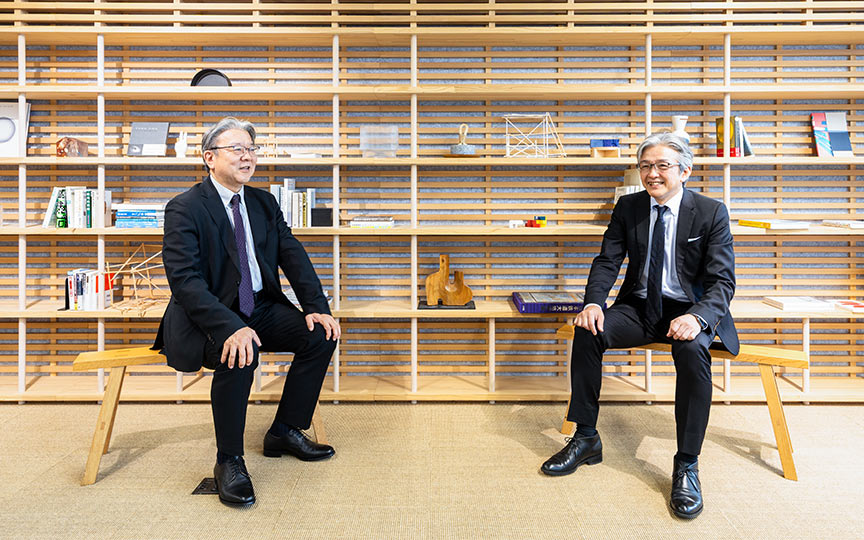
Underpinning Nikken Sekkei’s DX efforts is the Digital Design Lab (DDL) within the Tech Design Group at Design & Technical Department.Established in 2011, the DDL consists of a total of 15 members who conduct independent research and development and collaborate with other departments to create new forms of architectural expression. We spoke with Daisuke Tsunoda Director, who leads the DDL, about the cutting edge of Nikken Sekkei’s DX efforts.



Visualizing invisible information and creating a dynamic facade.
One example of this data visualization being incorporated into architecture is the kinetic facade of the lower floors of "Shibuya Sakura Stage." This building was designed by Makoto Furuya + NASCA + Nikken Sekkei. The 300-meter-long pink facade, inspired by cherry blossoms, strangely appears to move as you walk through it.
Another prime example is “i liv” in Ginza, Tokyo, which translates the characteristics of a water’s surface onto the building’s facade. In response to the architectural designer’s request to “create a facade resembling a calm water surface,” DDL analyzed the relationship between the shapes of waves on the water’s surface and wind speed.We then conducted a thorough analysis to determine what shape would best represent a “calm” state. We arrived at a solution that expresses the water’s surface by layering glass to create a topographic surface resembling contour lines on the building’s exterior.
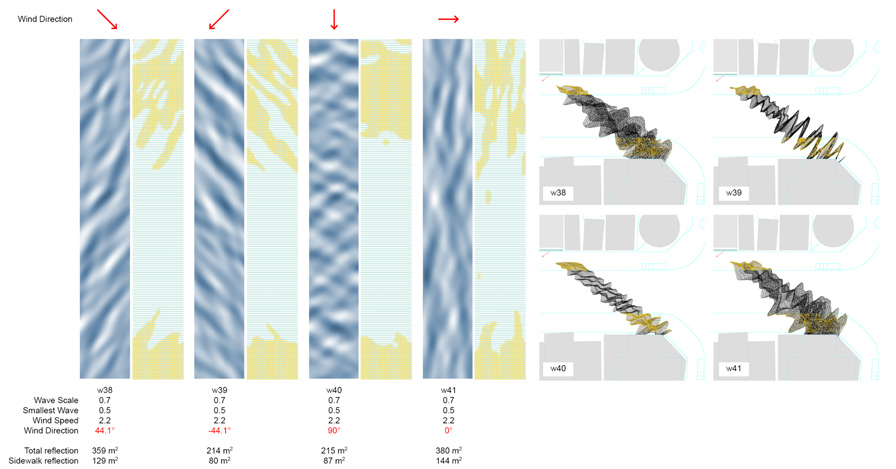
Reading and analyzing data from the truths hidden within natural phenomena, materializing that data, and creating new expressions in architecture—that is one of the digital transformations that Nikken Sekkei is undertaking.
Archiving spatial information
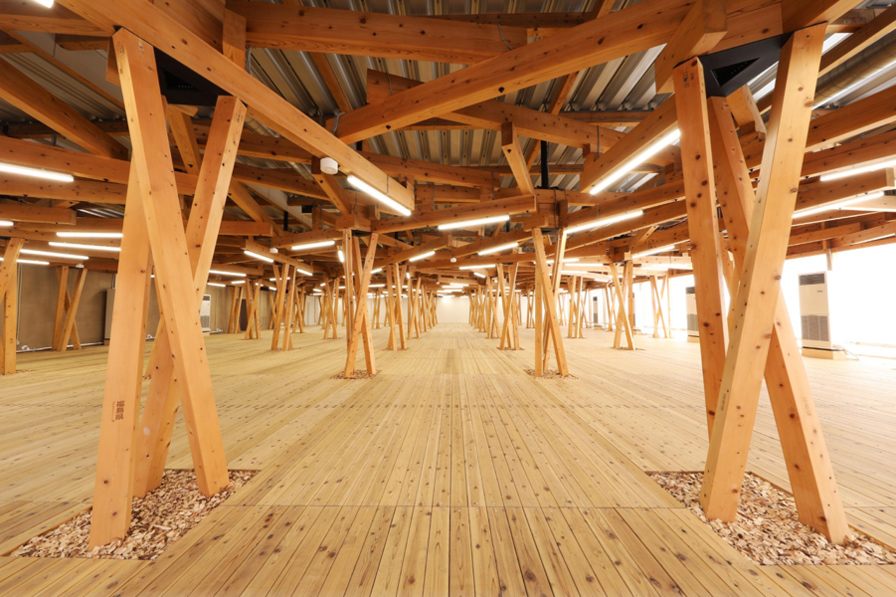 ©Gankosha
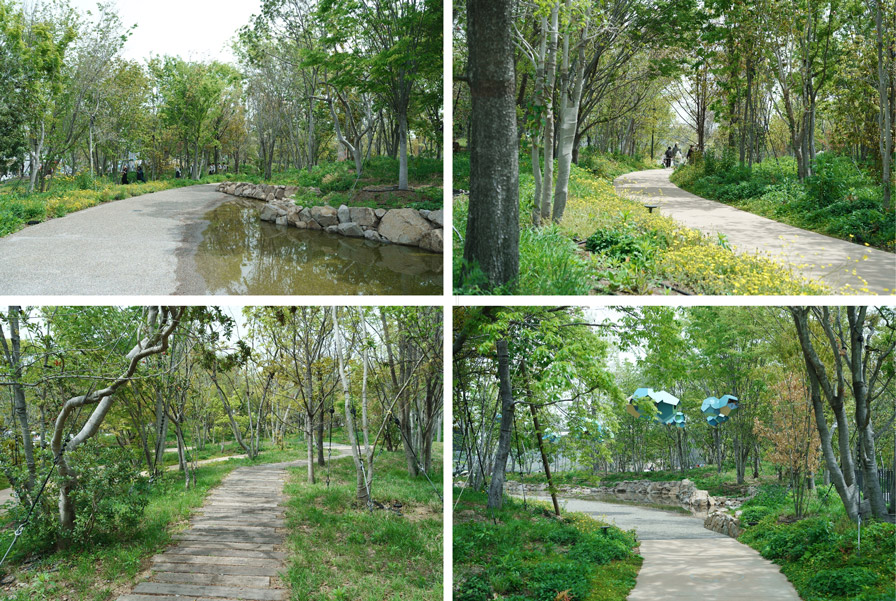 © Nikken Sekkei
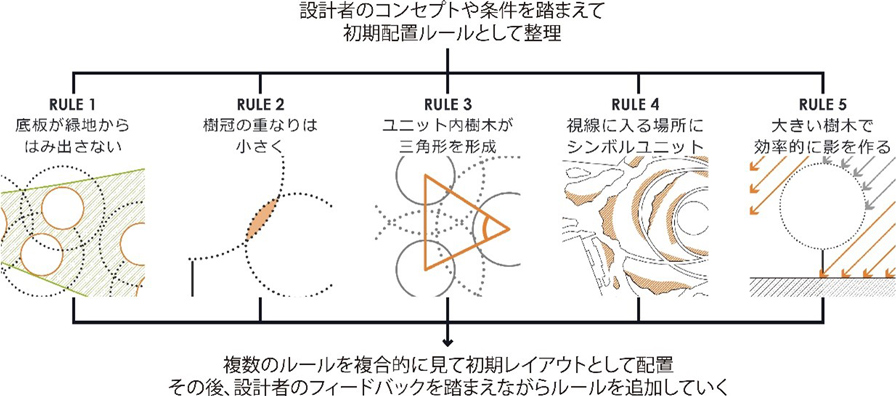 Five initial placement rules
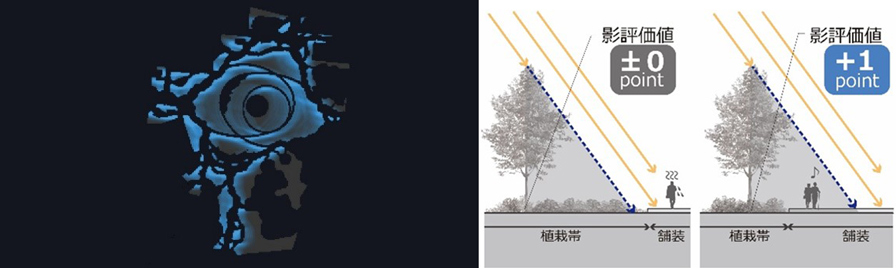 An image illustrating solar radiation analysis. The blue areas indicate locations where tall trees should be placed to create shade.
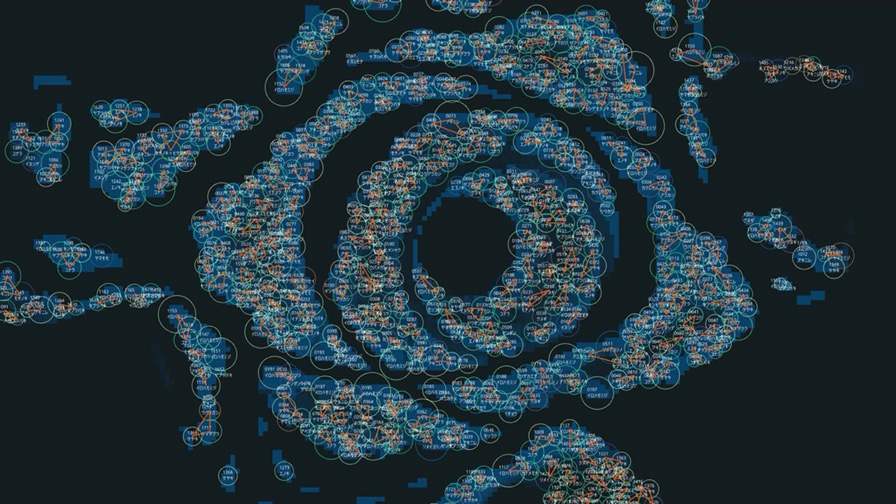 The simulation shows how trees are placed.
We will utilize our accumulated design knowledge in future designs.
DDL views the experience and know-how cultivated by Nikken Sekkei as big data and has a grand vision of creating a phylogenetic tree diagram of architecture.
If we can digitize prototypes tailored to the function and scale of the building, we can virtually experience that space, improving the accuracy of our evaluations. By changing the prototype according to the given conditions of the project, we might be able to derive more creative, individualized solutions... That's the future I envision. This may still be just a dream, though.
However, digital technology is evolving at a rapid pace. The day when Nikken Sekkei's DX, leveraging its vast design knowledge, transforms the design process may not be far off.