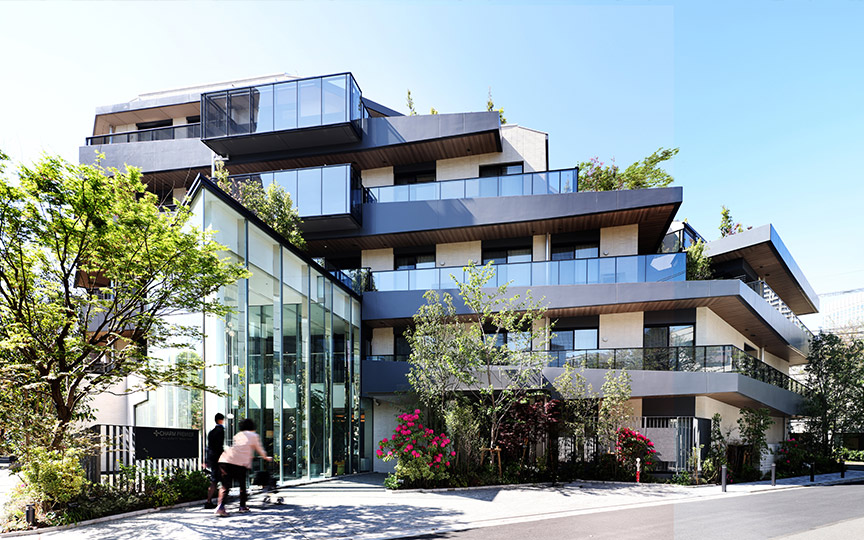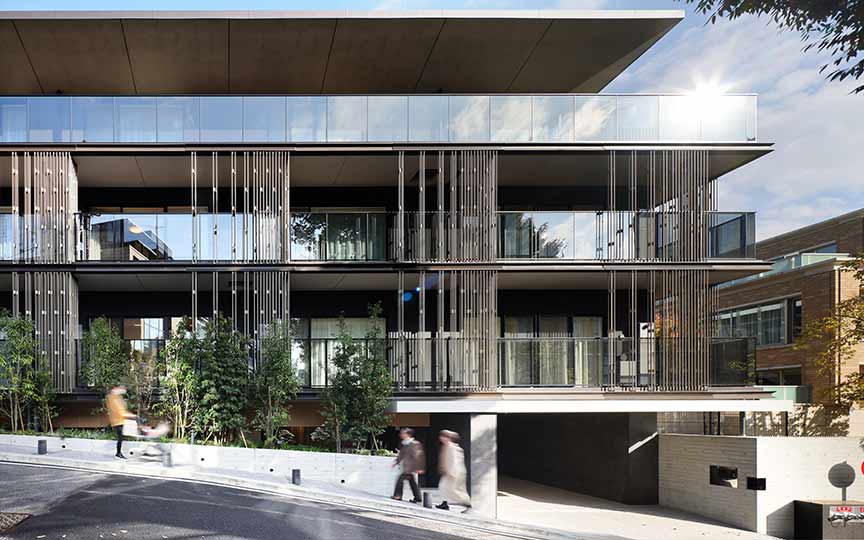

Toward Sustainable and Flexible Living
SCROLL DOWN
At a time when the environment surrounding our homes and our values are undergoing significant changes, what kind of “ideal living environment” should we envision? Challenges are becoming increasingly complex, driven by diversifying lifestyles, growing environmental awareness, and the need to make effective use of existing housing stock. We explored the housing of the future—from both the physical and social perspectives—covering “adaptability” to embrace change, “sustainability” for long-term use, and even the redefinition of “the value of daily life,” including relationships with communities and local areas.



Hiroyuki Usami:That describes it well—we can certainly see that phenomenon. I have been involved in the design of housing complexes throughout my career since joining the firm in 1987. I’ve often felt that, just as you say, housing trends come in waves. Over and over, I’ve seen themes and ideas that were once popular fall out of favor, only to come back to attention 20 years later. I would say that over the past decade, changes seem to be occurring at an even faster pace.
Nakagawa: I agree. Especially over the last 10 years, the pace of change seems to have accelerated dramatically.
Hiroyuki Usami: That’s true. To briefly introduce our firm, Nikken Sekkei first became involved in this field in 1970, at a time when there were still no high-quality privately developed apartment complexes in Japan. A trading company approached us with the request to create what they described as “housing that matches the quality of contemporary European residences.” At the time, our experience in residential design was relatively limited, but we brought together the full breadth of our expertise. The approach we established back then—to design with durability and long-term adaptability in mind—remains the foundation of our work today. At the time, the current seismic-resistance standards had not yet been established, but the design of these buildings was grounded in ideas that foreshadowed the development of the skeleton and infill (SI) method, in which the structural frame is planned separately from the interior finishes and building equipment. Those buildings continue to stand and remain high-quality housing stock. Today, however, we are living in an era in which simply choosing a place to live is a challenge. The home-search publications that were once thick with housing listings have steadily shrunk, and many have even gone out of print. Changes that I first began to sense a decade ago have now become a visible reality. Against this backdrop, what kinds of proposals should we as a company be making? Given your long career of reporting on housing and real estate, I would love to hear your take on these issues from the user side.
Nakagawa: When discussing the history of housing, I often point to the example of the inaugural issue of the women’s magazine, Hanako, published in May 1988. The title of its feature article was “A Nice Apartment Is the Ultimate Status Symbol.” The late 1980s were the last years of the bubble economy, and land prices were soaring. The focus in those days was not so much on where a person lived, but what their home itself was like.It was a time when added value lay almost entirely in design and appearance.
Today, however, the process of choosing a home begins with deciding on a location, and the number of factors people weigh has dramatically increased. After repeated natural disasters, people have become much more conscious of ground conditions, while the degree and quality of municipal services have also become important. Forty years ago, decisions about where to live were based almost entirely on interior design. Now attention is directed toward the building structure, ground stability, availability of local shops, and even the long-term prospects of the neighborhood itself.
At the same time, communities themselves have undergone changes. When very large housing complexes were the norm, communities took shape naturally. Today, opportunities for connection must be intentionally created—otherwise, people can feel isolated. Today’s housing consumers consider a broader range of factors—both inside and outside of the dwelling unit itself.
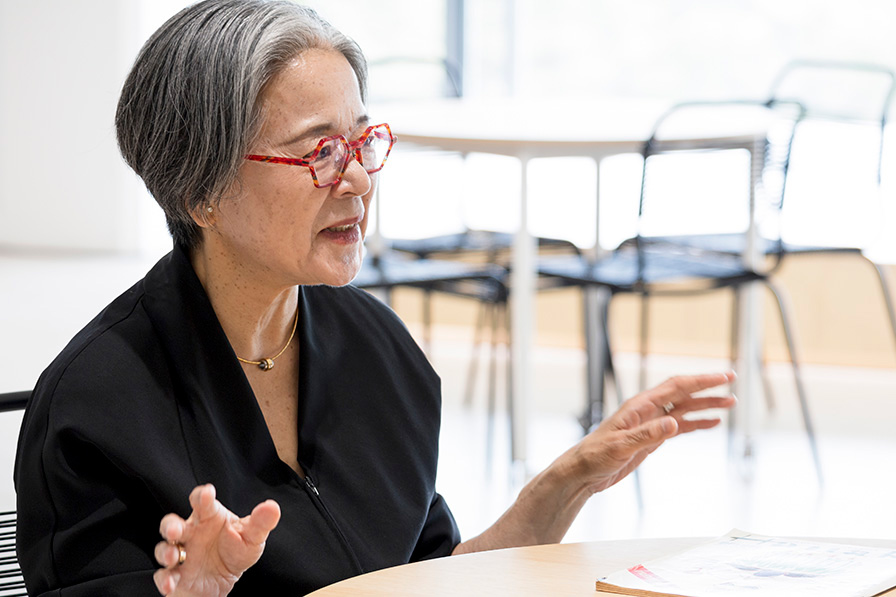
Housing for Diverse Lifestyles
Nakagawa: That's true. For example, there was a time when most people would rather have spent money on upgrading their kitchen than investing in higher-performing glass for their windows. Today, however, more people would spend money on the windows first. I feel there’s a growing emphasis on less visible forms of value—things like environmental performance and community-building.
Hiroyuki Usami: On the design side as well, there has been a significant shift toward focusing on how we can contribute to enhanced experience, value, and satisfaction. Rather than simply designing apartment residences as structures that people live in, we are increasingly focused on how people live within them and how residents engage with their surroundings, including the local community. The spotlight has finally begun to fall on these broader, less-tangible aspects of housing. I wonder, are there any questions or concerns you have about what people today are looking for when it comes to choices about where they live?
Nakagawa: The younger generation is less attached to the idea of ownership than their predecessors. This is reflected in the growing prominence of the sharing economy. Younger people seem to be thinking rationally about the value and benefits of opening up their living spaces and how doing so allows them to connect with others. They don’t need urging when it comes to making such connections and building community—if the living environment allows, they’ll do it on their own initiative.
Today, the typical “father, mother, and two children” household is no longer the standard. Single-person households, dual-income households whose members are rarely at home, households where people work remotely and spend the entire day at home—all of these reflect the growing diversity of lifestyles. I believe the usefulness of fixed dwelling layouts in accommodating varied lifestyles has reached its limit.
Hiroyuki Usami: That’s true. The idea of adaptability—the capacity of residents to project their own lifestyles onto a space and continue reshaping it over time—will become indispensable to collective housing for the future. This is why it will become more and more important to provide structures that enable the interior to be easily reconfigured. In turn, this will contribute to sustainability by encouraging people to use and maintain buildings over the long term. In fact, the principles we’ve pursued since the 1970s have been rooted in this very idea of flexibility—the capacity to accommodate changes in residents’ ways of living. It seems this concept is finally beginning to align with the values of today's residents.
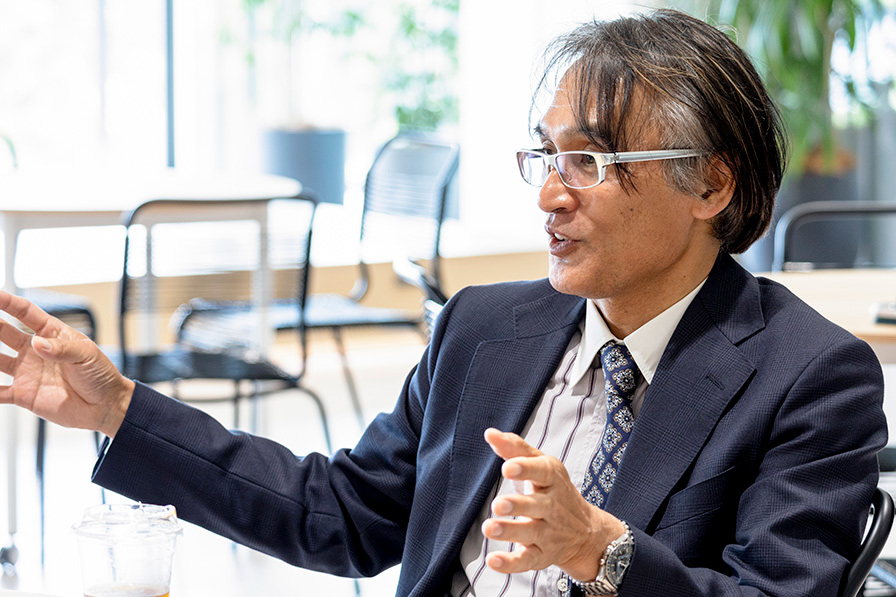
Hiroyuki Usami: Yes, that’s true. Ownership tends to make people more conservative.
Nakagawa: As buildings incorporate more advanced technology and their equipment and systems become increasingly complex, even professionals tend to disagree about which aspects should be maintained and how. As such, there will almost certainly be limits to what can be achieved when owners’ associations—made up of resident volunteers—attempt to make decisions by consensus. Going forward, I believe buildings will require management systems in which professionals are responsible for maintenance and operations. Another pressing concern is the aging of the resident population. As both buildings and their occupants grow older, managers who can approach issues objectively are becoming indispensable.
Hiroyuki Usami: The current system of building management through owners' associations may indeed be reaching its limit. Legal reforms are currently being discussed, including measures to ease the requirements for reaching consensus on redevelopment, but progress remains painfully slow. We’ve been involved in redevelopment consulting for nearly 20 years, and cases that proceed smoothly are rare.
To return briefly to what we were talking about earlier, when I first entered the field of housing design, the architect Shoji Hayashi (1928–2011), one of my mentors, used to say, “If you have one hundred people, then you have one hundred different ways of thinking about housing.” Everyone has their own image of what a home is, shaped by the environment in which they were raised. At the same time, however, current social and economic conditions like rising material costs, labor shortages, and geopolitical instability are making the purchase of a newly built condominium increasingly unrealistic. Vacant houses—including the “zero-yen” properties—and existing housing stock are gaining attention. People are beginning to recognize a wide range of alternatives.
Nakagawa: I really hope more people become aware of those possibilities. The reality is that we aren’t doing a particularly good job of presenting the full range of options available—for example, the fact that just a short distance outside the city center, it’s still possible to buy a spacious house for around ¥10 million (US$62,000).
Hiroyuki Usami: Still, despite soaring prices, there’s no shortage of people who want to live in central Tokyo. What do you think keeps drawing them there?
Nakagawa: In the end, it boils down to convenience—the abundance of choices the city offers. People have so many options to choose from, whether it’s restaurants or schools or anything else. That sense of freedom is what people find alluring, and the idea of living close to one’s workplace in the city center has become well-established since the early 2000s. Rather than the quiet suburban lifestyle that people once aspired to, living in convenient mixed-use developments has become a contemporary standard.
Hiroyuki Usami: The sense of safety afforded by the resilient infrastructure and advanced seismic performance that cities offer has likely also contributed to the resurging appeal of urban-center living.
Nakagawa: Well, the diversity of real estate developments is directly tied to the diversity of people’s lifestyles. Perhaps one of the key challenges going forward will be whether housing can easily accommodate diverse ways of living, not only in central Tokyo but beyond it as well.
Utilizing Existing Building Stock and Co-Creating Value
For example, in the city of Shimoda, in Shizuoka Prefecture, an experimental initiative is being carried out in which an old warehouse owned by a local construction company can be borrowed free of charge and then lent to others, also for free. People who once held executive positions at corporate jobs in central Tokyo have gathered there to pursue creative activities like painting and DJing. Things that had previously been impossible because of noise restrictions or lack of space suddenly start to thrive once a place for them is made available. What is especially interesting is the revenue model: There is no rent; instead, participants pay the owner 10 percent of whatever income is generated through the activities conducted there. Free from the constraints of conventional levels of market rent, the model allows revenue generated through relationships and shared activity to be distributed without any fixed upper limit. Little by little, such attempts to break free from existing frameworks are beginning to emerge in local areas.
Hiroyuki Usami: In other words, on the other side of a crisis lie the seeds of innovation. In fact, Nikken Sekkei, too, has been exploring activities that move beyond the conventional boundaries of architectural design—from developing a remote-work hub centered around a traditional-style farmhouse on Awaji Island to collaborating with grape farmers in Kofu, Yamanashi Prefecture to offer farming experiences. Through the reuse of existing building stock, we are exploring ways to support a new kind of lifestyle—one in which people can live in central Tokyo while also maintaining meaningful ties to regional communities. We think of this as a kind of “new neighborhood relationship,” or “new neighbor” model.
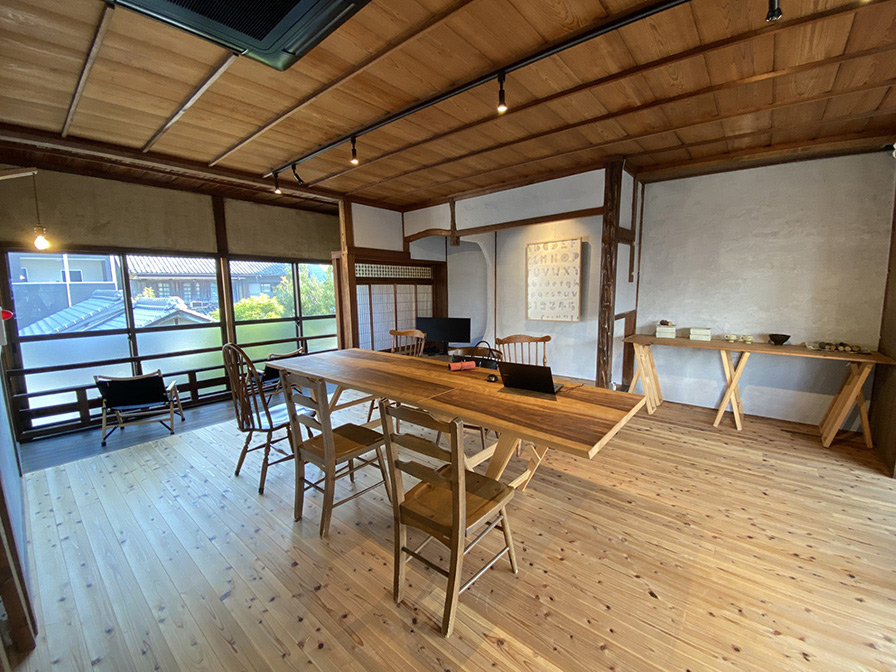 The Konyamachi Workation Hub, a mixed-use remote-work facility created through the renovation of a traditional-style house on Awaji Island.
© Nikken Sekkei
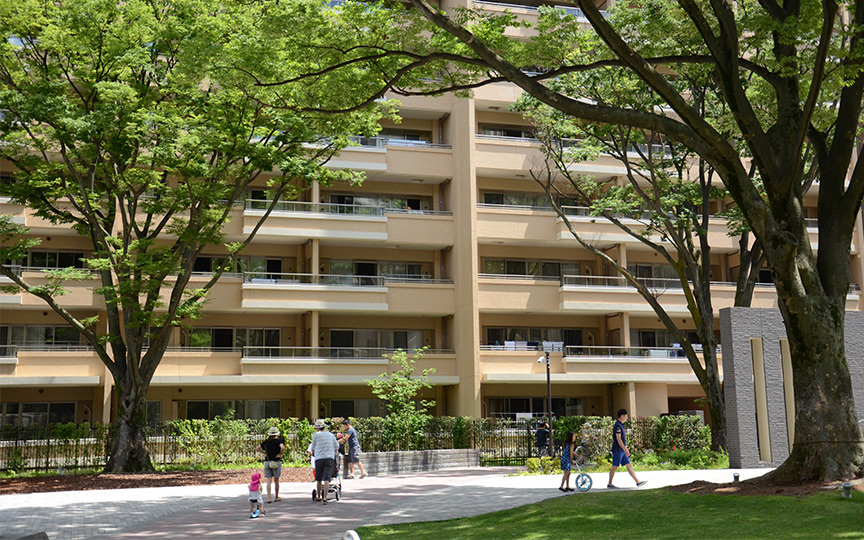
Hiroyuki Usami: Exactly. Very large apartment complexes, for example, often have generous open spaces and greenery that has been growing for several decades. Our challenge is how skillfully we can pass on those accumulated forms of value to the next generation.
Nakagawa: One project that recently impressed me was a group of cottages available for rent in rural Kawasaki. The location itself is not particularly convenient, and yet the resident retention rate is very high. The secret lies in the trust-based relationship between the owner and the tenants. Every year, residents gather for activities like bamboo-shoot digging and barbecues. They’re even free to build things on their lots like pizza ovens. The owner is also attentive to repairs, helping to maintain a high-quality living environment over the long term. The physical qualities of the housing are important, but it is this intangible element—the support given to residents and their individual lifestyles—that creates the sense of belonging.
Hiroyuki Usami: That is a perfect balance of hard and soft elements, isn’t it? As designers, we also feel a strong responsibility to create buildings that will endure through the years, while also ensuring they remain fully functional and actively used over the long term.
As a final question, I’d like to ask what you most want to see from Nikken Sekkei as we move forward, including any criticism or suggestions for improvement.
Nakagawa: Considering the changes that have occurred over the past decade, I feel the most compelling projects all share one characteristic: They both redefine and clarify the nature of the work being undertaken. Rather than simply creating architectural spaces, they focus on the purpose of these spaces—in other words, what is meant to actually happen within them. I sincerely hope that Nikken Sekkei, with its large organization and diverse perspectives, will continue proposing new solutions to the challenges facing society today.
Hiroyuki Usami: At present, we are also actively exploring “experience-making” initiatives and the incorporation of new technologies such as AI. Housing cannot simply be filled with the ideas or experiences of the designer; it must instead engage deeply with the lives of the people who inhabit it. We hope to expand the concept of housing to encompass centers of activity and spaces that support ways of living and interacting, and to continue working together with developers and clients to create new value. Thank you very much for your time today.
Nakagawa: It’s been a pleasure. Thank you for the chance to take part in such a thought-provoking discussion.
Interview photos by: Anna Nagai