
Energy-saving renovations reduced annual utility costs for air conditioning heat sources by 500 million yen (60 percent)
SCROLL DOWN
Moving Away from the Building with the Highest Carbon Dioxide Emissions in Kyoto
The Kyoto Station Building (completed in 1997) was a building with extremely high energy consumption—more than 130 percent of the average for buildings of its type. In 2010, a proposal process was launched to transform it into an energy-efficient building, and Nikken Sekkei was selected for the project.
From the project’s inception through design, construction, and operation, Nikken Sekkei served as the client’s technical consultant, providing comprehensive management of the performance verification team and contractors, and successfully completed the energy-saving retrofit within the planned budget and schedule.
Here, we will briefly explain the initiatives that led to a 60 percent reduction in utility costs.



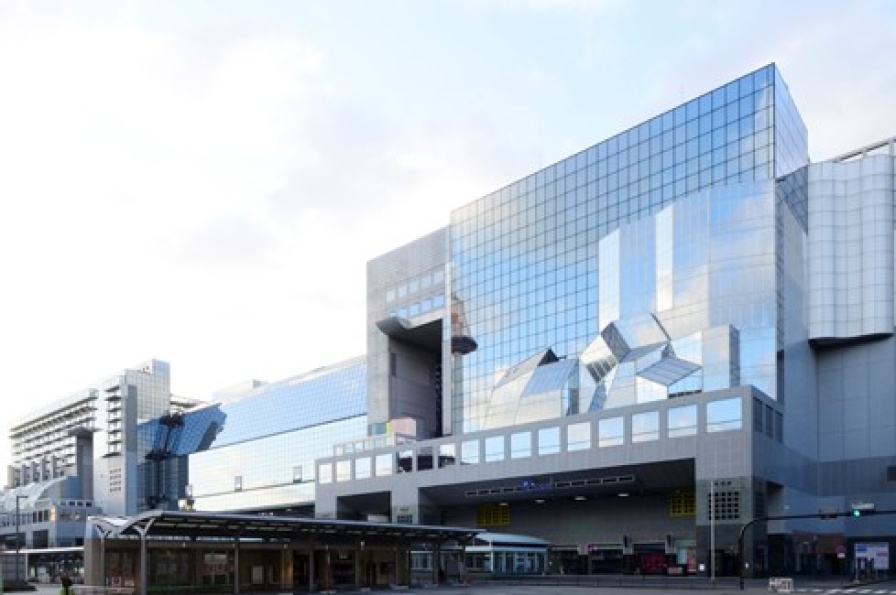 Kyoto Station Building (Completed in 1997)
Collaboration with Japan's Leading Experts
Performance verification meetings have been held from the initial design phase through the present, and energy-saving improvements continue to be implemented. This initiative has been selected for the Ministry of Land, Infrastructure, Transport and Tourism’s “Pioneering Project for CO₂ Reduction in Housing and Buildings (Heisei 26, 2nd Round).”
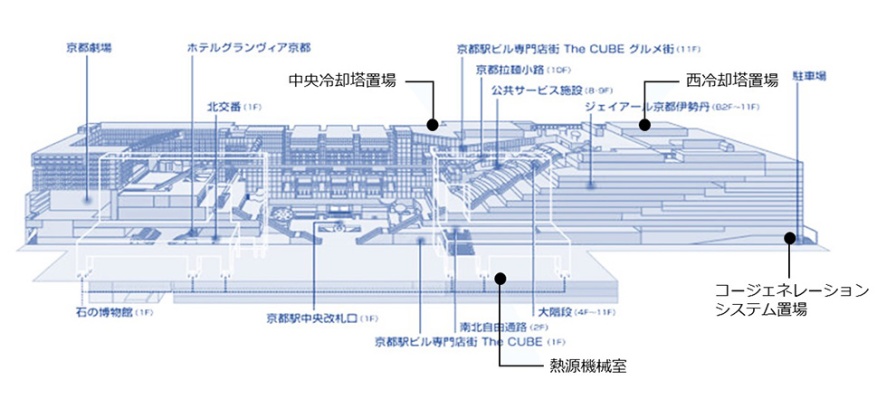 Total floor area: 238,555 m²; designed by Hiroshi Hara + Atelier Fai Architectural Research Institute
Implementing Energy-Saving Renovations Without Interrupting Business Operations
For the renovation, we conducted a thorough preliminary survey and determined the heat source capacity required for each month, thereby reducing the total heat source capacity.Furthermore, during the heat source conversion work, we operated only the heat sources necessary at that time and utilized the remaining idle space for replacement, enabling us to update the heat sources without any impact on normal operations.
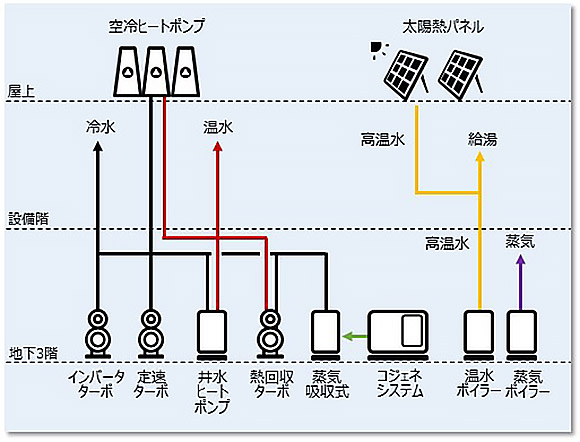 Upgrade to a system centered on inverter turbochargers
Achieved a 56% reduction in energy consumption in the first year!
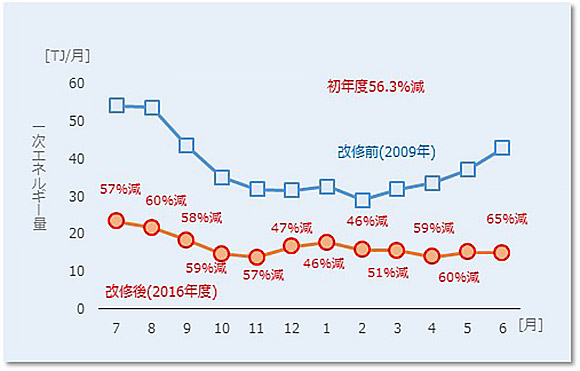 Actual Energy Consumption in Renovated Areas
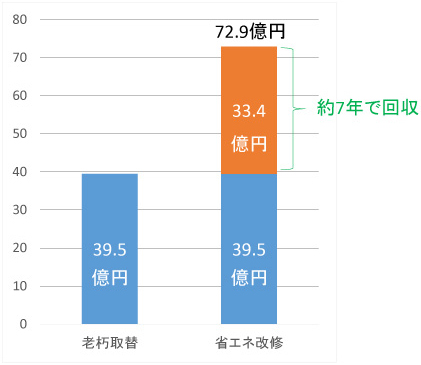 Costs for Renovating Aging and Deteriorating Facilities + Investment Amounts for Performance Improvements
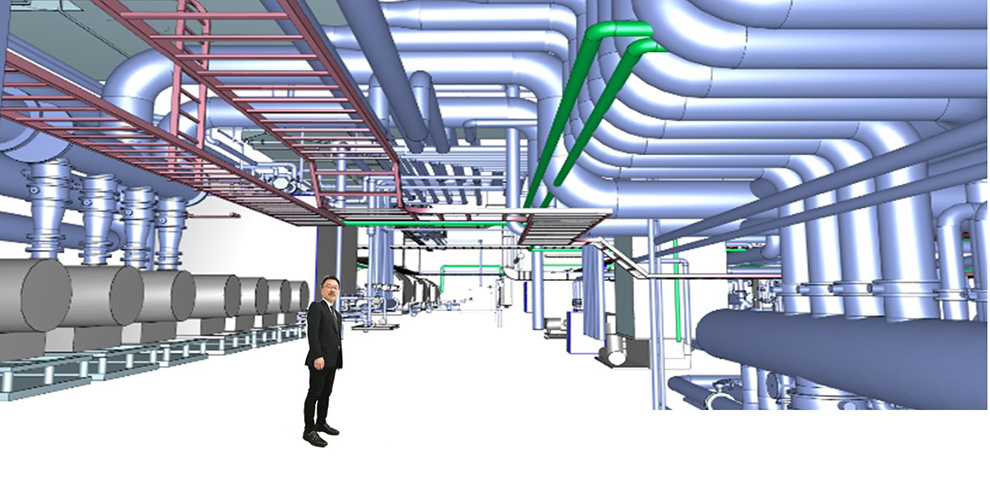 BIM Model of the Heat Source Machine Room on the 3rd Basement Floor: Renovation Concept