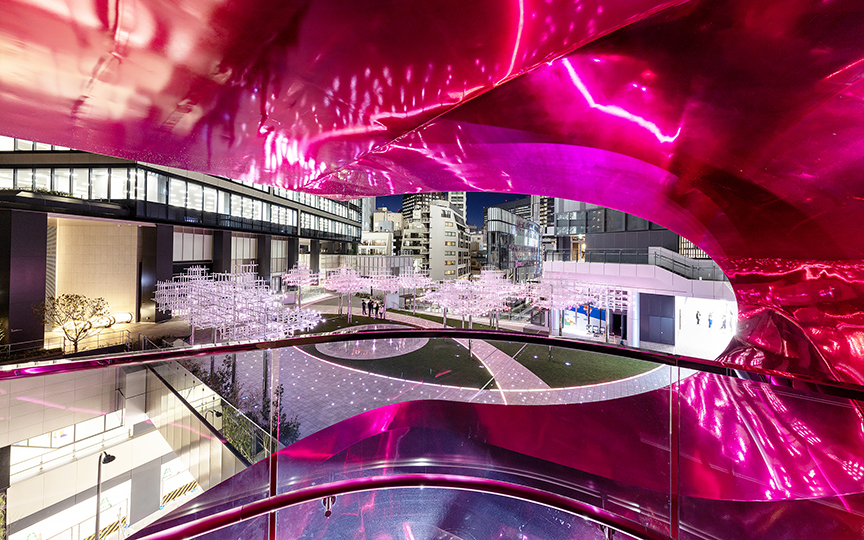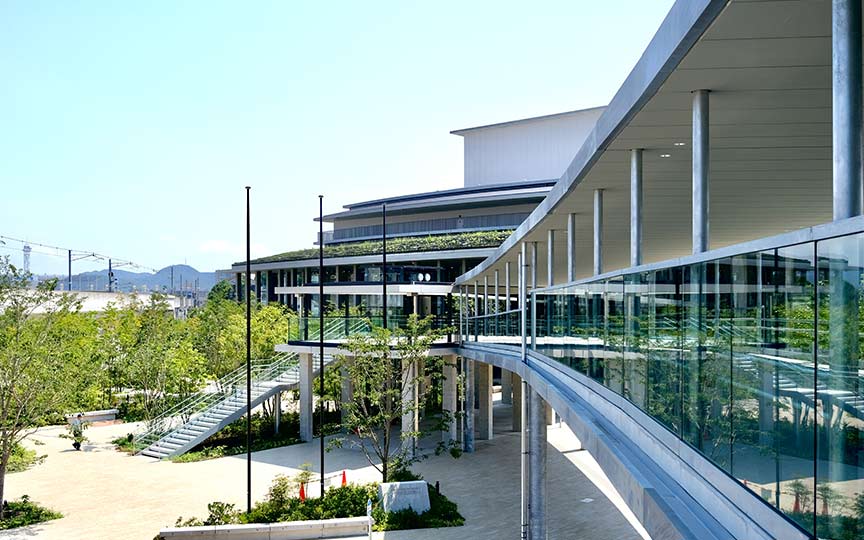

New places born from development: Shibuya River revitalization and Shibuya River Street [Part 2]
SCROLL DOWN
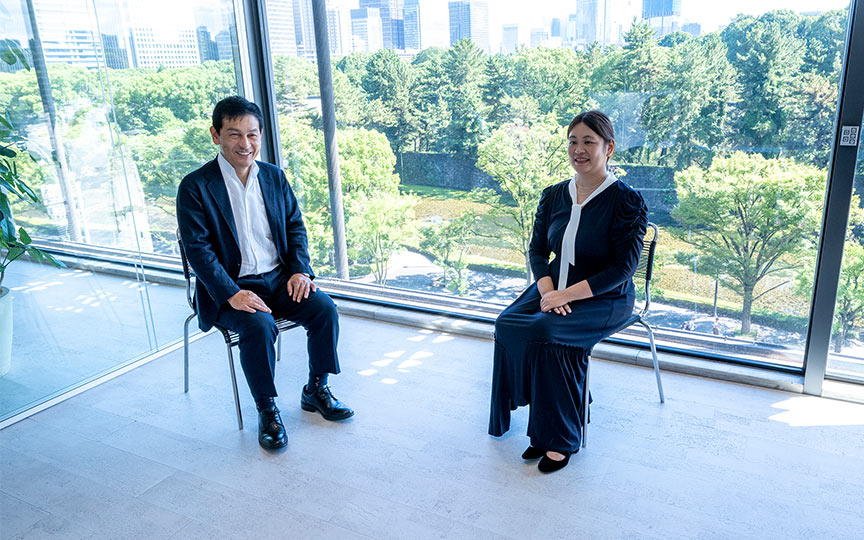
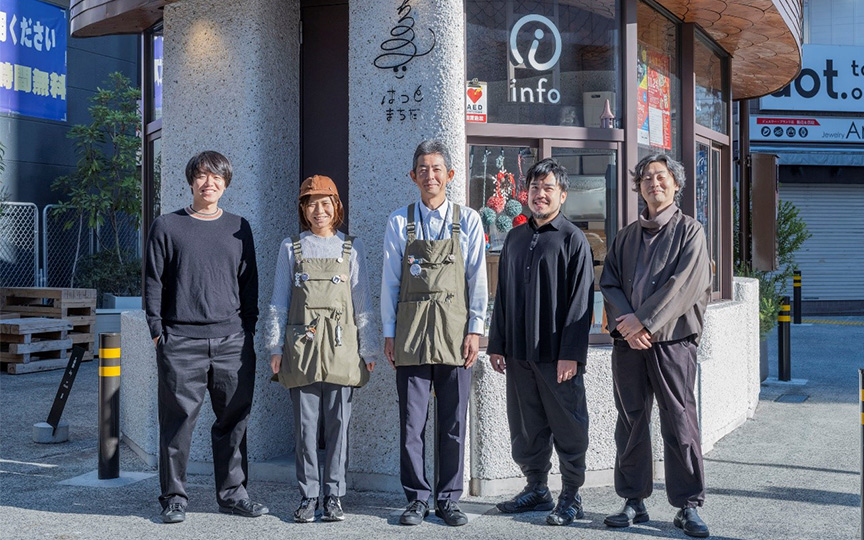
Shibuya Stream, which opened in September 2018 as the first major project in the redevelopment of the Shibuya Station central district, was built on the site of the former Shibuya Station platforms and tracks of the Tokyu Toyoko Line. The central theme of this development was the revitalization of the Shibuya River, which flows alongside the site.Through this public-private partnership revitalization project, the river was restored to its former clarity, and the riverside area was transformed into “Shibuya River Street,” featuring two plazas suspended above the river. The participants in this discussion are Kazuhiro Okuno of the Community Development Promotion Section, Urban Development Department, Shibuya City—who was involved in the operations of the Shibuya River Environmental Improvement Council—Director, andMr. Narutada Otake and Mr. Yuki Yoshizawa from Tokyu Corporation, which handles the development and operation of Shibuya Stream; and Mr. Keiki Yasuda and Mr. Takayuki Sakamoto from Nikken Sekkei Emotion Scape Lab, who were involved from the conceptual stage and designed Shibuya River Street.How did this approximately 600-meter-long promenade connecting Shibuya to Daikanyama come to be? We also discussed the various activities that have emerged since its opening, as well as the future of the Shibuya South area. The facilitator was Taro Fukuda of Nikken Sekkei’s Urban Development Department.



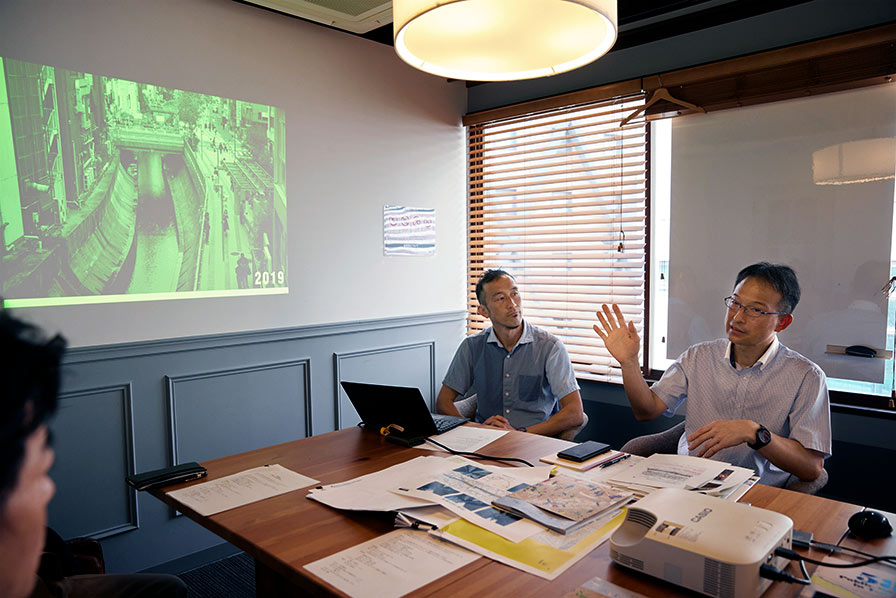
Waterfront spaces as a familiar part of everyday life
Yoshizawa: The opening of Shibuya Stream marked a major “revitalization” of the central Shibuya Station area. It took a form unique to Shibuya—a four-way partnership between the public sector, the private sector, academia, and the local community—that is rarely seen in other cities.As for the Shibuya River, since it’s a linear space, rather than aiming for a massive influx of visitors, it has a strong “everyday” element—as opposed to the “special” one. We designed the space with the intention of creating a place that, while moderately bustling, also serves as a place of relaxation.
Fukuda: In the area around the station, the “Shibuya Hikarie” had already opened in 2012, but Shibuya Stream was the first of several surrounding projects to open all at once ahead of the Tokyo Olympic and Paralympic Games. It felt as though it was carrying the weight of everyone’s expectations that Shibuya was finally about to change.
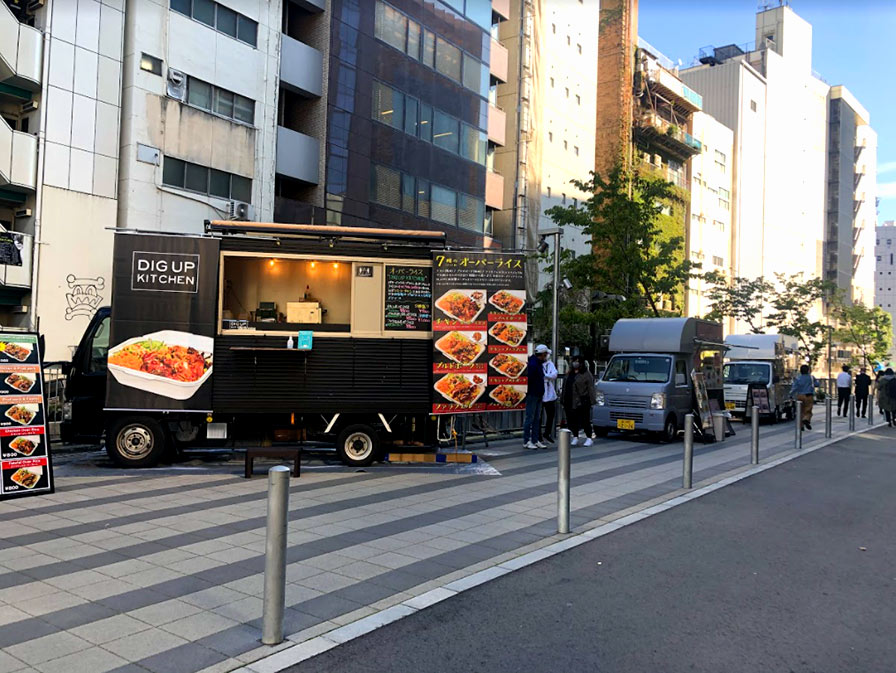
Ohtake: For example, we have food trucks set up, and we're also working on an urban farm.
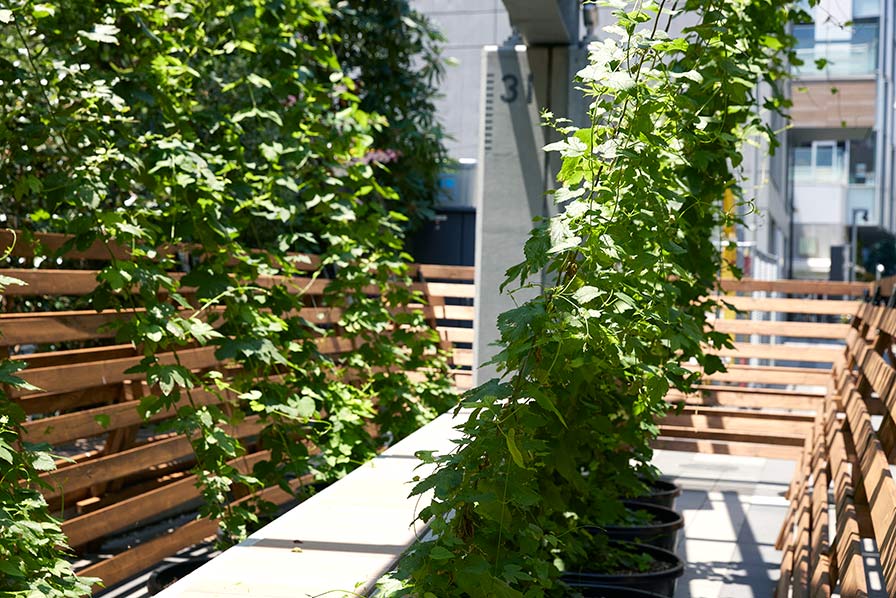
Yoshizawa: Since this area has few restaurants and many people struggle to find a place for lunch, we decided to set up a food truck there. It’s been very busy every day and has been well-received not only by customers but also by the vendors.We launched the Urban Farm project because we believed it would complement Shibuya’s only waterfront space. In collaboration with the Urban Farmers Club, an NPO based in the Shibuya area, we’re growing vegetables, fruits, and other crops in two large planters.I’ve heard that by delivering thinned-out vegetables to the neighboring daycare center, we’re helping with the children’s food education, and having people tend to the plants daily—watering them and so on—is also helping to improve neighborhood safety. Also, we’re currently growing hops, and we have plans to harvest them and make “craft beer using Shibuya-grown hops.”
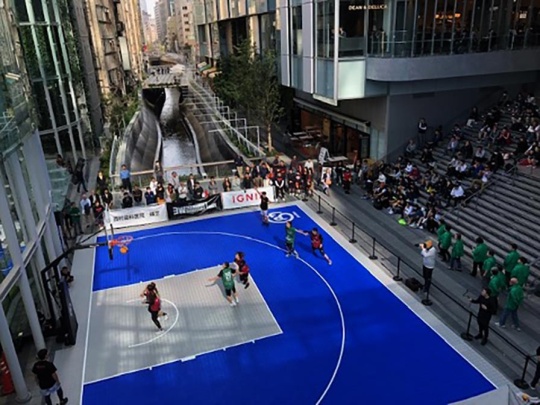
Yoshizawa: In addition to these activities, which have been an ongoing tradition since we opened, we also hold market-related events from time to time. And then there’s 3×3 (three-on-three) basketball.
Fukuda: The coat fits perfectly, doesn't it? The backdrop with the grand staircase at Shibuya Stream is interesting, too, and it gives just the right sense of being surrounded.
Ohtake: You might not realize it, but after all, it’s a court built over a river.
Yoshizawa: That’s right. We launched this initiative both to support the Japanese women’s national team’s bid to compete in the Olympics and because it aligns well with Shibuya Ward’s “Exercise Anywhere Project.” Although we’ve had to put it on hold for a while due to the impact of COVID-19, we’ve received feedback from people saying they’d like to see it resume, so we plan to continue working on it.
Yasuda: I think this has become one of the liveliest spots—perhaps even the liveliest—among the various “urban cores” scattered throughout Shibuya.
Fukuda: The area surrounding the court includes private land such as the Grand Staircase and the Urban Core, as well as the river itself and elevated decks connected to the roads—it spans a variety of different entities. Is coordination with each of these entities handled centrally?
Yoshizawa: That's right. If anything, I try to handle the preliminary planning carefully so that the organizers can carry out the project without any hassle.
Events and social experiments aimed at creating a place that fosters a sense of attachment.
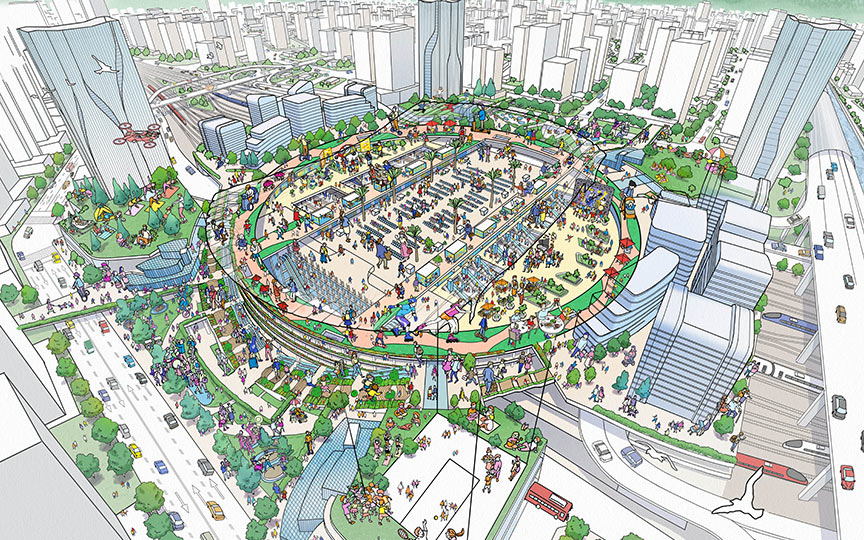
Sakamoto: From the very beginning, I imagined scenes ranging from festive occasions like festivals to everyday moments, such as lying down along the riverbank after crossing an overpass. I created these illustrations based on those images of people’s activities.
Fukuda: In fact, during the annual festival at Kinō Hachiman Shrine, the mikoshi is carried into the square, isn’t it? Lately, it’s really come to be seen as “the only place for this,” and the town has come to recognize it as such.
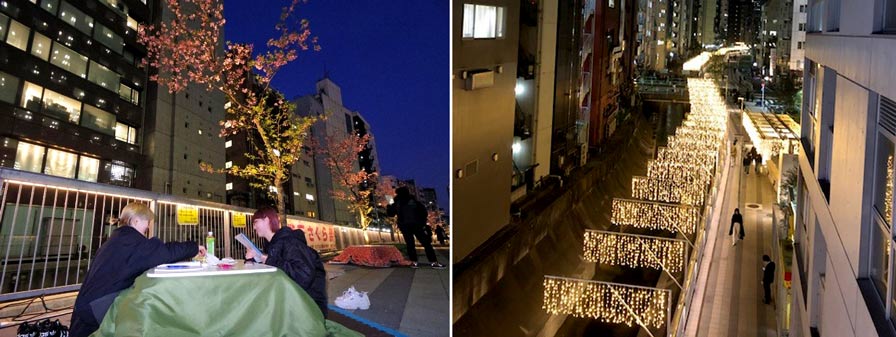
Yoshizawa: In addition, based on a suggestion from local residents to plant Kawazu cherry trees, we’ve been organizing a cherry blossom festival in collaboration with the local community development council and a seminar group at Kokugakuin University. Since Kawazu cherry blossoms bloom as early as February, we’ve tried hosting events where people can enjoy food and drinks while warming up under kotatsu heaters set up along the river.
Sakamoto: What a challenge.
Yoshizawa: When you hear the words “kotatsu” and “outdoor space by the river,” you might think, “Huh?” but strangely enough, it actually fits right in, doesn’t it?
Sakamoto: It’s even beyond what I imagined from the picture (laughs).
Yasuda: You also put up some holiday lights, didn't you?
Yoshizawa: We negotiated with the Tokyo Metropolitan Government, asking, “Please let us put up illuminations over the river!” I think it’s quite rare to have illuminations extending all the way over a river, and since it’s a linear space about 600 meters long, the lights formed a continuous, dazzling display that was incredibly beautiful—and this was also very well received by the local community.
Yasuda: It’s challenging, but it has that “Was this here all along?” kind of vibe, doesn’t it? The staff understand that, and they’ve created a space that’s not flashy but is still beloved.
Yasuda"Not 'scenery' but 'atmosphere.' I believe people's feelings influence the atmosphere of a place, so the idea here is that if people's senses become more open, the place itself will become more open as well."
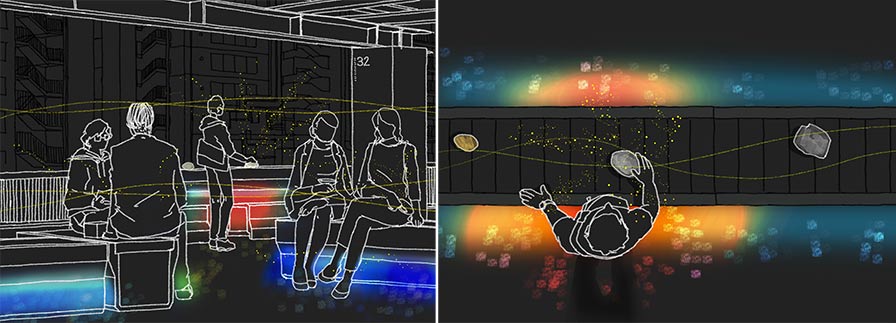
Sakamoto: Something like a water feature—it has no particular meaning, but its presence adds a sense of openness to the space. We started by creating the sounds themselves and held a workshop where we searched for sounds hidden within the city.
Yasuda: About 20 of us, each holding a stethoscope, wandered around, tapping on handrails, listening inside vending machines, and picking up the sounds of outdoor air conditioning units.
Sakamoto: I placed stones that, when mixed together, produce an abstract sound—one that sounds mysterious yet somehow familiar.
Yasuda: There are no explanations anywhere. But when you touch it, it makes a sound, so it’s kind of fun. There were even some elementary school students who would stop by and touch the stone every time they passed by.
Sakamoto"Although the term 'social distancing' didn't exist yet, I wondered what kind of environment would make it okay to have a stranger sitting right next to you. With that in mind, I incorporated a mechanism where the sound changes as the number of people changes. When the sound cuts out, the sounds of the city suddenly flood your ears, snapping you back to reality. It’s as if that jolt sharpens your senses."
Yasuda: I’ve been wondering if it might be okay to have scenes that aren’t just simple, boisterous fun, so I’m experimenting with that using quite a bit of technology.
Sakamoto: On the surface, it was just a rock sitting there (laughs).
Low barrier to entry, high aspirations. Updating everyday life.
Ohtake: As for the Shibuya River, since it opened, the handrails and lighting have aged naturally, the plants have grown, and I feel it has really come to blend into the neighborhood. This kind of development that leaves room for flexibility is very rare, so I’m thinking about how we can make the most of this space going forward—and how we should utilize the surrounding area to achieve that. I hope to engage with the space in ways that make this flexibility even more interesting.
Yoshizawa: Until now, the organizing members have approached our work with a focus on area management activities in the Shibuya River watershed. To further evolve this approach, we adopted the theme “good stream” for fiscal year 2021.While “stream” literally means “small river,” we interpret it as “a positive sign” or “a current,” and we aim to launch initiatives that create such a positive flow.
Okuno: In Shibuya Ward, we’ve long advocated for “community development on a large, medium, and small scale.” We’re now beginning to explore ways to create a system that makes it easier to rebuild small- and medium-sized buildings—such as those along the Shibuya River—rather than focusing solely on large-scale development around the station.Since the river environment itself is already well-established, the next priority is to ensure that the atmosphere along the river remains intact. We intend to promote community development that connects with the river—one that makes people want to face the river rather than turn their backs on it.
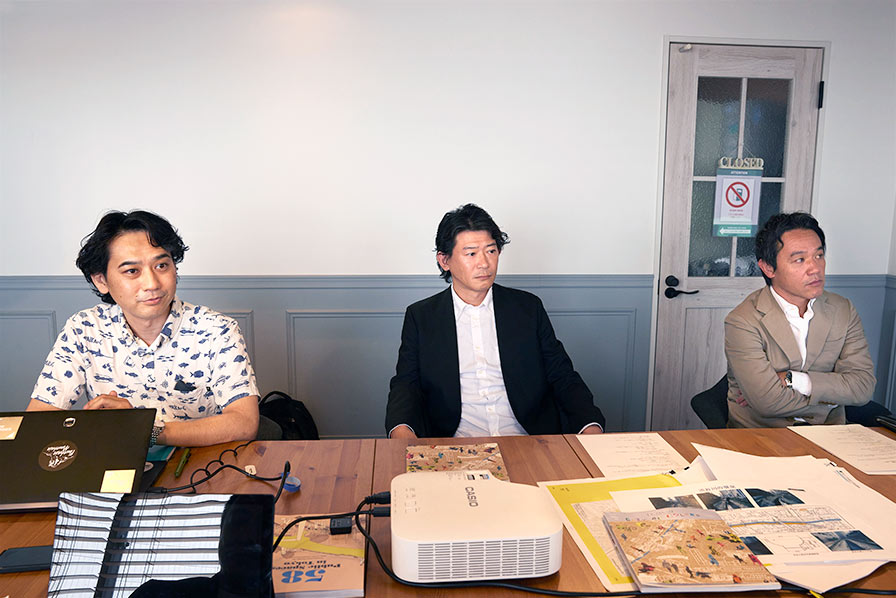
Yasuda: That’s right. I, too, feel that the Shibuya River restoration project is all about revitalizing everyday life. But everyday life isn’t something you can easily isolate, and it’s not something that works just because a single moment is good. Through this project, I’ve learned that it’s incredibly important to truly grasp that point.
Yoshizawa: When it comes to the waterfront as a shared community asset, we want to keep the barriers to entry as low as possible while maintaining high aspirations. Together with not only Tokyu but also local residents and Shibuya Ward, we hope to foster activities that contribute to the community’s development.
Yasuda: As with the concept book, both the planning and operations teams were able to come together and discuss things well before the project was completed. I also came to realize that documenting these discussions thoroughly and sharing them would be a tremendous asset once we entered the operations phase. We carefully wove the narrative into the project, and we’ll continue to develop that story even after we open.It would be great if these kinds of initiatives spread to other areas as well, not just the Shibuya River development.