
TOD creates vibrancy and vitality in the city.
—The designer of Guangzhou Baiyun Station speaks (Part 2)
SCROLL DOWN
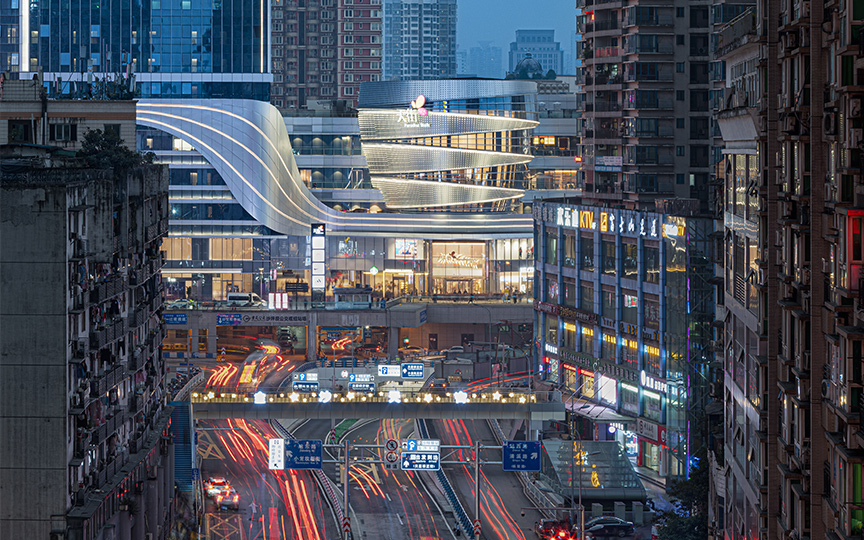
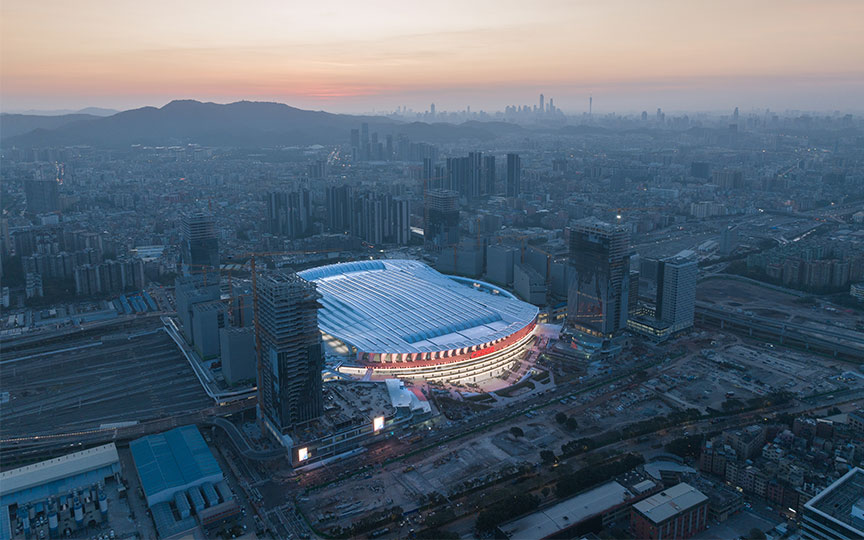
In December 2023, Guangzhou Baiyun Station opened in a newly developed area north of Guangzhou, China. Baiyun Station is a public transportation hub with a total floor area of 410,000 square meters, serving 24 above-ground lines including high-speed rail and 6 subway lines. Integrated development (TOD) is underway around the station and surrounding area of approximately 500,000 square meters of office and commercial facilities. Nikken Sekkei was selected in the international TOD competition and took on the role of design architect.
In China, where the development of public transportation is accelerating, the need for TOD (Transit-Only Development) has been increasing recently. Nikken Sekkei has leveraged its expertise gained from numerous TOD projects in major Japanese cities, including Shibuya Station, to lead the way in China's TOD development from its early stages.
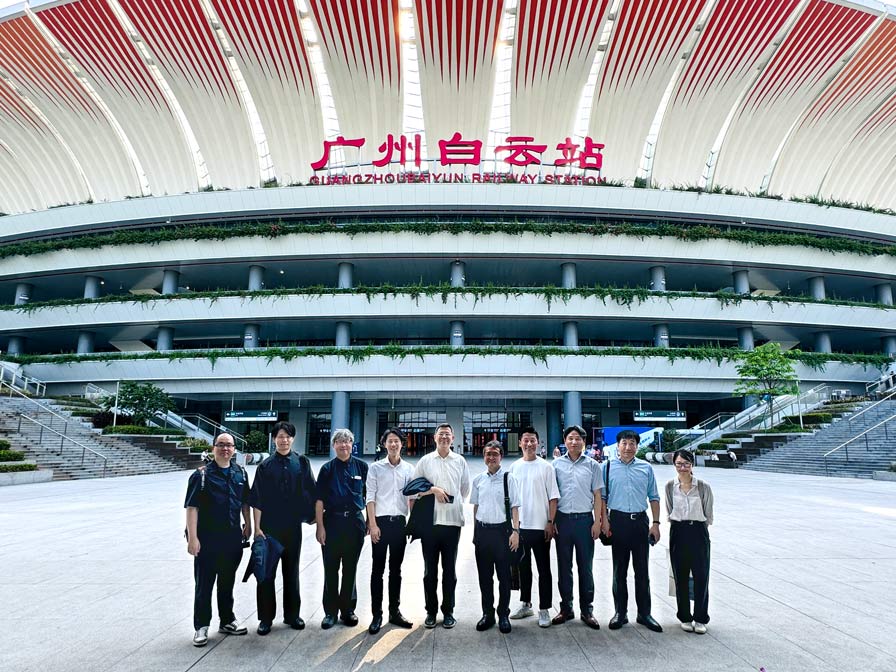
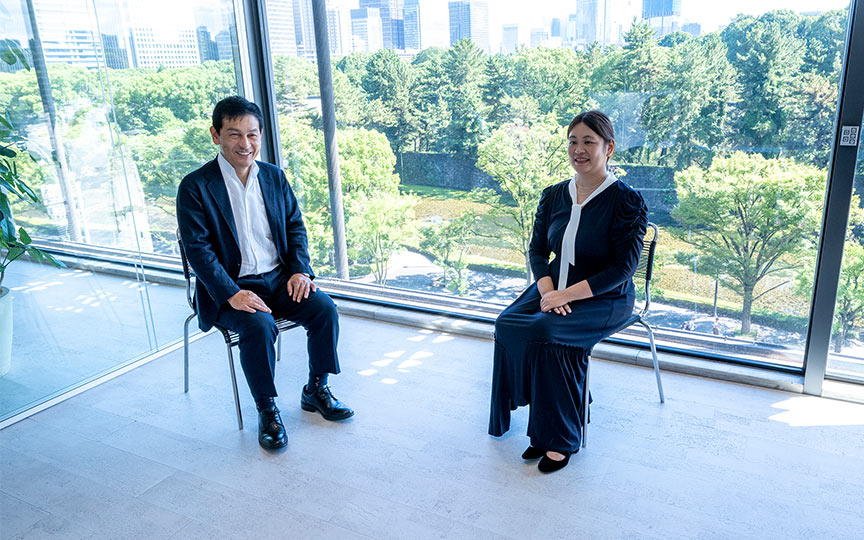
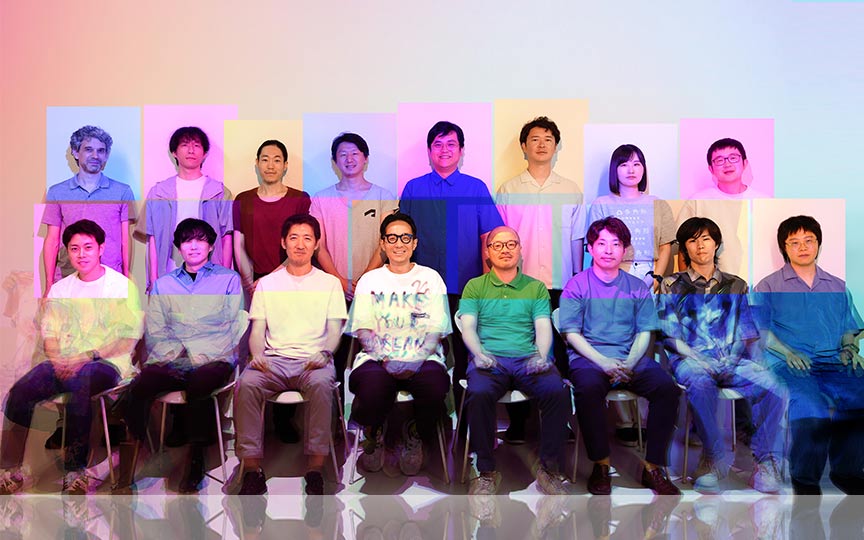
Six months after the opening of Guangzhou Baiyun Station, Asia's largest high-speed rail (TOD) station, the project team visited the site and then held a roundtable discussion. Six years after the competition, we reflected on the project and looked ahead to the future of TOD development in China.



Connecting the rich pedestrian space around the station to the city.
—The future potential of Shirakumo Station
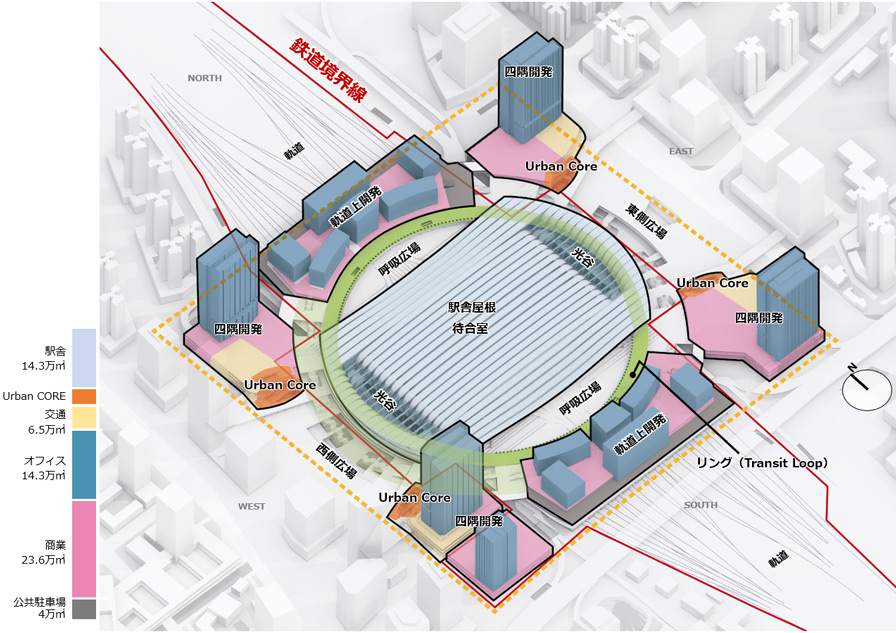 Overall Structure Diagram
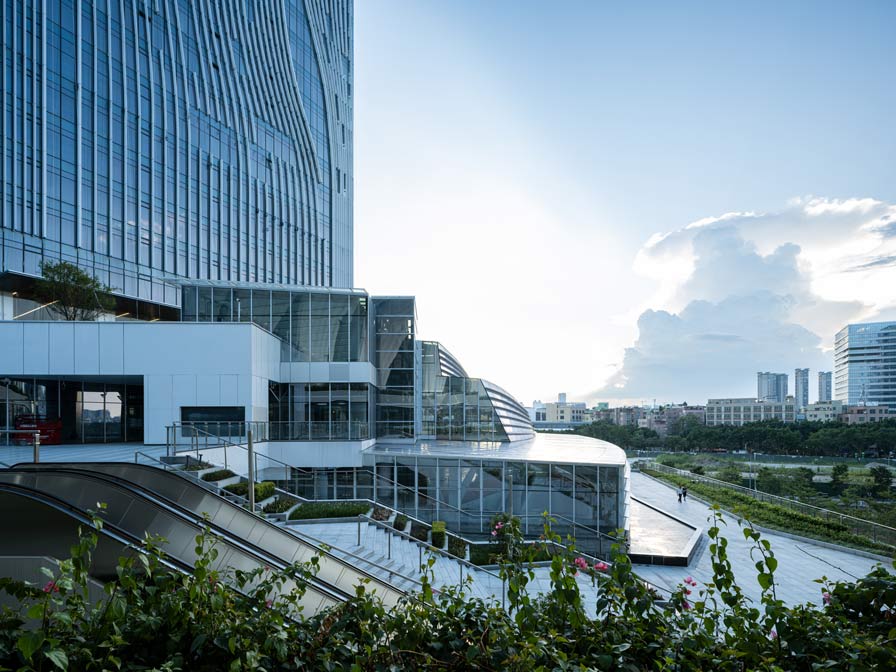 Urban core on the southwest side © Yang Min/mintwow
Jeong Byeong-gyun: Since only one of the five subway lines is currently in operation, once the other four lines open, the usage rate of Urban Core will increase significantly.
Nomura: The central pedestrian passageway in the basement was very crowded, but are the narrower pedestrian passageways on the north and south sides actually used?
Land: They’re used to connect to the parking lot, aren’t they? The other day, when I was walking through the Tokyo Station concourse, I saw a long row of coin-operated lockers, and I thought that was really effective. It would be a good idea to place facilities that station users need—such as coin-operated lockers, a fitness center, and shower rooms—along the Hakun Station concourse as well.
Nomura: The ring surrounding the station building at ground level is 1.4 km in circumference. If this ring is utilized in various ways, the vitality it generates will spread to the city. We hope that such a network will take shape.
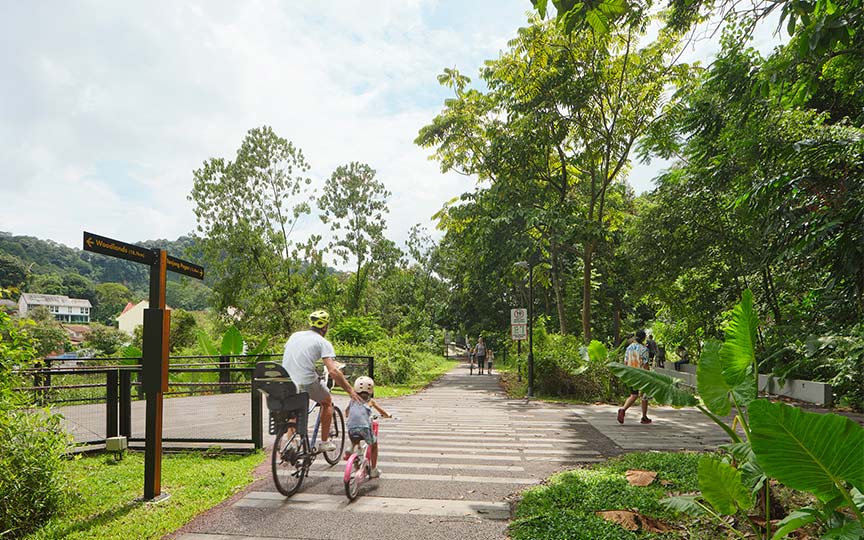
Ding: Although the 4th floor of the Ring isn't open to the public yet, people can freely walk around the 3rd floor of the Ring, and there are even people jogging there. It would be great if both local residents and station users could use the space in their own ways, making it a lively place.
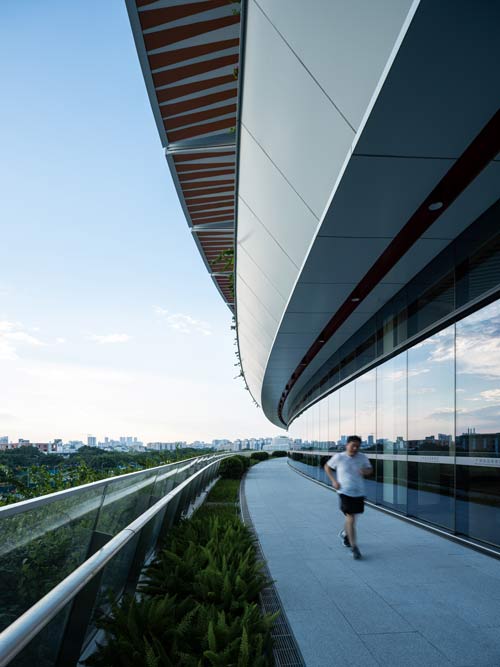 Citizens running in a ring © Yang Min/mintwow
Towards TOD, a town full of character
—Future TOD development
Land: No matter how good an idea may be, a project of this scale cannot be realized by a single company alone. In the process of refining the concept for this station, we built a relationship of trust with our local partner, the Fourth Railway Institute, and established a strong partnership that will continue into the future.
In large-scale projects, contracts vary by stakeholder, and designers differ depending on the location, so barriers and boundaries inevitably arise. Furthermore, there is the challenge of barriers and boundaries forming even within management itself.
In Japan, TOD has a history of moving toward integrated station-and-city development by breaking down operational boundaries—such as through railway companies strengthening ties after the privatization of the Japanese National Railways, diversifying their business operations, and introducing commercial facilities within stations. I believe that the key challenge for continuing to roll out full-scale TOD in China lies in how we can remove these very boundaries.
Ding: I certainly felt that boundary. However, with the Japan National Railways (JNR) group having been partially privatized, it became more interested in commercial development than before, which led to the construction of commercial facilities around Breathing Plaza. Such structural changes are necessary to encourage people other than station users to stop by the station.
Tadahiko Murao: Going forward, I believe we should go beyond merely describing the benefits of integrating stations and cities in intuitive terms and instead back them up with concrete data. For example, if we can use data to show that bringing outside air into a station not only creates a natural atmosphere but also contributes to energy savings, the economic benefits will be recognized. I think this design philosophy—one that solves major social issues while enhancing the spatial experience—will continue to gain traction.
I also believe it’s important to have striking locations that could serve as film locations. It would be wonderful if dramatic scenes—like those of encounters and farewells—could unfold between people descending from the fourth-floor café or the Breathing Plaza to the platforms.
Nomura: It’s true that train stations are spaces that should evoke a sense of sentiment—whether it’s the start of a journey or a chance encounter—but that sentiment isn’t really part of our current TOD projects, is it? So, it would be great if we could create stations like that. It’s important to create spaces that become memorable scenes for people—ones that don’t fade with time.
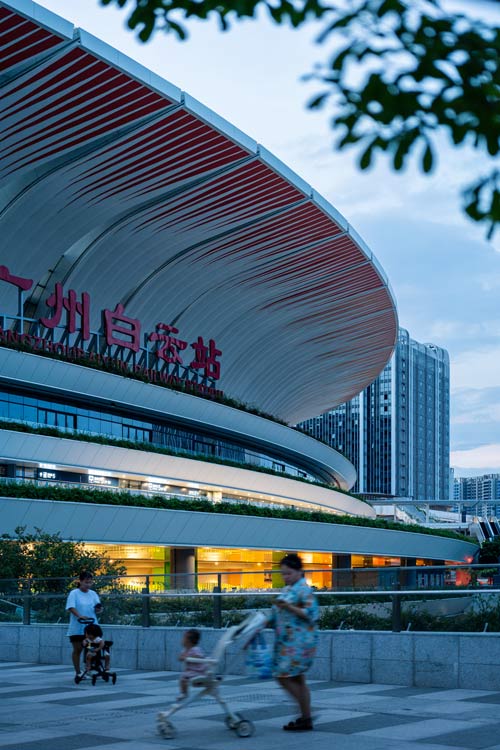 Citizens taking a stroll in the square in the evening © Yang Min/mintwow
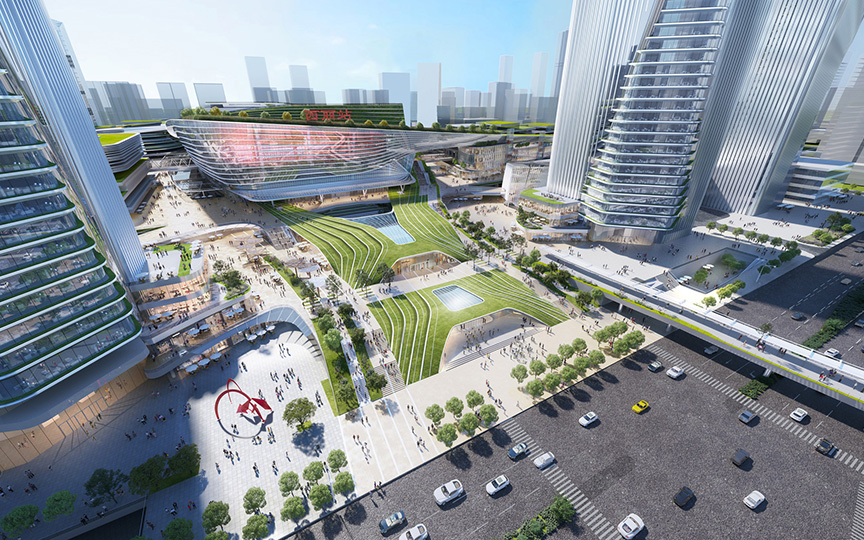
Nomura: At Shenzhen’s Xili Station, which is currently under design, we are taking on the challenge of making the station more open to the community by incorporating a green belt along the top of the station building and adding cultural facilities.
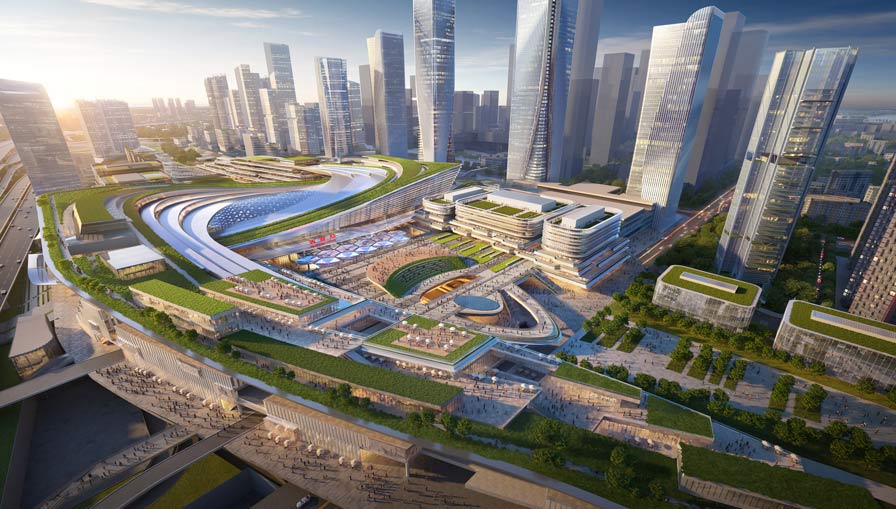 Nishirei Station is a place where a green, ribbon-like park stretches from the town on the ground level up to the roof of the station building. The green ribbons cross at the top of the station building, resembling a ribbon, hence the name "Ribbon Park."
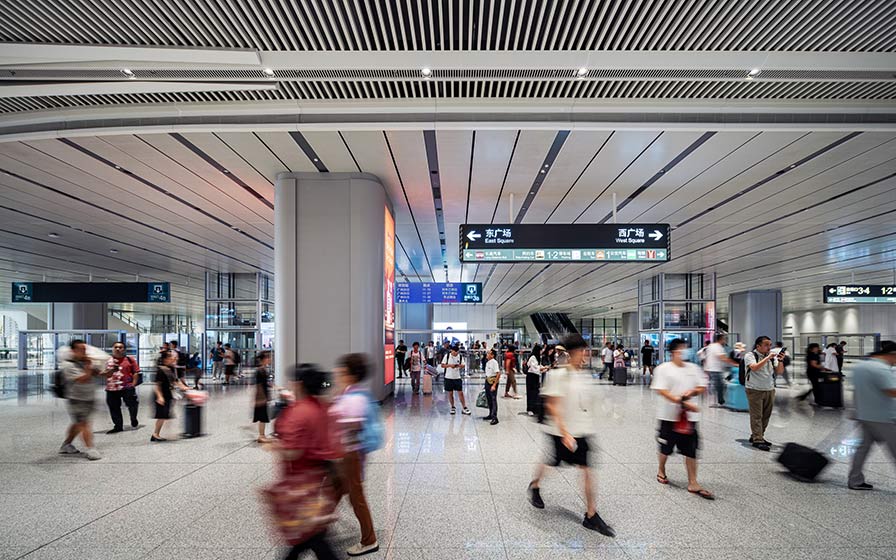 People coming and going in the underground passage after getting off the high-speed train © Yang Min/mintwow
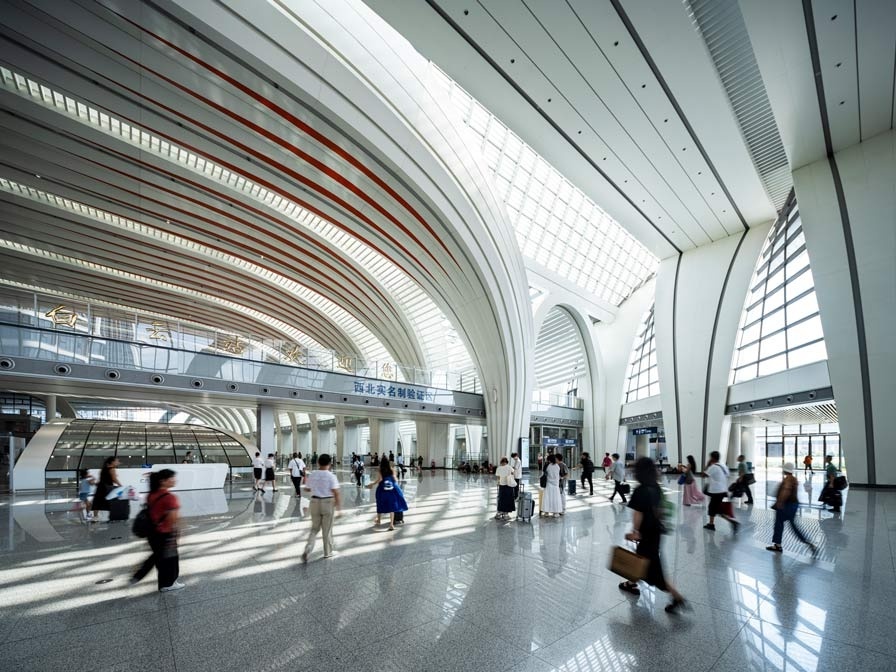 Entrance Hall © Yang Min/mintwow
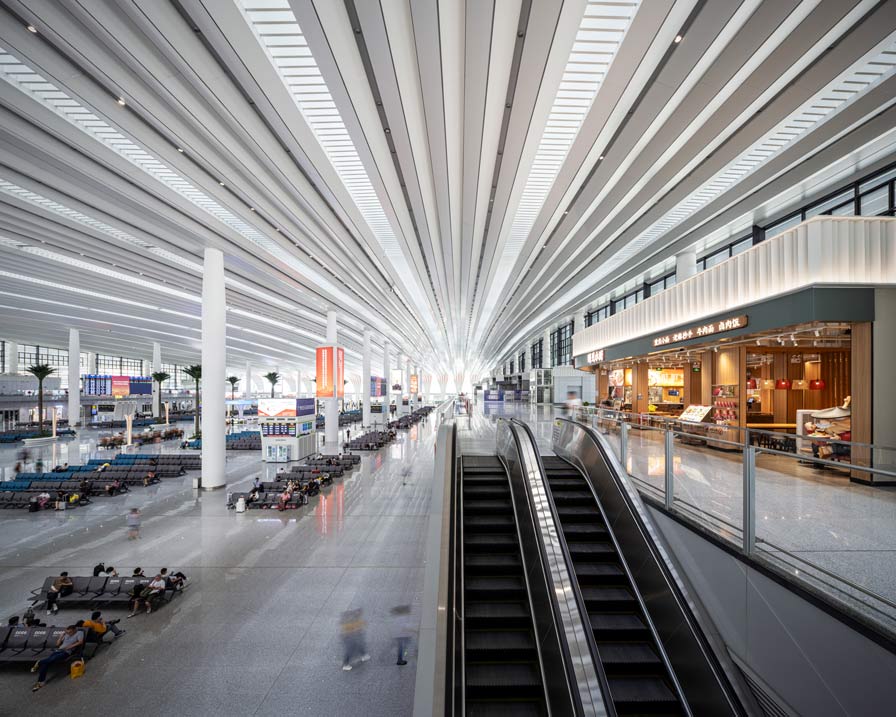 Cafe space in the waiting hall © Yang Min/mintwow
Nomura: I’ve always found it challenging to figure out how to use TOD to bring out the “distinctive character” that makes a town appealing. While the local context is important, the spaces we create also contribute to shaping a town’s unique character, so we need to combine various elements—both soft and hard—to build it up.
Land: That’s right. We need to discuss and consider, together with all stakeholders, what kind of space we want to create through TOD. We want to help lay the groundwork and bring everyone’s vision to life, so we can build more attractive cities and TOD developments.