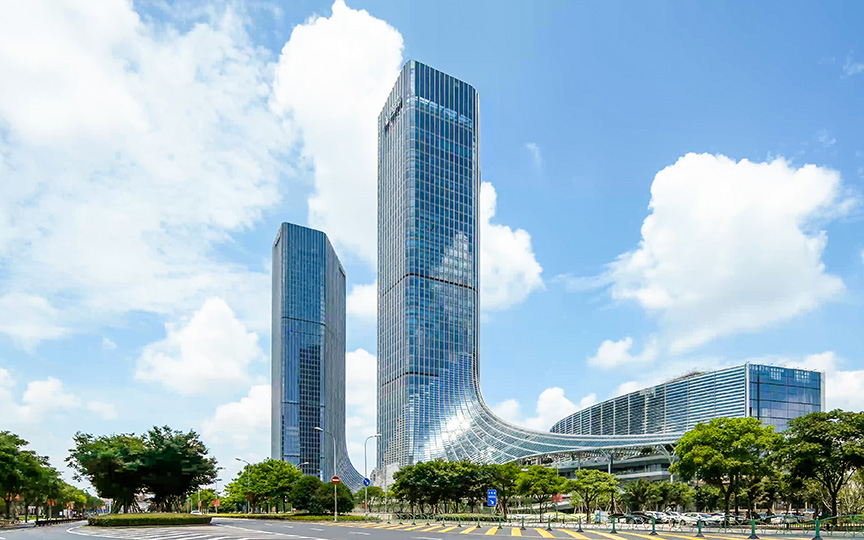

Towards a new society brought about by the coronavirus
~Integrated station-town development as a network hub~

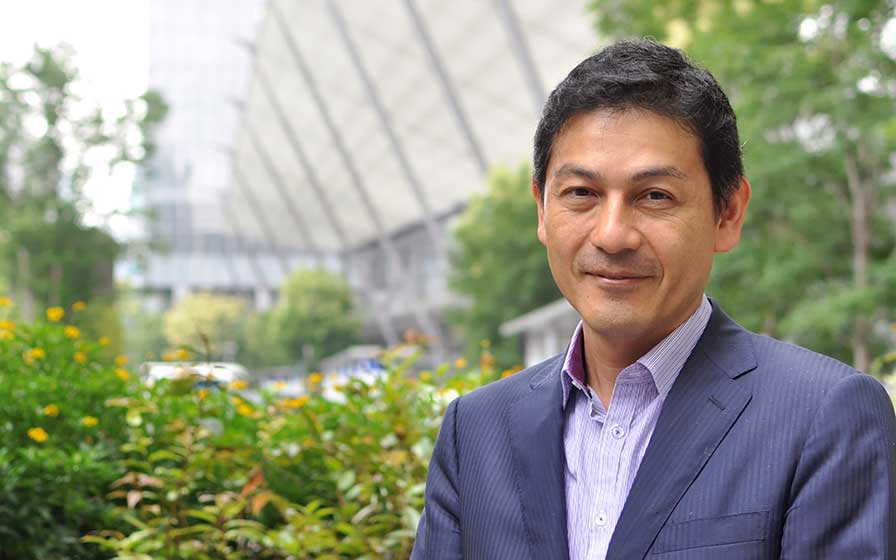
Executive Officer, Nikken Sekkei, Principal, Urban Development Group, Urban Division
Kiyoyoshi Okumori
(Title as of the time of publication)

SCROLL DOWN

During the COVID-19 pandemic, significant travel restrictions were imposed in cities around the world.
Life with travel restrictions has led to the discovery of new values, such as remote work, but it has also undeniably given rise to questions about the way cities and transportation have been conducted. Therefore, I would like to consider the future of cities and transportation in this article.

Nikken Sekkei Executive Officer Urban Division, Urban Development Group, Principal Kiyoki Okumori Executive Officer, Nikken Sekkei, Principal, Urban Development Group, Urban Division
Kiyoyoshi Okumori
(Title as of the time of publication)

From centralized to decentralized transportation
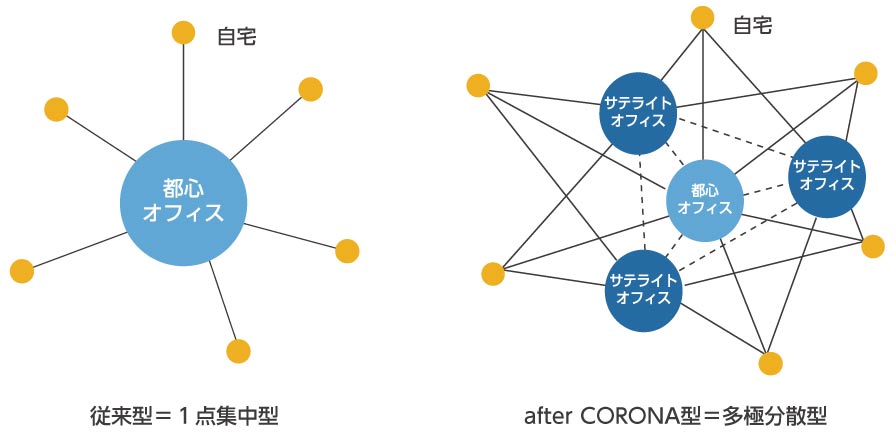
The options for where to work will increase significantly, and we can expect a shift towards a lifestyle where people choose from multiple workplaces and networking venues depending on their daily needs, rather than just commuting in one direction from home to a city center office. For example, one day might involve working from home, a workplace near home, a city center office, and then another nearby workplace after a meeting. This shift from a centralized to a more decentralized approach to work.
Major cities around the world, including Tokyo, London, New York, Paris, and Shanghai, have extensive subway networks. Taking Tokyo as an example, the Tokyo Metro alone comprises nine lines and covers approximately 195 km. Subway stations are spread like a web across cities worldwide, making them ideal infrastructure for supporting the decentralized urban society of the post-COVID era. When considering future cities and transportation, it will be crucial to consider how to adapt the global subway network to new lifestyles.

Schematic diagrams of centralized and decentralized systems Schematic diagrams of centralized and decentralized systems

Role as a network hub for walkable spaces around the station.

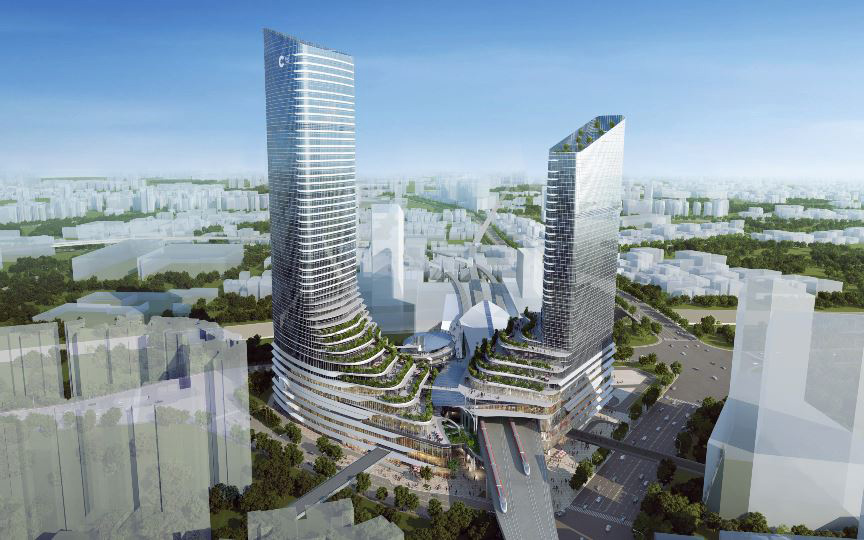
Tokyo Metro has extended the transfer time limit for those who need to exit the ticket gates to change lines from 30 minutes to 60 minutes, and has made the previously unconnected Ginza and Ginza-itchome stations transferable. This may lead to people enjoying strolling around the city during transfers. Many urban centers around the world have multiple stations within walking distance of each other. While efforts have been made to create station-city spaces that integrate each station with the surrounding area, expanding pedestrian spaces connecting multiple stations will create a station-city integrated space that serves as a network hub fostering walkable and diverse urban activities. By connecting stations to personal transportation options such as buses, shared cars, and shared bicycles, people will be able to access a variety of activities and locations smoothly. The station-city integrated area is expected to become a space where diverse functions such as plazas, commercial facilities, workplaces, and entertainment are interconnected. To achieve this, it will also be necessary to transform street spaces from roadways into spaces for pedestrians and other forms of mobility. The newly created space can be utilized as a valuable, vibrant area for the community through area management. By making the entire area, including the street spaces, a space that generates vibrancy, it will become an infrastructure that supports real-world communication, which is expected to become increasingly valuable in the future.
These walkable area strategies cannot be realized by railway operators alone; therefore, it is crucial to create an area vision in collaboration with local governments and surrounding businesses.
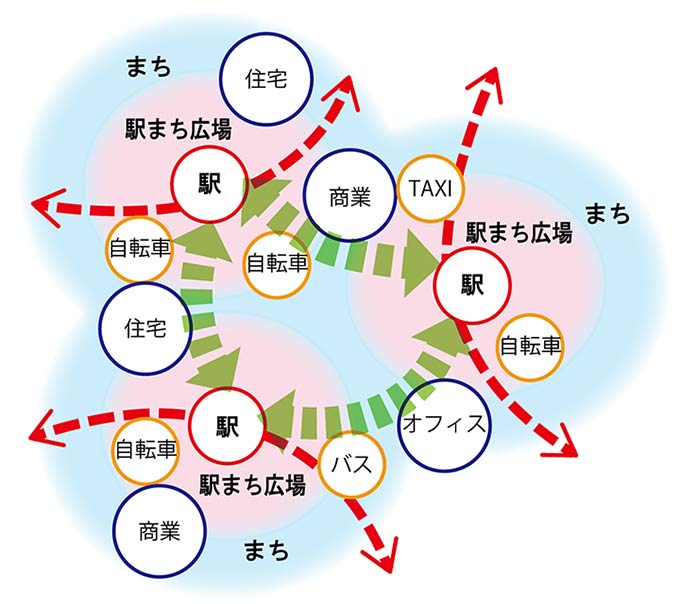
Station and town integrated space as a network hub Station and town integrated space as a network hub

Proactive response to diverse transportation mode options
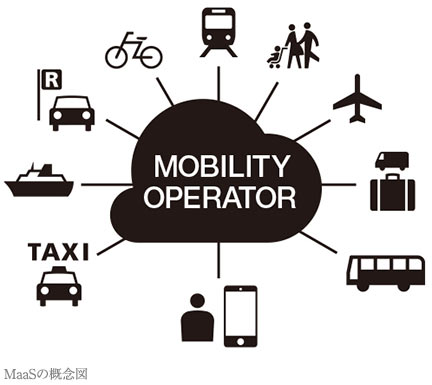
Conceptual diagram of MaaS

Mobility as a Service (MaaS) is already a global initiative, but it is expected to accelerate in the post-COVID-19 society. This is because, with the shift to decentralized mobility, the coordination between subway stations, which are network infrastructure, and other modes of transport will become even more important. People will be freed from one-way travel, such as from home to the office, and will be able to choose the optimal mode of transport and location to suit their purpose for the day. In addition to the diversification of travel behavior due to the decentralization of workplaces, the use of ICT (=MaaS) will enable cloud control that responds to peak times and congestion levels, and it is expected that smart use of transportation capacity will be realized. By realizing an urban model in which the choice of TIME and PLACE is made smarter through MaaS, it is expected that cities will become more resilient to pandemics.

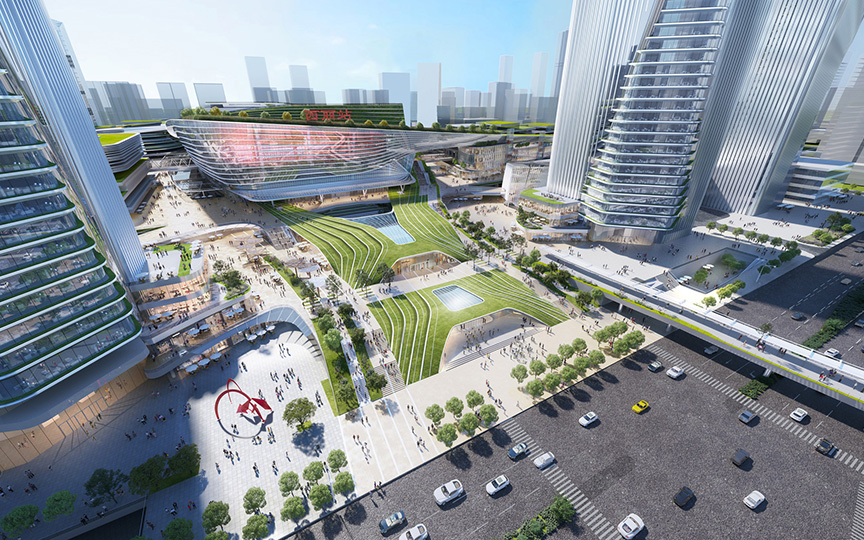
Towards a station-town integrated space where you can feel the light and wind.
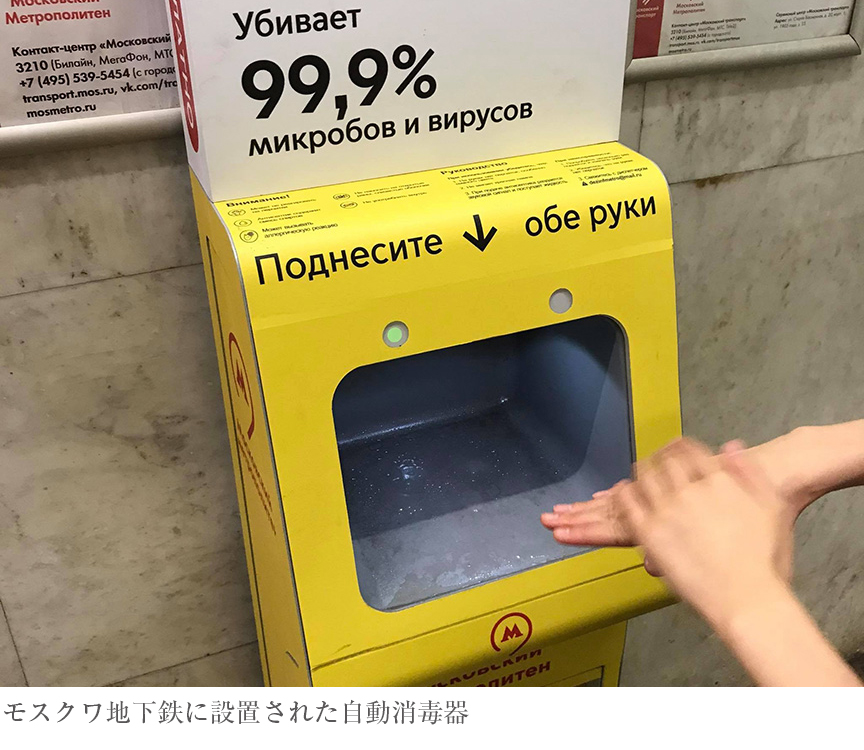
In the future, there will undoubtedly be an increasing demand for comfort and safety in transportation. Considering safety measures such as automatic hand sanitizers already implemented in the Moscow Metro and thermometers that are becoming common in office entrances, I believe it will be necessary to secure spaces for such safety measures within station areas.
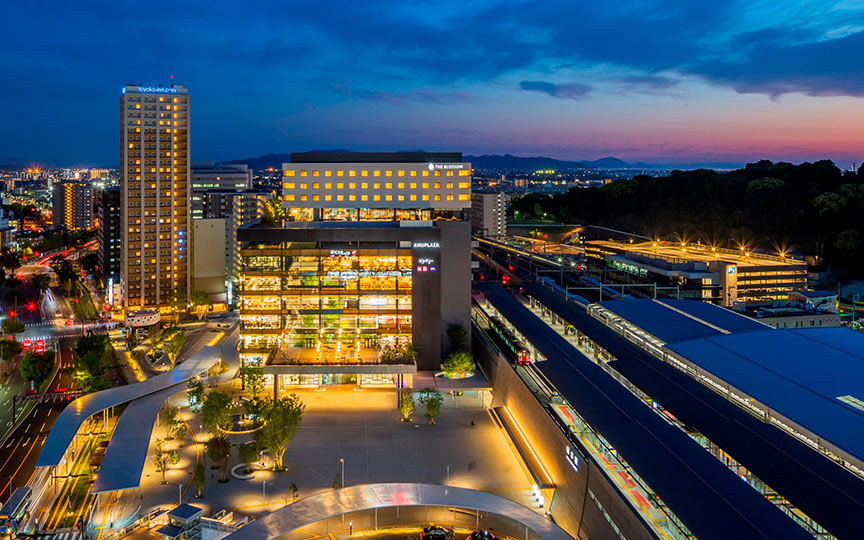
A more proactive approach would be to create more open and inviting station spaces. Increasing the number of stations that are filled with natural light and allow for a natural breeze would not only enhance the comfort of travel but also contribute to safety.
Making entrances and exits easier to understand and expanding the space connecting to the ground level are also necessary, but these efforts are important not only for countermeasures against COVID-19 but also for business continuity planning (BCP) measures in the event of a disaster.
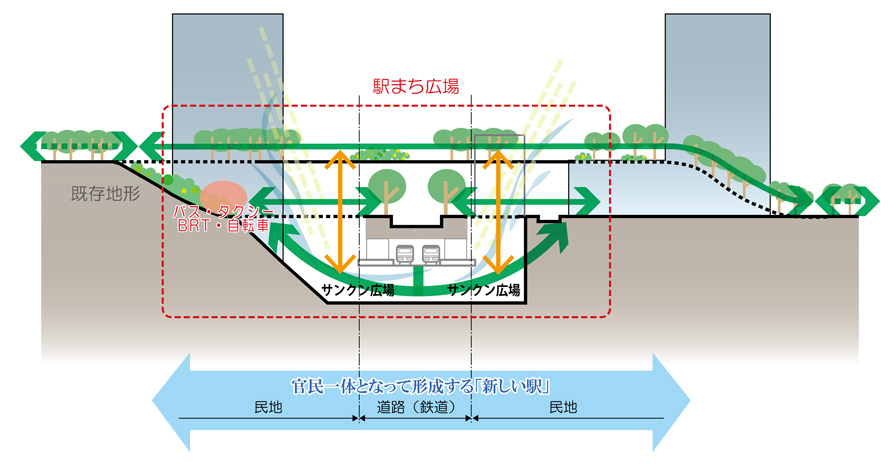
An image of a station-town integrated space where natural light and natural breezes can be felt.
I believe the value of real-world communication in urban areas will remain high. As station-centered urban development acts as a network hub, it will become the infrastructure supporting this communication, enabling a wider range of choices than ever before, and fostering initiatives that enhance both comfort and safety. (July 10, 2020)
Top image: Kyobashi Subway Station and Tokyo Square Garden: © Forward Stroke Inc.
* "Beyond Covid-19: Society, Cities, and Architecture" is a series. Going forward, architects, planners, engineers, consultants, and others will regularly share their visions from their respective professional perspectives.

This site uses cookies. By continuing to use this website, you consent to the use of cookies.Our policy.