
The past and future of urban development around Shibuya Station. [Part 2]
SCROLL DOWN
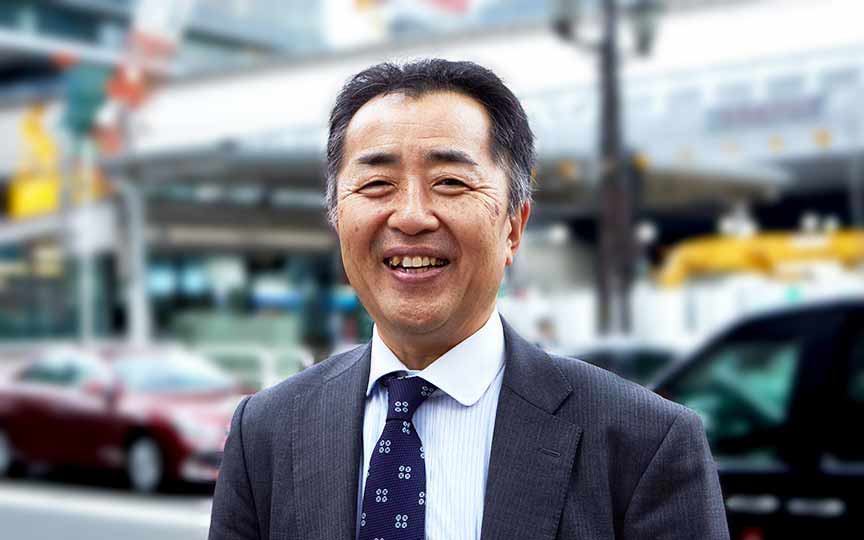
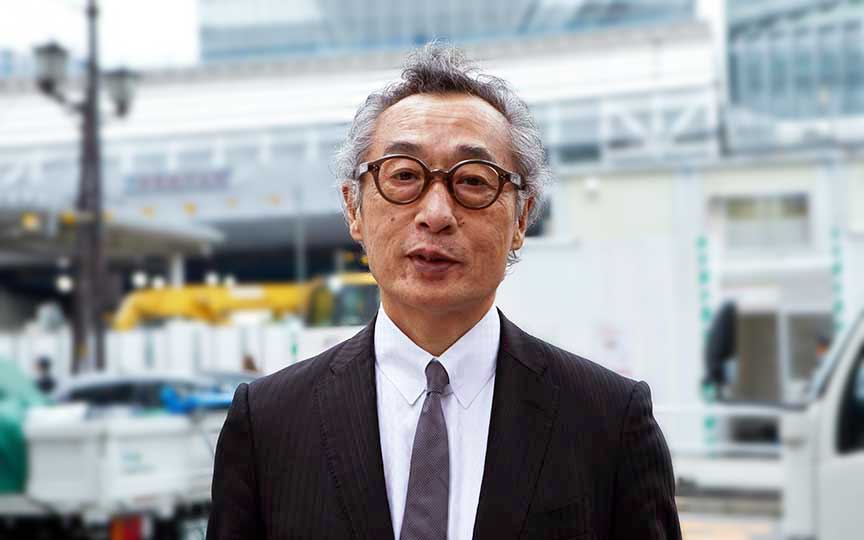
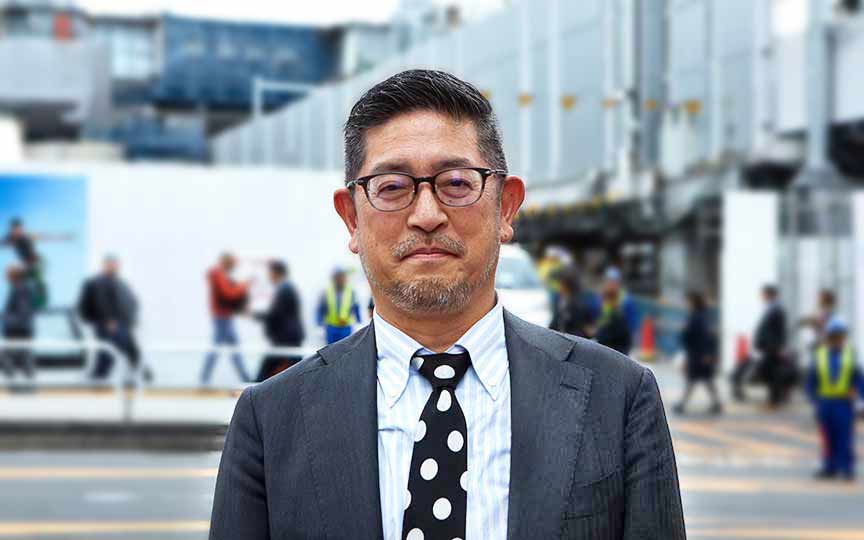
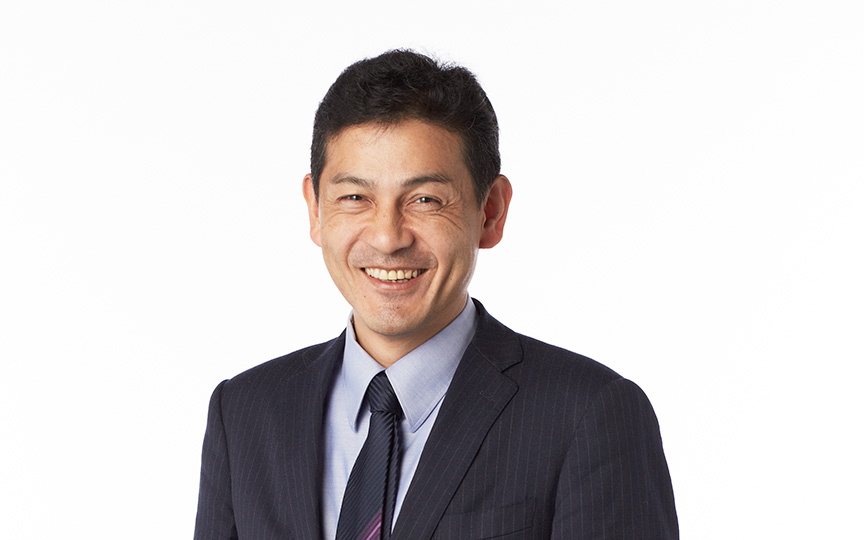
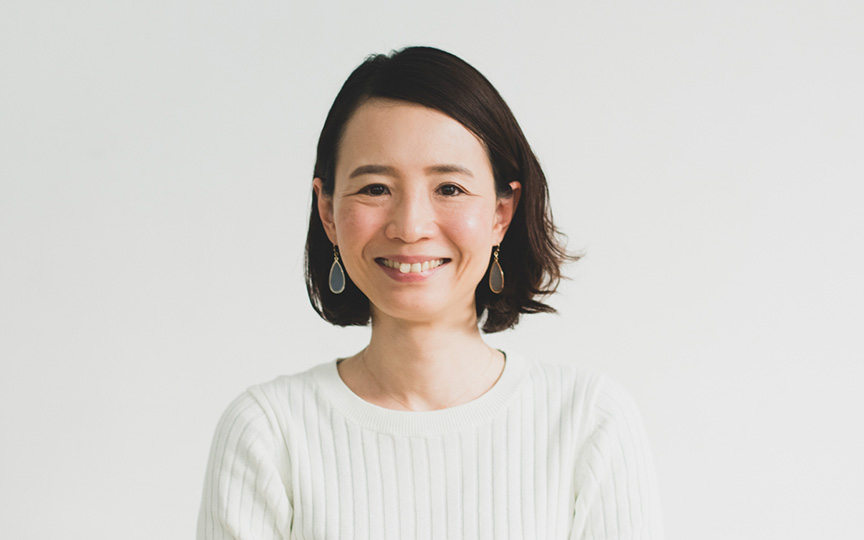
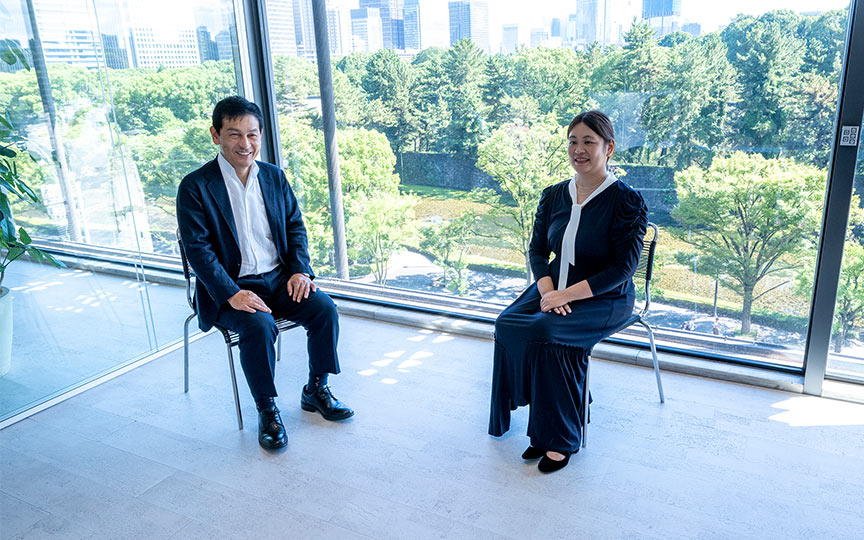
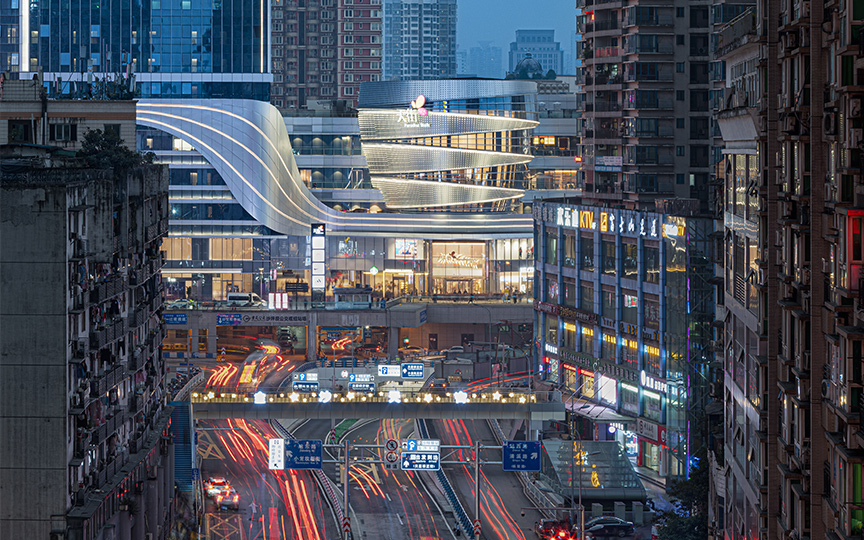
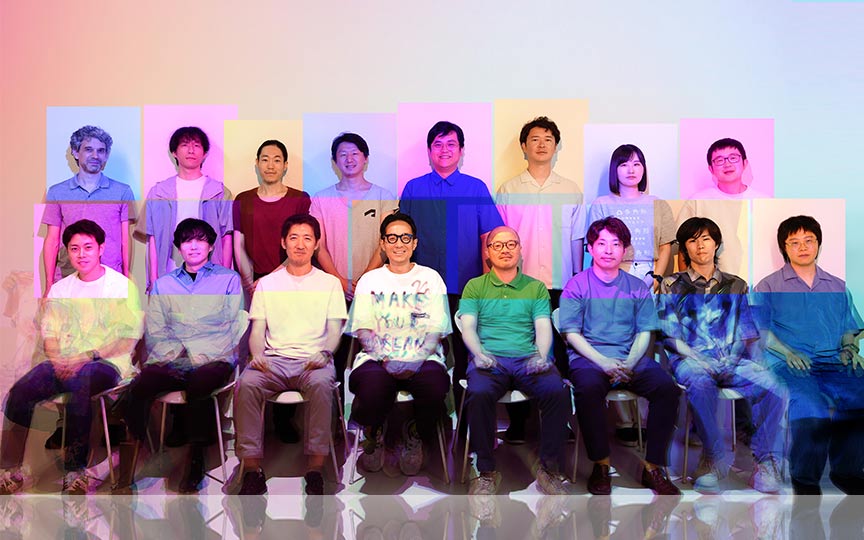
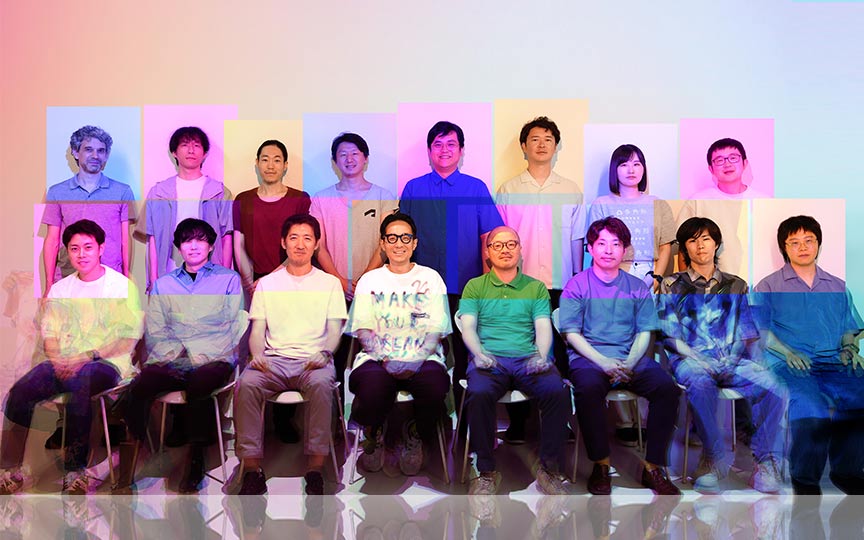
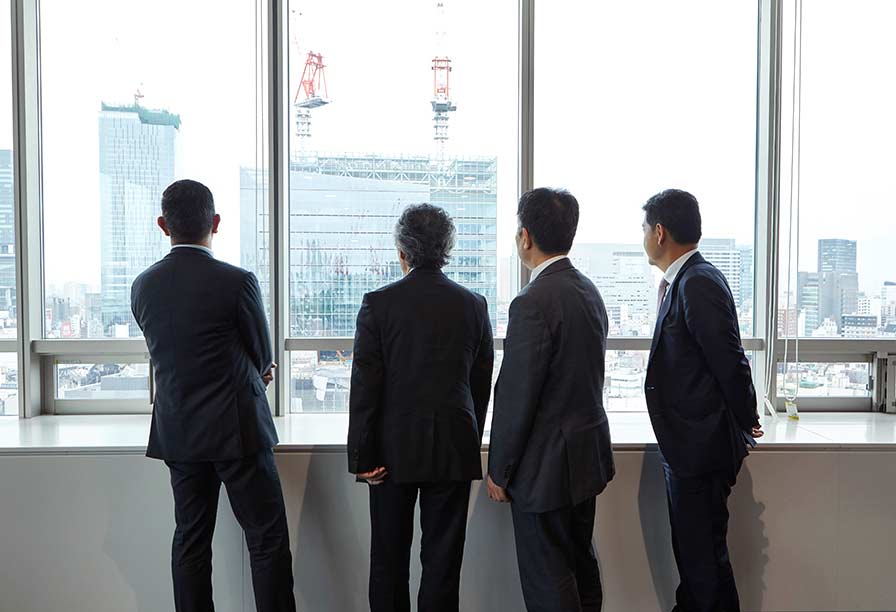
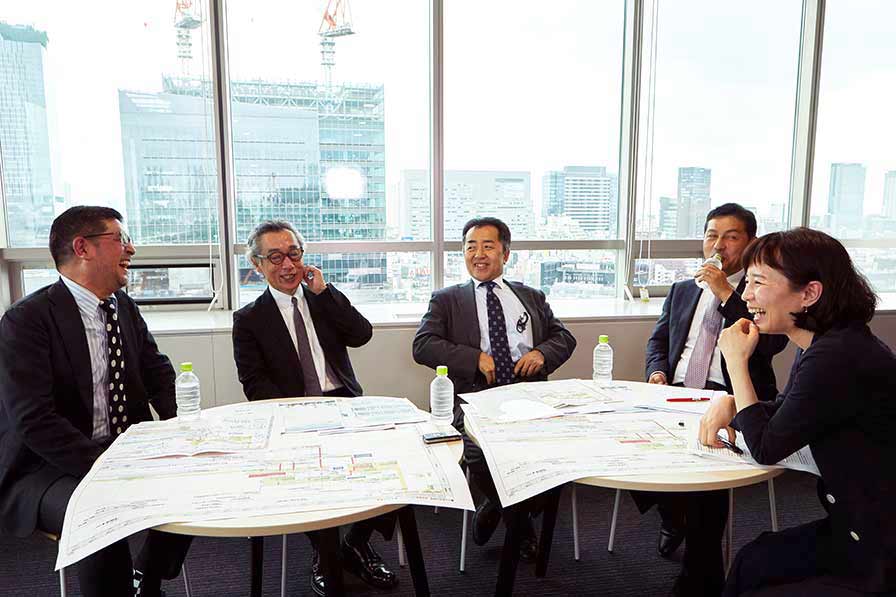
With the opening of “Shibuya Scramble Square the First Phase (East Tower)” in November 2019 and “Shibuya Furasu” in December, Shibuya continues to undergo a “town opening.” The major catalyst for this redevelopment dates back to 2002, when the decision was made to implement direct through-service between the Tokyu Toyoko Line and the Tokyo Metro Fukutoshin Line.Members involved in urban development from various perspectives discussed how this massive project has progressed since then.Gathered at the new Shibuya Ward Office building, which served as the venue for the discussion, were Ritsu Ko-waki, Shibuya Playing Manager at Pacific Consultants Co., Ltd.; Norio Sudo, Executive Director of the Shibuya Future Design General Incorporated Association; Junichi Yoneyama, Chief of the Roads Division, Civil Engineering Department, Shibuya Ward; and Kiyoshi Okumori, Representative of the Urban Development Group at Nikken Sekkei Ltd.(pictured from right to left). What do these four have to say about the past and future of urban development around Shibuya Station? The facilitator was Mika Kanayuki of Nikken Sekkei’s Urban Development Department (Associate), who has been involved in development projects around Shibuya Station for many years and currently serves as a project designer for Shibuya Future Design.



Urban planning carried out through discussions between the public and private sectors.
Yoneyama: Everything was all interconnected. First, with the Fukutoshin Line and the Toyoko Line set to begin through service, we had to build the Shibuya Hikarie to ensure Shibuya wouldn’t become a “passing station” and to quickly establish a flow of people. At the same time, the Tokyu (department store) Toyoko Branch also needed renovations, which meant we had to relocate the Ginza Line station located inside the building.
Okumori: : There was also a lot of discussion about how to operate the Ginza Line, wasn't there? The same goes for JR—there were discussions about how to improve convenience by aligning the Saikyo Line more closely with the Yamanote Line.
Yoneyama: Although the issue was discussed in the 2003 “Guide Plan 21,” the railway improvement plan was not mentioned at all. In order to move forward with deliberations on the railway improvement plan, various adjustments were needed—such as technical evaluations and cost-sharing arrangements—and at that time, the government was unable to take that step. However, at a certain point, things suddenly began to move forward in a concrete way.
Under the arm: I think the Railway Operators’ Conference was definitely a major turning point. It was a truly substantive meeting where we sat down with railway operators to discuss how to address the challenges facing Shibuya Station—covering both the financial considerations and the non-financial aspects.
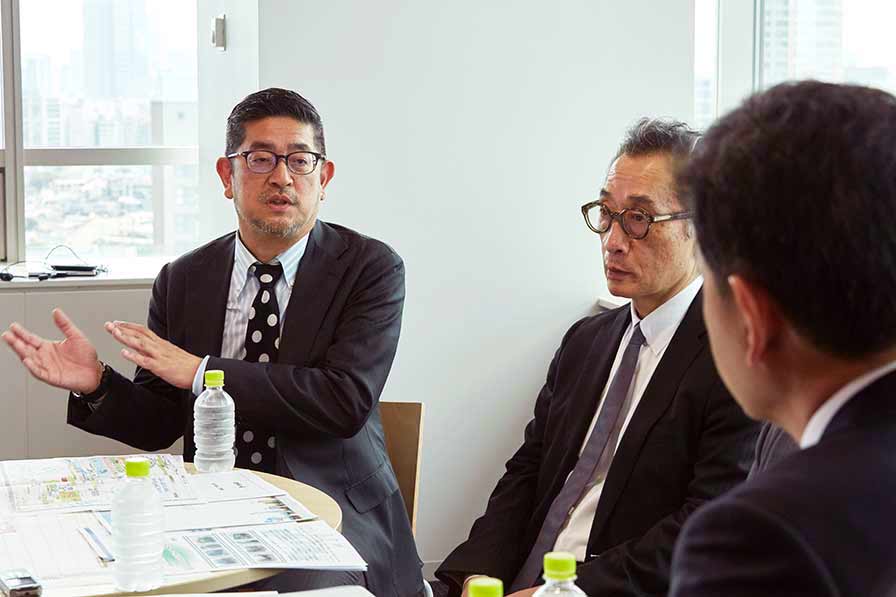
Under the arm: The person who spearheaded that meeting was Professor Hitoshi Ieda of the University of Tokyo, who served as vice chair of the “Guide Plan 21” review committee. Although it took some time, he worked tirelessly, determined that “we absolutely had to see this through with this group of people.”
Sudo: Back then, the “Private” played a major role in shaping the situation. Then, with the “Guidelines 2010,” we were finally able to outline how to improve the railways. However, while the government could state what “should be done,” it was the rail operators who actually had to carry out the projects, so we had to ensure the projects were financially viable. That was the really difficult part.
Under the arm: Back then, we used to have heated debates almost every day, didn't we? (laughs).
Sudo: Mr. Kowaki was also involved in the review of the “Infrastructure Development Policy,” which outlines how to develop the urban infrastructure around Shibuya Station.
Under the arm: While I was a consultant for Shibuya Ward, I also served as a consultant for private-sector entities, such as railway companies. I can’t even count how many times I was asked, “Whose side are you on?” and replied, “Both” (laughs).However, it wasn’t solely due to my efforts; ultimately, the public and private sectors were able to find a common solution, which led to the formulation of an urban infrastructure plan for the Shibuya Station district in 2009. From that point on, discussions moved beyond just infrastructure and railways to include development plans as well—so I think that was one of those moments when the project shifted gears all at once.
Okumori: : I believe the urban development around Shibuya Station—which was driven by a public-private partnership to reorganize urban infrastructure, including not only the railways but also the station plaza and the Shibuya River—is a project that symbolizes a turning point in history.We’re no longer in an era where urban development is handled solely by the public sector, and planning isn’t something that can be accomplished simply by drawing a single line. In a situation where there was no clear demarcation between the public and private sectors, we moved forward by taking small steps together.
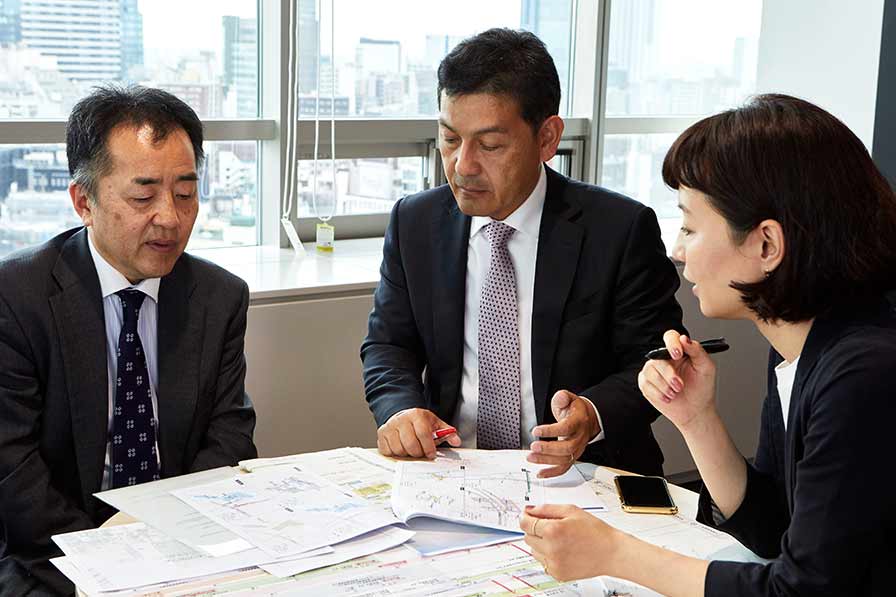
Gold Shop: It's really amazing that, in the end, everyone is shaking hands. I think this is the result of extraordinary efforts that weren't even outlined in the urban planning documents.
Under the arm: A while back, the general attitude would have been, “A plan is something you spend 20 years creating and another 20 years implementing.” But since the urban infrastructure reorganization plan for the area around Shibuya Station had a clear deadline, it may have actually been a good thing that we held our discussions under the pressure to make decisions quickly.There are plenty of plans out there that are nothing but pipe dreams, but in Shibuya’s case, the goal was actually to make it happen.
Sudo: At the core of this is the belief that we must build an urban infrastructure where “no one dies,” even in the event of a natural disaster. I think we were able to reach a decision precisely because there was a shared understanding—both on the part of the government and the railway operators—that unless everyone took this seriously, we would be in danger.
We will share the "Shibuya Model," born from area management, with the world.
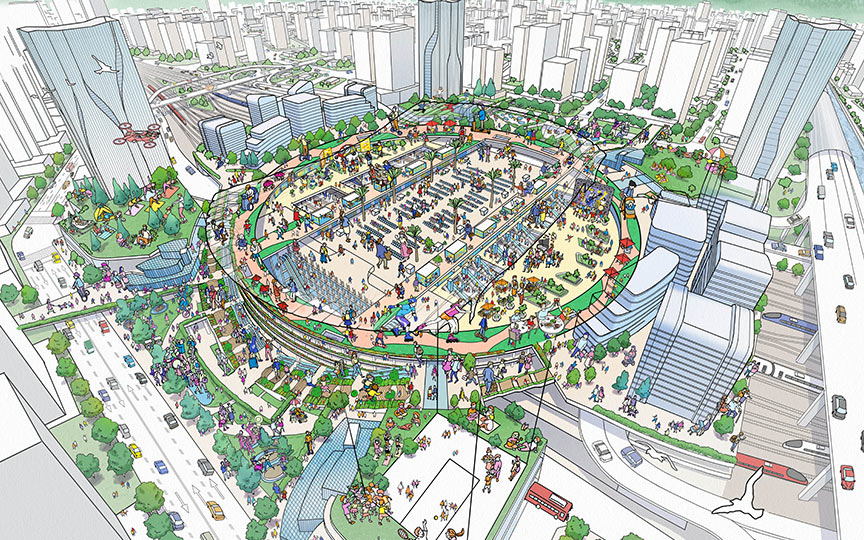
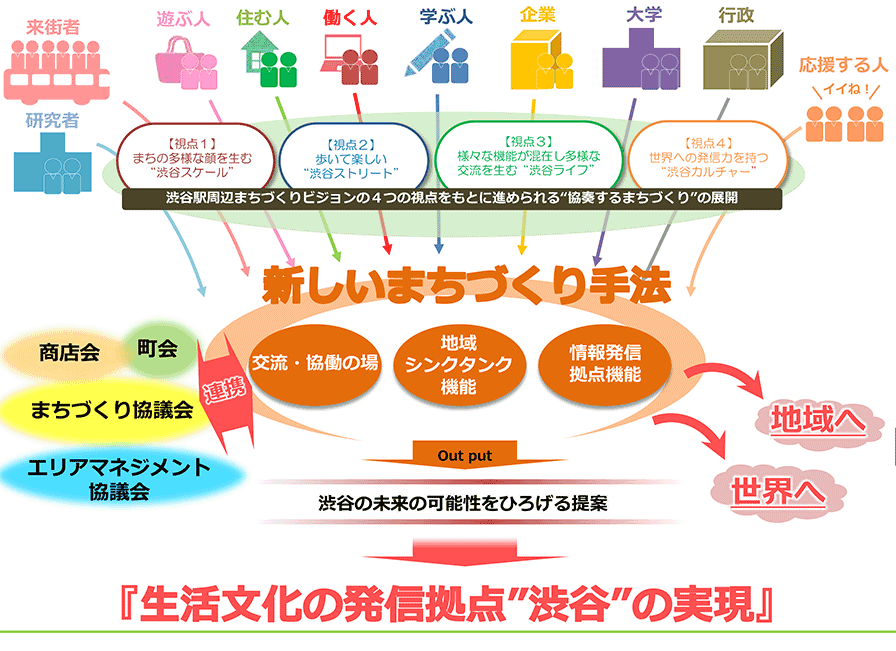 Shibuya Station Area Urban Development Vision 2016
Okumori: : As a result, organizations like the “Shibuya Station Area Management Council” and Shibuya Future Design—where Mr. Sudo serves as executive director—have been established, and the number of people involved in community development has increased.
Sudo: Compared to when we developed the “2010 Guidelines,” the term “area management” itself has become much more widely accepted, and various initiatives can be seen nationwide. Among them, the Shibuya Station Area Management Council—which involves railway companies, landowners, and local government—is a rather unique model.Furthermore, with area management activities already underway in local shopping districts and elsewhere, I believe Shibuya Future Design has the potential to become a hub for information sharing going forward.To envision what Shibuya will look like 20 or 30 years from now and make it a better place, young people must take the lead. I believe Shibuya Future Design is, at its core, an organization dedicated to figuring out how to get young people involved in community development. That is precisely something the government alone cannot achieve.”
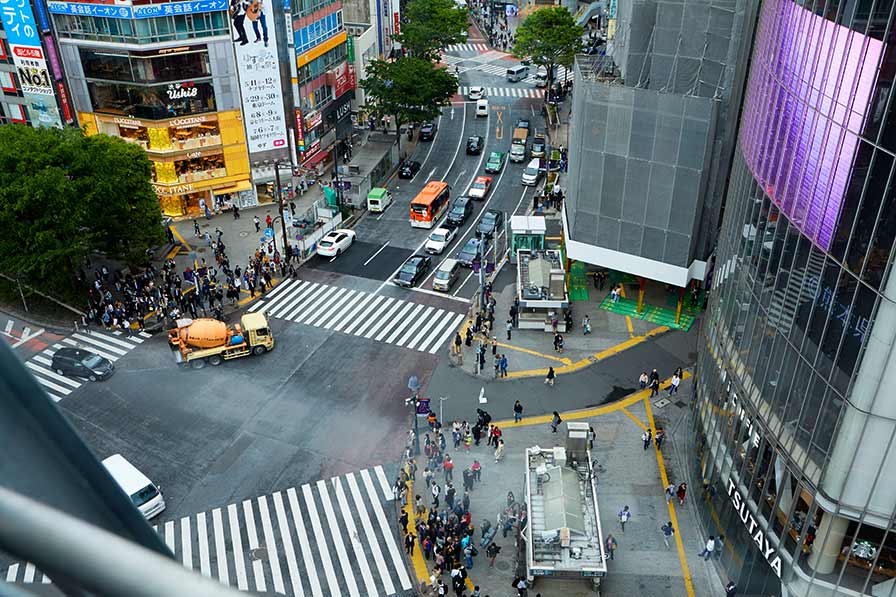
Okumori: : It’s true that, up until now, we’ve been focusing on how to build things through public-private collaboration, but I think it’s also important to consider how everyone will be involved once the project is complete. There’s no doubt that area management organizations provide a forum where diverse people can come together and easily generate a wide range of ideas.
Under the arm: During our development discussions, the idea that “Shibuya is a very tolerant place” came up frequently. Considering its history, Shibuya really is a place where it’s easy to take on new challenges, isn’t it?
Yoneyama: People call it the “100-Year Plan,” but in 100 years, probably none of the people involved today will still be around.The birthrate will likely continue to decline, and we may see even more foreign residents coming in—we simply don’t know what the future holds. However, from the perspective of public administration, it is precisely because we don’t know what will happen that planning is so crucial. I hope you’ll pour your passion into this effort.”
Sudo: As technology continues to advance rapidly, we’ll reap tremendous benefits—but there will also be things we lose along the way. Even so, I hope that cutting-edge technology won’t strip away our culture or cause us to lose sight of the most fundamental questions: why we are born and how we should live.For example, while battery-powered watches have become the norm, there’s been a recent resurgence in appreciation for the merits of mechanical watches, isn’t there? In the same way, I hope we can move forward while keeping both sides of the coin in mind.
Under the arm: What I’ve come to realize through my conversations with you all is that Shibuya’s redevelopment has progressed through moments of conflict—or mutual understanding—between people at each stage along the way.Even as construction continues from here on out, there will be people with differing perspectives at every stage of the project. Since a city only truly comes to life when people are there, we should candidly exchange opinions and discuss matters until we reach a mutual understanding. I hope the city will continue to thrive in this way. After all, the fact that “people are the protagonists” is what makes Shibuya so fascinating.
Okumori: : First, as a result of our efforts over the past 20 years, several redevelopment projects around the station will be completed starting this fall. As a result, the daytime population on weekdays will increase significantly.New people will gather here, sparking innovation and engaging in activities never seen before. The spread of such movements embodies the “essence of Shibuya,” and we may even be able to share this as the “Shibuya Model” throughout Japan and even around the world. I believe the future of redevelopment holds such great potential.