
Area management envisions a new way to create Shibuya. [Part 2]
SCROLL DOWN
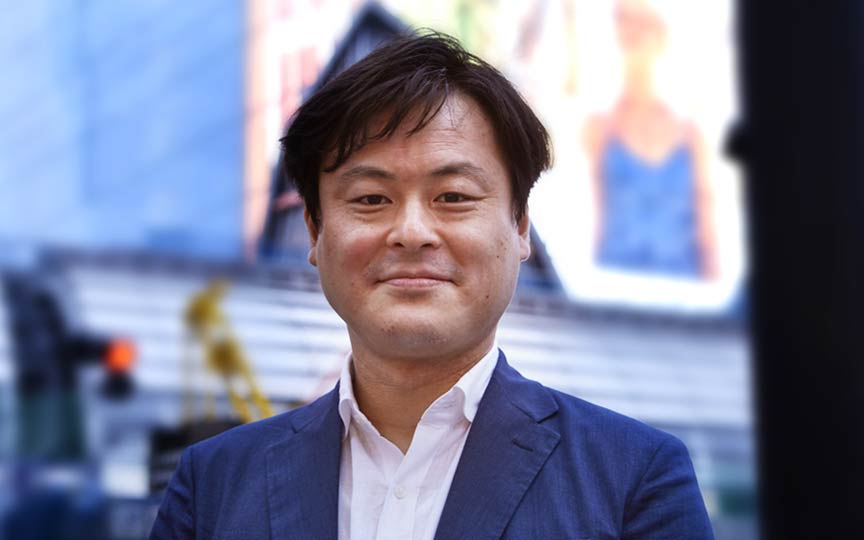
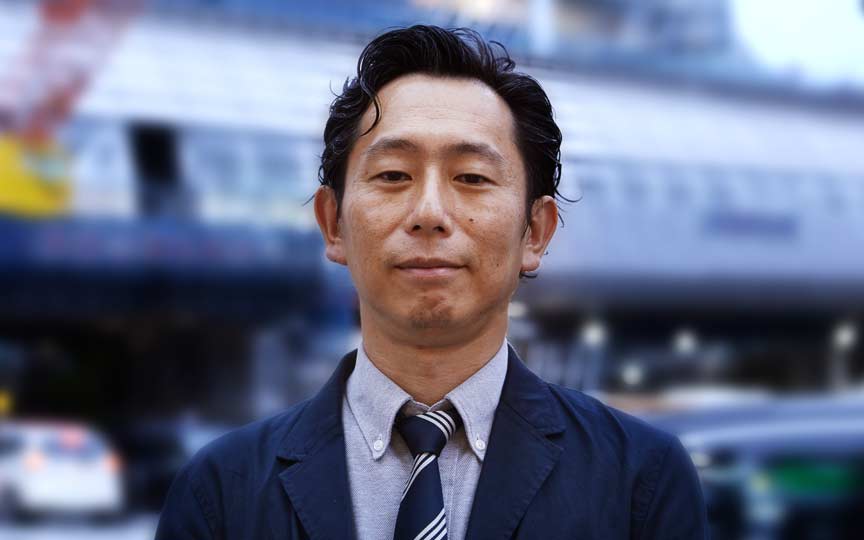
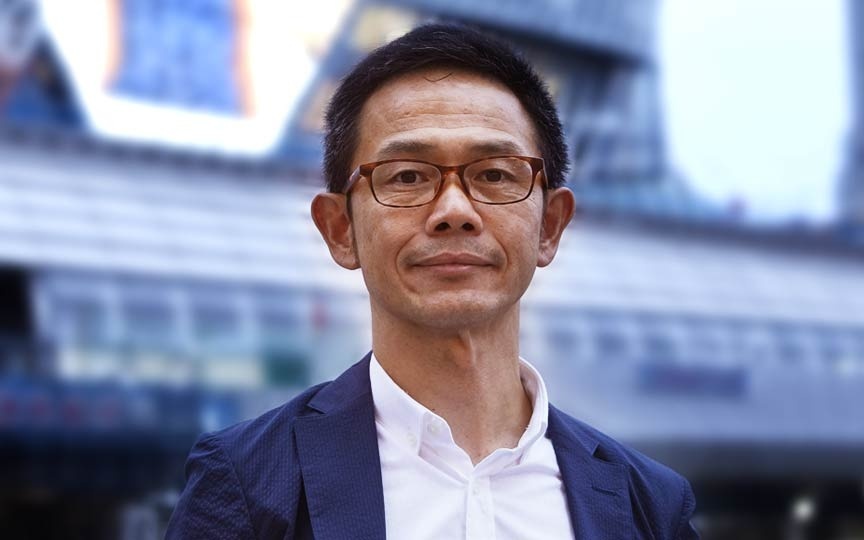
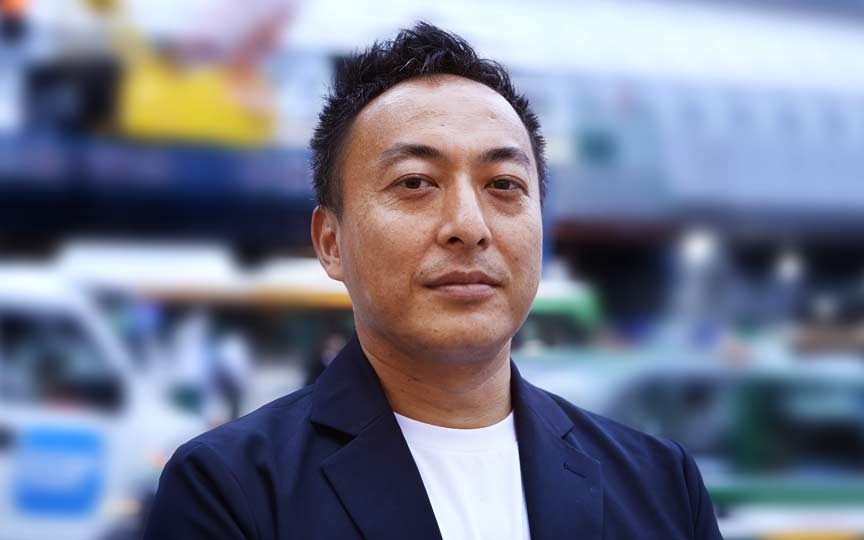
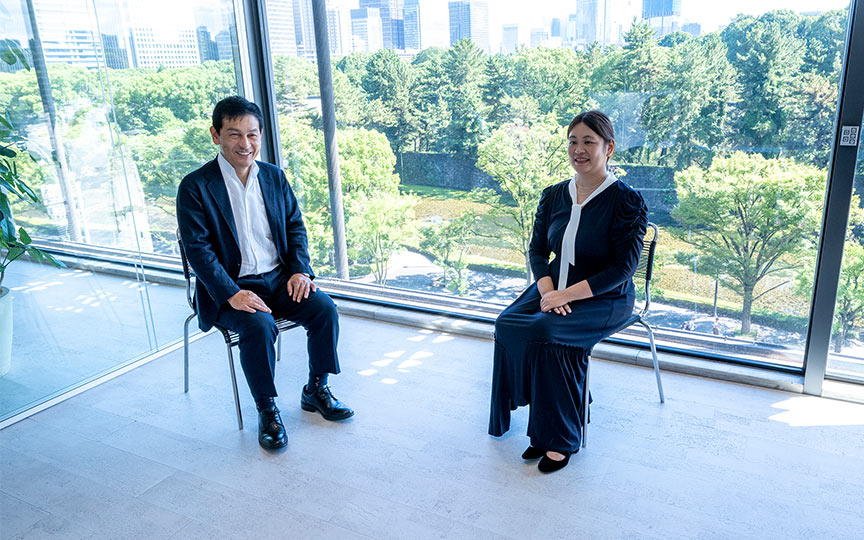
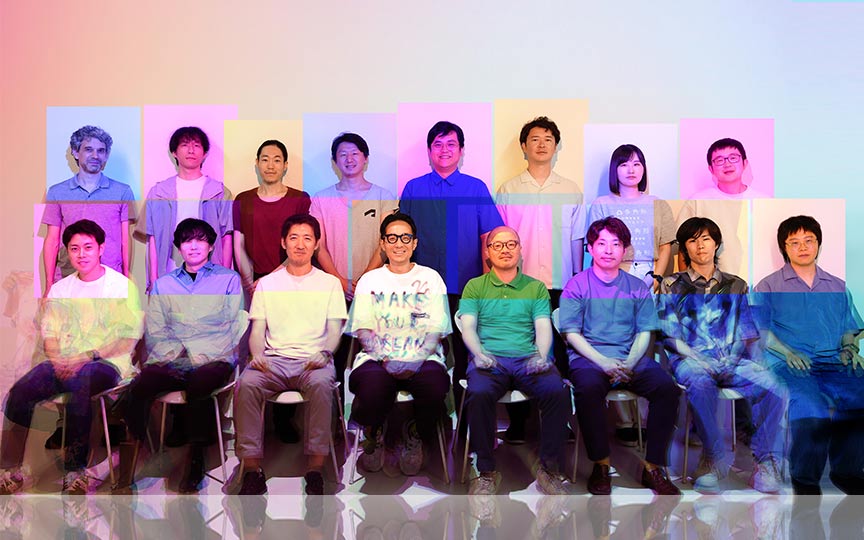
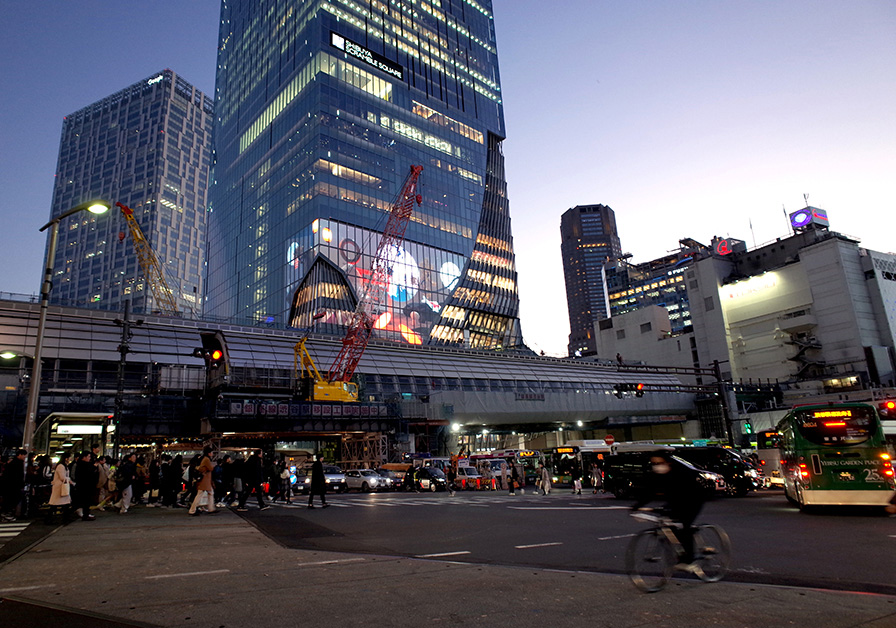
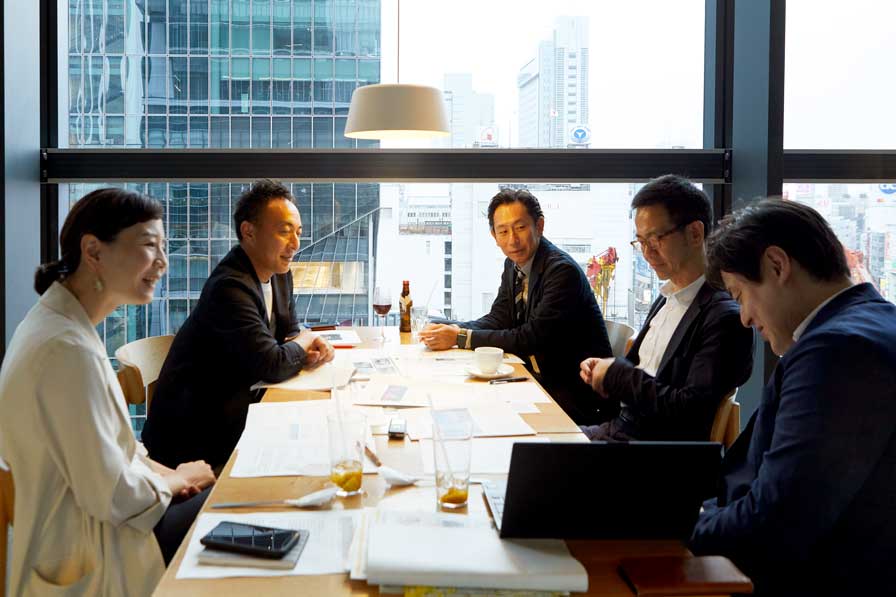
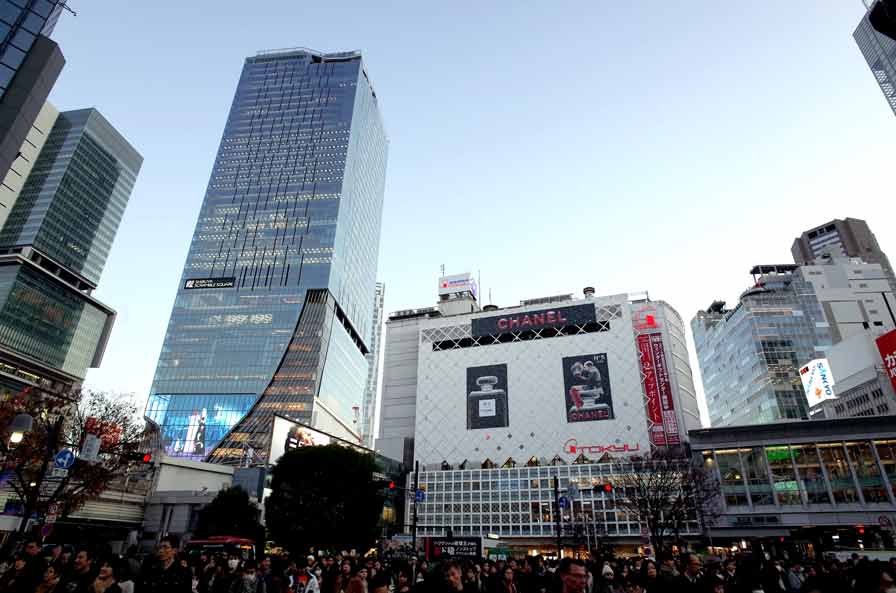
At “Shibuya Scramble Square the First Phase (East Tower), Phase 1 (East Wing),” which opened on November 1, 2019, a pilot project is currently underway using “Shibuya Scramble Square the First Phase (East Tower) Vision,” a large-scale digital signage display installed on the building’s exterior.The Shibuya Station Area Management Council (hereinafter referred to as the “Eri-Mane Council”) is involved in this experiment. The council is a public-private partnership working to establish guidelines for the Shibuya Station area with the goal of realizing “Shibuya” as a hub for lifestyle and culture open to the world.In addition to advertising initiatives at Hachiko Square, the council is carrying out various activities—such as creating a lively atmosphere around Shibuya Station and disseminating information—to foster a positive community in Shibuya as the area undergoes redevelopment. Featured in this article are Mr. Ryuji Akimoto (Tokyu Corporation, from left in the photo) and Mr. Yoichiro Sumi, who serve as Deputy Directors-General of the Secretariat for the Shibuya Station Area Management General Incorporated Association (hereinafter “Shibuya Station Area Management Association”),as well as Associate Professor Tomohiro Fukuda of Osaka University, who is supporting the pilot project, and Taro Fukuda of the Urban Development Department, Urban Division, Nikken Sekkei Ltd. Director. Together, they discussed the past and future of area management in Shibuya. The facilitator was Mika Kanayuki of the Urban Development Department, Nikken Sekkei Ltd. Director.
*Shibuya Station Area Management Council: The umbrella organization for urban development in the Shibuya Station area, comprising public and private sector stakeholders (five building operators, the land readjustment project implementer, the Ministry of Land, Infrastructure, Transport and Tourism, the Tokyo Metropolitan Government, and Shibuya Ward). Established on May 30, 2013.
*Shibuya Station Area Management General Incorporated Association: A component of the Area Management Council, this organization consists of the five building operators and the land readjustment project implementer. As an Urban Regeneration Promotion Corporation, it promotes urban development projects using revenue generated from initiatives such as outdoor advertising. Established on August 18, 2015.



A social experiment with digital signage: the first step in creating a new Shibuya
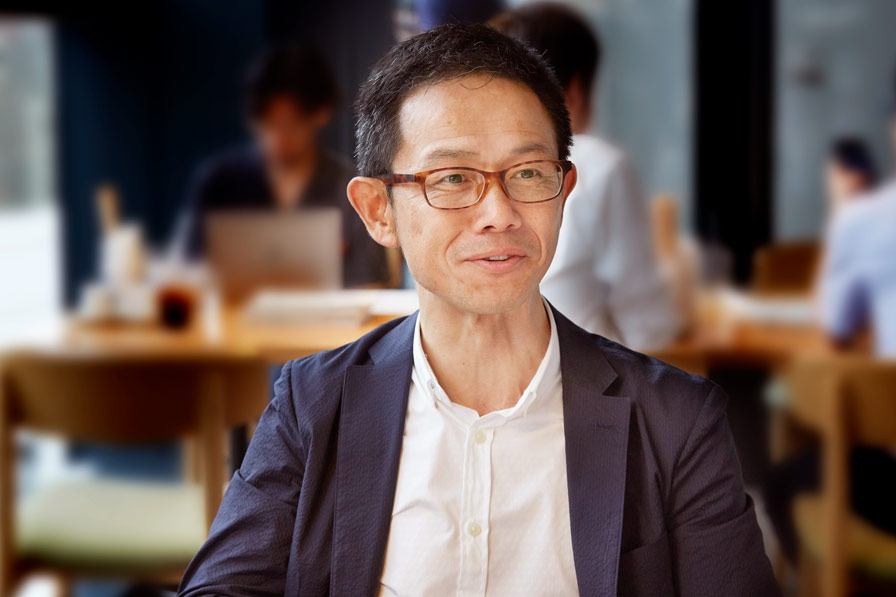
Fukuda (Futoshi): Yes. After nearly two years of preliminary preparations, we were finally able to launch a pilot project based on the “Shibuya Scramble Square the First Phase (East Tower)” vision this past June. Professor Fukuda, who conducts research in environmental design informatics at Osaka University, served as an expert advisor for this project.
Fukuda (Tomomi): Mr. Fukuda from Nikken Sekkei actually found me. Even though it’s such a niche field (laughs). I think I first received an email from Mr. Fukuda around July 2017. When I saw his name, I thought, “Huh? We have the same name!”
Akimoto: That was a great opening, wasn't it? (lol).
Fukuda (Futoshi): Many of the instructors at the design workshop were architects or urban planning experts, so we lacked a framework for assessing the impact of digital signage on the surrounding environment. Professor Naito and the other instructors encouraged us to propose solutions to this problem, such as developing an evaluation framework or seeking out experts in the field.After doing some research, I learned that Professor Fukuda was conducting research on the glare and sensory experiences—such as comfort and discomfort—associated with digital signage. I also discovered that a similar study was apparently underway in the area in front of Osaka Station, so I reached out to him—and that was the starting point.
Fukuda (Tomomi): Around that time, I was doing something similar in Osaka. I was helping Osaka Prefecture and Osaka City draft guidelines related to digital signage. They consulted with me on a variety of matters, starting with the very basics of how to proceed.
Gold Shop: So, did you conduct the same experiment as you did in Shibuya?
Fukuda (Tomomi): Yes.We actually installed a 5.4-meter-by-3-meter display in a lecture hall and conducted an experiment with about 50 participants. In a pitch-black room, we gradually adjusted the brightness to determine at what level people found it dazzling or uncomfortable, and we published the results around February 2015.
Gold Shop: Well, that was perfect timing. Since we have the same last name, I guess it was fate.
Fukuda (Futoshi): Exactly (laughs). So, I reached out to a place I had absolutely no connection with to set up a meeting, visited Osaka University, and explained the background of the situation so far. I had already provided some explanation at design meetings and before committees of the Tokyo Metropolitan Government’s Landscape Council and Advertising Council, but it felt like I was missing that final push—or rather, neither the government nor the experts could quite make up their minds.
Fukuda (Tomomi): By the time we met, you’d already put together a rock-solid plan, and you were really under the gun to move on to the next step (laughs).
Akimoto: First and foremost, the signage in Shibuya is one of the largest in Japan, with a combined area of approximately 780 square meters across both screens. There’s simply no precedent for it.
Fukuda (Tomomi): Even in Osaka, the size is limited to 100 square meters. For low-rise buildings, 5 square meters or so is typical. Even the famous Glico sign in Dotonbori is only about 200 square meters, so Shibuya is really on a different scale. I was really impressed.
Corner: Plus, they're inverted triangles of different sizes.
Fukuda (Tomomi): That's right. As I said at the beginning, "I don't really understand it, but we should go ahead and do the experiment."
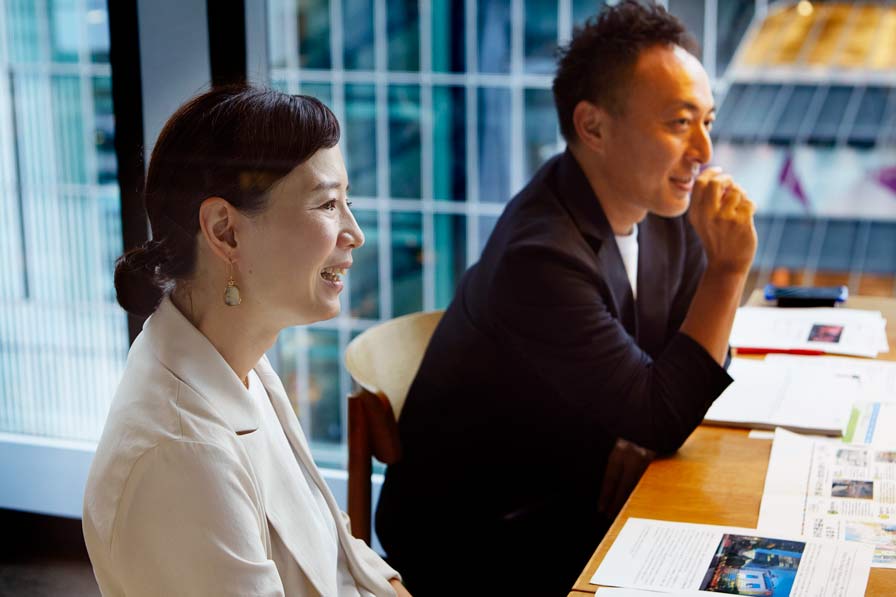
Fukuda (Tomomi): “With VR, ‘glare’—which is a key evaluation factor—doesn’t come across at all. If we can test it on an actual display, we can properly assess the brightness, so I suggested that we should really test it with the actual product.”
Akimoto: The experimental design was approved at a design meeting in the fall of 2018, and the experiment was actually conducted in June 2019. I first met with the professor in August of the previous year to discuss the experiment.
Fukuda (Tomomi): I remember thinking it was amazing when they came back to Osaka the following month and already had a fair amount of material prepared. The expertise of Nikken Sekkei, Tokyu Agency, and everyone else had been seamlessly combined.
Corner: In the middle of the night, I walked all the way around the station and even took some photos, thinking, “This is how it should look from here.”
Fukuda (Tomomi): After all, there are people living in the neighborhood. Besides, I think this experiment could set a standard not just for Shibuya, but for the entire Tokyo Metropolitan Area. That’s precisely why we need a clear justification for why Shibuya is allowed to go this far.
Corner: I think it's wonderful that all the business owners agreed to this experiment. Of course, there were various issues to work out beforehand, such as how to cover the costs of the experiment.
Fukuda (Tomomi): That’s exactly what I wanted to ask. Since conducting experiments like this can make it harder to see the signals, rail companies tend to be cautious. Even though there were three rail companies involved this time, how were you able to secure their cooperation?
Akimoto: I think it was helpful that we were able to prepare by discussing the experiment’s objectives and methods. Also, since the person in charge had experience in the field, we received a lot of advice from them.
Gold Shop: So you knew exactly how to make things go smoothly, didn't you? I get the impression that while railway companies take a while to make a decision, once they do, they move forward very quickly.
Akimoto: It took about five years after the Eri-Mane Council first established the local rules for outdoor advertising, but once we actually put them into practice and things started to go well, it felt like everyone was finally on the same page.
Fukuda (Tomomi): Since the Eri Mane Council has been taking proactive steps, I think the local government must have appreciated that. I think they’re handling things very carefully.
Gold Shop: The fact that it didn’t rain during the actual digital signage experiment—even though it was the rainy season—must be because we’ve been so dedicated to this project (laughs). Basically, everyone has been really positive about this experiment.
Akimoto: The more you do it, the more it affects costs, so you have to be creative.
Gold Shop: It felt like everyone was watching with excitement during the experiment.
Akimoto: That's right. We've even heard people say, "It's really starting to feel like an 'Entertainment City,' isn't it?"
Corner: We are currently accepting submissions for works to be shown on this digital signage. It’s part of a contest called the “Motion Plus Design Shibuya Video Contest 2019,” and it seems to be generating a lot of interest among creators.
Akimoto"When I spoke with Cook Ioh, who organizes an event called 'Motion Plus Design,' he agreed to host it. I think he saw the significance of creating a display that symbolizes Shibuya—especially since it would allow us to showcase the winning entries from the contest alongside the unveiling of Scramble Square."
Fukuda (Futoshi): Ultimately, the inverted triangle shape—which is more than just a simple rectangle—itself appeals to the creative spirit. It certainly holds the potential for interesting expressions and content. Another interesting feature is that the building has displays on two sides, allowing for three-dimensional use.
Fukuda (Tomomi): By the way, how do you review the content you publish?
Akimoto: As a general rule, entries are subject to self-assessment based on the Outdoor Advertising Regional Rules established by the Eri-Mane Council. In addition, for this contest, the organizers will conduct a review with input from experts.
Corner: We’ve already been following the same process as the Scramble Square Vision’s self-review for outdoor advertisements in Hachiko Square.First, we verify compliance with the Self-Regulatory Council’s review guidelines, and then we have expert advisors deliberate on revisions to the review guidelines each fiscal year based on the content of the posted advertisements. I believe one of the key points is that there are no restrictions or prior coordination required—they are free to discuss the matter openly on the spot.
Akimoto: I think this is a truly grand social experiment that I’ve been able to carry out together with so many different people. I hope the results will be incorporated into Shibuya’s future urban planning and serve as valuable insights—and that we can give back to society in some way.
The challenge of creating an unprecedented town will continue.
Corner: What I have in mind is keeping Shibuya’s public spaces clean and ensuring clear, easy-to-follow pedestrian routes. In the past, there were many people sleeping in Miyashita Park or under the National Route 246 elevated highway, and the area had an image that was, to put it mildly, not very clean.Government officials have used the analogy that if, for example, a broken window is left unrepaired, it can gradually erode the city’s aesthetic appeal—and ensuring that doesn’t happen is a core goal of Private. To achieve that, we need to generate revenue, and to generate revenue, we must create effective advertising and signage. I believe that’s what leads to effective area management in Shibuya.
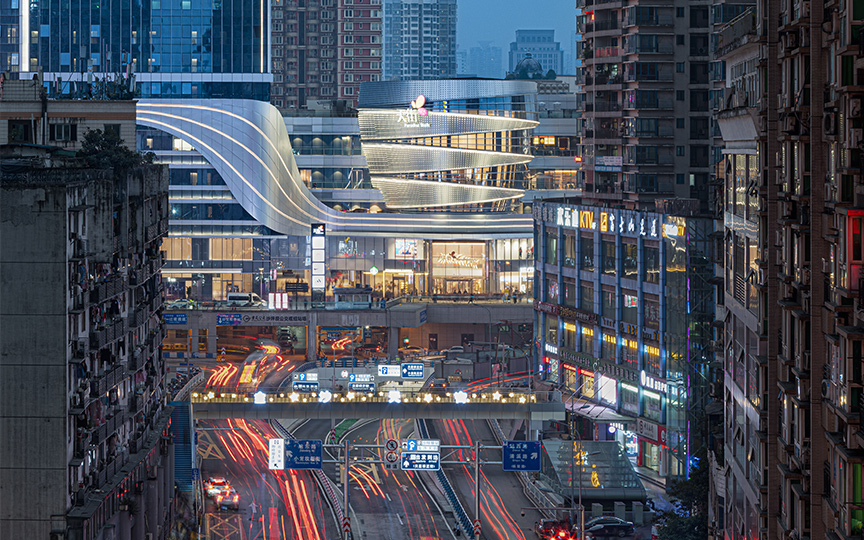
Fukuda (Tomomi): I’m still interested in how we can create a nighttime landscape and media environment that truly embody the spirit of Shibuya. For example, I think there are various approaches we could take, such as building large-scale media facades like those in China or holding events at specific times. It’s not just a matter of simply bringing what’s being done elsewhere here; we need to think about how to bring out Shibuya’s unique charm.
Gold Shop: As development continues, the question is what the future of outdoor advertising—including digital signage—should look like, isn't it?
Fukuda (Tomomi): That’s right. I think the number of fans will grow once they actually see the finished digital signage. As we continue, I’m sure suggestions like, “Maybe we should try this next,” will come up, so as a first example, I’m really looking forward to seeing it in action as soon as possible.
Corner: I was there in charge, but since the site was on a slope, the drum tower would sway every time I hit the drum, and I felt like I was going to die. Still, once the road was opened to traffic, a lot of people gathered, and it was really lively.
Akimoto: It’s not enough to just stay inside the office; after all, being able to actually enjoy entertainment out in the world is what really matters. I want to let the world know that Shibuya offers that kind of experience, and I hope that eventually it will become a destination that can rival New York’s Times Square.
Gold Shop: Thank you. Let’s have our colleague Fukuda wrap things up (laughs).
Fukuda (Futoshi): I don’t think there’s ever been a project like this before, with such close collaboration between architecture, infrastructure, and railways. Furthermore, as various structures have gradually begun to take shape, an abundance of public spaces has emerged, and our connection to the city has grown ever closer.Urban regeneration is still a work in progress, but as we mark the milestone of the district’s official opening this year, the aspects of urban operation and management are coming into sharp focus. We at Nikken Sekkei are also contributing to this effort with a desire to take on new challenges that don’t necessarily fall within the scope of design or urban development consulting.There are many difficult challenges, but taking them on builds our sense of pride, and we may be able to apply this experience to other projects. I’m truly grateful to be working with all of you on projects that propose new visions in Shibuya, a place that attracts global attention. I’d be happy if you continued to throw impossible challenges my way (laughs).